







Related
Topics
Journalists who don’t play by the rules often don’t get access to the most powerful people. At press conferences their raised hands are ignored. Their phone calls are not returned. Their queries are handled by low-level assistants. But sometimes top politicians and business leaders who talk only under the managed conditions and grant interviews only to the journalists they know are caught in the headlights of a free press. One such instance occurred before the 2000 elections. President Clinton went on the record and answered questions on substantive issues, when all he intended to do was make a packaged get-out-the-vote statement. [includes rush transcript]
Tape:
- Interview of President Bill Clinton by Amy Goodman and Gonzalo Aburto, November 8, 2000.
Related Story
 Web ExclusiveMay 24, 2019Assange Is Indicted for Exposing War Crimes While Trump Considers Pardons for War Criminals
Transcript
AMY GOODMAN: Journalists who don’t play by Washington’s rules rarely get politicians to go on the record or even gain access to the politicians and other powerful people they try to cover. At press conferences, their raised hands are ignored. Phone numbers — phone calls not returned.
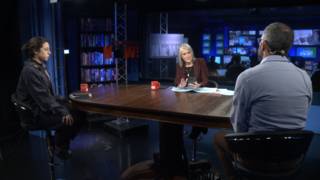
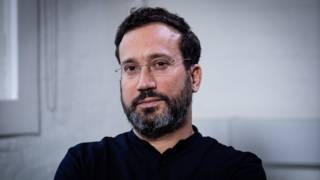
But sometimes politicians who talk only under the managed conditions and grant interviews only to the journalists they know are caught in the headlights of a free press. We have one such instance in which President Clinton went on the record and answered questions on substantive issues, when all he intended to do was make a packaged get-out-the-vote statement. It did happen last November on Election Day, and this was an interview that we were able to do with him here at WBAI, Pacifica Radio, in New York, when President Clinton called in to tell people to get out the vote. And I did the interview with him with my colleague here at WBAI, Gonzalo Aburto.
AMY GOODMAN: Mr. President, are you there?
PRESIDENT BILL CLINTON: I am. Can you hear me?
AMY GOODMAN: Yes, we can.
GONZALO ABURTO: Yeah.
AMY GOODMAN: You’re calling radio stations to tell people to get out and vote. What do you say to people who feel that the two parties are bought by corporations and that they are — at this point feel that their vote doesn’t make a difference?
PRESIDENT BILL CLINTON: There’s not a shred of evidence to support that. That’s what I would say. It’s true that both parties have wealthy supporters. But let me offer you — let me just give you the differences. Let’s look at economic policy. First of all, if you look at the last eight years, look where America was eight years ago, and look where it is today. We have the strongest economy in history. And for the first time in 30 years, the incomes of average people and lower-income working people have gone up 15 percent after inflation. The lowest minority unemployment ever recorded, the highest minority home ownership, the highest minority business ownership in history — that’s our record.
If you look at our proposals, what do we propose to do? We propose a tax cut that helps average people, for child care, for long-term care, for paying for college tuition, for retirement savings. We propose to invest large amounts of money in education, healthcare, the environment, in our future. And we propose to keep paying down the debt, because that keeps interest rates lower.
What do the Republicans propose? A tax cut that’s three times as big. Most of it goes to very wealthy people. The top one percent of the people get as much money as they would spend on healthcare, education and the environment combined. They propose to privatize Social Security. And if you add the two things together, we’ll be back in deficits, which means the economy will go downhill and interest rates will be higher for ordinary people.
AMY GOODMAN: President Clinton —
PRESIDENT BILL CLINTON: So, look, that’s just one example. You asked the question. There’s not —
AMY GOODMAN: Right.
PRESIDENT BILL CLINTON: Look at campaign finance reform. The Democrats are for it; the Republican leadership kills it.
AMY GOODMAN: Well, let me just —
PRESIDENT BILL CLINTON: Look at the environment. The Dem — we’ve got the cleanest environment in history, the best environmental record in history. The Republicans want to reverse our environmental record. So, give me — you can’t give one example of where both parties are dominated by large corporations and therefore there’s no difference. The American people’s lives are a lot better than they were eight years ago.
The truth is there’s an ideological struggle between those who believe that the best way to grow the economy is to give more money to the wealthy, and the Democrats, who believe that the wealthy will make more money if average people do better.
AMY GOODMAN: President Clinton, since it’s rare to get you on the phone, let me ask you another question. And that is, what is your position on granting Leonard Peltier, the Native American activist, executive clemency?
PRESIDENT BILL CLINTON: Well, I don’t — I don’t have a position I can announce yet. I think if — I believe there is a new application for him in there. And when I have time, after the election is over, I’m going to review all the remaining executive clemency applications and, you know, see what the merits dictate. I will try to do what I think the right thing to do is based on the evidence. And I’ve never had the time actually to sit down myself and review that case. I know it’s very important to a lot of people, maybe on both sides of the issue. And I think I owe it to them to give it an honest look-see. So, part of my responsibilities in the last 10 weeks of office after the election will be to review the requests for pardons and executive clemencies and give them a fair hearing. And I pledge to do that.
AMY GOODMAN: And you will give an answer in his case?
PRESIDENT BILL CLINTON: Oh, yeah, I’ll decide one way or the other.
AMY GOODMAN: And finally, do you support a moratorium on the death penalty, given the studies that show how racist it has been — how it has been applied in a racist manner?
PRESIDENT BILL CLINTON: Well, I think in the case of — I certainly support what the Governor of Illinois did, because there was clear evidence in Illinois that a lot of mistakes had been made. In the case of the federal government, I have asked the Attorney General to conduct a comprehensive review and to let me — and to report back to us on the racial disparities and on any question of guilt, on adequate assistance of counsel, on all those things, to determine whether there should be a moratorium. And I haven’t gotten her findings yet. Now, so far, the only two cases which have come up have been deferred, while we do this study. And so, when that comes in and if it comes in while I’m still in office, then I’ll make a judgment. And if it doesn’t, I think that the next president, I would hope, would make the same decision, based on the merits, based on what the evidence shows.
The disturbing thing to me is that there’s not only an apparent racial disparity on death row, but also — in the federal government, but also way over half the cases come from a relatively small number of the U.S. attorneys’ offices, which is — you know, it’s disturbing.
But again, let me just say this. If you’re concerned about that, that’s a good reason to vote for Al Gore and Joe Lieberman, and Hillary for the Senate, and for the people in New Jersey who can hear you, for Jon Corzine, because we know the Democrats care about these issues, and we know they’re not very important to the Republicans.
AMY GOODMAN: Vice President Gore —
PRESIDENT BILL CLINTON: And so, that’s another example of another reason you ought to vote for the Democrats.
AMY GOODMAN: Gore supports the death penalty.
PRESIDENT BILL CLINTON: He does, but —
AMY GOODMAN: And Lieberman.
PRESIDENT BILL CLINTON: Yes, they do. But there’s a difference in supporting it and thinking that you would carry it out even if you thought the system was fundamentally unfair. His opponent —
AMY GOODMAN: But the studies show that it is.
PRESIDENT BILL CLINTON: But the studies are not complete, because the studies have to — what the Attorney General is doing is not just looking at everybody that’s been convicted, but everybody that could have been charged that wasn’t. There’s a lot more stuff that needs to be done. And it may confirm the initial view of who’s on the death row. But I think what — you ought to look at that as compared with Texas, for example, where there was evidence that — lawyers falling asleep in their trials were not enough to deter Texas from continuing to carry out the death penalty, which I thought was unacceptable. And so, I think that if you’re interested in having somebody that at least has the capacity to look at the fairness of this, you only have one choice.
AMY GOODMAN: Well, I guess many people were quite disturbed that when you first ran for president, you went back in the midst of your campaign to Arkansas and presided over the execution of a mentally impaired man.
PRESIDENT BILL CLINTON: Yeah, but let me — let’s go back to the facts here. He was not mentally impaired when he committed the crime. He became mentally impaired because he was wounded after he murdered somebody. And the law says that it’s your mental state at the time you committed the crime. That’s something no one else ever — no one ever says that when they talk about it. Had he been mentally impaired when he committed the crime, I would never have carried out the death penalty, because he was not in a position to know what he was doing. That is not what the facts were.
GONZALO ABURTO: President —
PRESIDENT BILL CLINTON: Secondly, if I had not gone home, I would have been accused of putting a tough decision off on somebody else.
GONZALO ABURTO: President Clinton, my name is Gonzalo Aburto. I’m a Latino living here in New York. I’m the host of La Nueva Alternativa here at BAI. I want to ask you why Latinas and Latinos in the United States should vote for Gore and Lieberman.
PRESIDENT BILL CLINTON: I think they should vote for Al Gore and Joe Lieberman for several reasons. First of all, we are committed to fairness for legal immigrants, and we’re trying to pass a law right now to guarantee that. And our opponents in the Republican Party are opposed to that, and that’s — and the congressional leaders are opposed to it, which is another reason to vote for Al Gore, Joe Lieberman and for Hillary, for Jon Corzine in New Jersey. The Latinos should know that the Democrats favor fairness for immigrants.
Secondly, we favor affirmative action.
Thirdly, we favor hate crimes legislation and employment non-discrimination legislation and the appointments of judges to the Supreme Court that will protect civil rights and human rights.
And fourthly, let me say again, we have had an economic policy that has dramatically improved the lives of Latinos. When I became president, the Latino unemployment rate was 11.8 percent. Today it is five percent, the lowest in the history of the country. So, if you’re looking for somebody that wants to make sure everybody is part of America’s present and future, Al Gore is your man.
He also proposes to put more money into the schools in the poorest parts of our country to modernize the schools, to hire more teachers, to connect all the classrooms to the internet. He proposes healthcare reforms that would provide medicine for seniors on Medicare and more health insurance for children and for the — for the working parents of low-income people. The Latino working families have the highest level of uninsured people of any population group in the country. So, for all those reasons, Latinos should vote for Gore and Lieberman and Hillary.
AMY GOODMAN: Yet, despite massive protests in Puerto Rico, the U.S. Navy continues to bomb, and you’ve — the island of Vieques. And you have authorized this. Why?
PRESIDENT BILL CLINTON: Well, now, wait a minute. Wait, wait, just a minute now. The United States Navy has an agreement with the government of Puerto Rico, the representative of all the people of Puerto Rico, to turn back — if — to turn back the western half of Vieques to Puerto Rico, to not have any live fire bombing — there’s no live fire bombing going on there — and to terminate all the training within a couple of years, during which time they have to find a new place to train.
So this — this training that’s going on now is subsequent to an agreement.
Now, the Republicans in Congress broke the agreement and, instead of giving the western part of the island to Puerto Rico, gave it to the Interior Department to manage. If I can’t find a way to give that island, the western part of the island, back to the people of Puerto Rico and to honor the agreement that the government of Puerto Rico itself made, with the support of the local leaders, including the mayor of Vieques, then the people of Puerto Rico, I think, have the right to say the federal government broke its word and the training has to stop right now.
But I think the training should stop, because the people don’t want it there. But we need a place to train, and we’re in the process of finding another place. And we made an agreement with the Governor and the people of Puerto Rico, [the elected representatives, to turn over the western part of the island, to invest a lot of money in helping to build up the tourism capacity and protect the environmental structure of the Vieques, and to otherwise compensate the people of] Puerto Rico and the island of Vieques for the training in the past.
So, I think it was a good agreement, and I think the agreement ought to be honored. And I was disappointed that the Congress didn’t fully honor it. But I think I can find a way to keep the commitment of the federal government anyway. And that’s what I’m trying to do.
GONZALO ABURTO: Mr. President, what do you think about a possible amnesty for undocumented — trabajadores indocumentados?
PRESIDENT BILL CLINTON: Well, I think that — that’s what I meant earlier. I’ve got a bill before Congress now, that would treat legal immigrants from Honduras, from — from Guatemala, from Haiti, from Salvador, in the same way that the Congress has already voted to treat immigrants from Cuba and Nicaragua. I think that it’s not right the way we have treated a lot of these immigrant populations differently. I know there aren’t many Liberians probably among your listeners. Most of them live up in the Rhode Island, Massachusetts area. But they also are being treated unfairly, and I’m trying to get them included in immigrant fairness.
And again, I’m having a big fight with the leadership of the Republican Party in Congress. So the Democrats are for that, and the — and the Republicans aren’t. So, that’s another reason, if you care about that, that we need to have someone to — to stand up to them. And that means that we need Al Gore. And if — I think the Democrats have a good chance to win the House and maybe the Senate. But if we don’t win, it’s very important that Gore be the president, because somebody’s got to be there to stop the extremist Republicans in Congress. And therefore, we need every Democratic senator we can get. We need Corzine in New Jersey. We need Hillary in New York. And we need — most important, we’ve got to have Gore and Lieberman in the White House.
AMY GOODMAN: President Clinton, U.N. figures show that up to 5,000 children a month die in Iraq because of the sanctions against Iraq.
PRESIDENT BILL CLINTON: That’s not true. That’s not true. And that’s not what they show. Let me just tell you something. Before the sanctions, the year before the Gulf War — you said this — how much money did Iraq earn from oil? Answer: $16 billion. How much money did Iraq earn last year from oil? How much money did they get, cash on the barrel head, to Saddam Hussein? Answer: $19 billion, that he can use exclusively for food, for medicine, to develop his country. He’s got more money now, $3 billion a year more, than he had nine years ago. If any child is without food or medicine or a roof over his or her head in Iraq, it’s because he is claiming the sanctions are doing it and sticking it to his own children.
We have worked like crazy to make sure that the embargo only applies to his ability to reconstitute his weapons system and his military state. This is a guy who butchered the children of his own country, who were Kurds, who were Shiites. He used chemical weapons on his own people, and he is now lying to the world and claiming the mean old United States is killing his children. He has more money today than he did before the embargo. And if they’re hungry or they’re not getting medicine, it’s his own fault.
AMY GOODMAN: The past two U.N. heads of the program in Iraq have quit, calling the U.S. policy — U.S.-U.N. policy “genocidal.” What is your response to that?
PRESIDENT BILL CLINTON: They’re wrong. They think that we should reward — Saddam Hussein says, “I’m going to starve my kids unless you let me buy nuclear weapons, chemical weapons and biological weapons. If you let me do everything I want to do, so I can get in a position to kill and intimidate people again, then I’ll stop starving my kids.” And so, we’re supposed to assume responsibility for his misconduct. That’s just not right. I know that they — you know, the truth is, a lot of these people want to start doing business with Saddam Hussein again because they want his money. And, you know, they want his — the money he earns from oil.
But the — it is an absolute fact that he has more money today than he did before the embargo. So if any child is without food or medicine, it’s because he has made a deliberate decision to let them die, to try to build up pressure to lift the embargo, so he can spend that money however he wants. He doesn’t want to spend that money on his people. He wants to spend that money to become the military dictator of the Middle East again.
Now, if people want to let him do it, that’s one thing. But, you know, I have consistently supported changing and relaxing the embargo, since I’ve been president, to make absolutely sure that he had enough money and enough freedom in the use of the money to rebuild the country economically and to try to feed those children and get them medicine. There were a lot of problems with the embargo in the beginning. There were legitimate criticisms. But he now has more money, with the absolute freedom to spend it on food and medicine and development and medical care of all kinds, than he did before the embargo was put in. That’s a fact; no one can dispute that. So, nobody can figure out why there are problems among the children, except that he won’t spend the money on them. He spends the money on his own military, on his own crowd, and he avoids spending it on a lot of kids who need it, so he can blame us, so he can actually get total control over his money, so he can rebuild his apparatus.
GONZALO ABURTO: Mr. President —
PRESIDENT BILL CLINTON: And I think — you know, remember, this is the only guy, the only world leader today, who has used chemical weapons on his own citizens. And the American people, in my judgment, should give him all the money he needs to take care of his kids, but should do everything we can, and even if we’re alone, to try to stop him from being in a position of murdering his kids again and murdering other children in the Middle East. That’s what I believe.
GONZALO ABURTO: Mr. President, are we going to see a substantial change in the policy through Cuba, regarding Cuba?
PRESIDENT BILL CLINTON: Well, let me say, we were on the way to that change. Back in 1996, we had a lot of changes in my first term in our policy toward Cuba, and we were working our way toward a reconciliation. And the Cubans were working their way toward more openness, more freedom for their farmers and their people. We were really making headway. And then they illegally shot down those two planes, and four people died on the planes. And the Congress passed the Cuba — the Helms-Burton bill, so-called. And I don’t have much flexibility to do much more.
What I have done with Cuba is to use the maximum extent of my legal powers to promote people-to-people contacts with Cuba and the Cuban people. I do believe there that the Cuban people have suffered because of the embargo, and we should do more in the area of food, in the area of medicine, in the area of people-to-people contacts. And, you know, I believe that it’s just a question of time ’til the United States and Cuba are reconciled. And I think that the situation is tragic.
AMY GOODMAN: How do you just —
PRESIDENT BILL CLINTON: But it wouldn’t have happened if Castro hadn’t shot those planes down out of the air, in blatant violation of international law. It was just murder. There’s no other — there’s no way to put a fine point on it. I mean, and we were — sometimes I think he doesn’t want the embargo lifted, because it’s an excuse for the problems that he has with his own administration, because he knew where we were going, he knew we were moving to reconcile, and he knew good and well that it was a total violation of international law to murder people who were in unarmed airplanes.
AMY GOODMAN: How do you justify imposing the embargo against Cuba and lifting it against China, normalizing relations with China?
PRESIDENT BILL CLINTON: Well, first of all, China hasn’t killed any of our pilots lately. They haven’t murdered any Americans. As a matter of fact, the United States accidentally and tragically killed some Chinese citizens during our military campaign in Kosovo.
And we have differences with China that we think can best be resolved. China is a nuclear power; we think they have missile capacity. We’ve worked very hard with them to reduce the threats of sales of missiles to renegade states, to make the world a safer place. And they’ve worked with us on peace on the Korean Peninsula, to help the North Korean situation.
And we would — as I said, I believe if Castro hadn’t shot those planes down and the Congress hadn’t passed a law which prohibits me from doing anything with the embargo, that we might have made some real progress there. But it — sooner or later, this is going to happen, and the sooner, the better. The sooner we can be reconciled with the people of Cuba, the better. But Mr. Castro is going to have to make some changes, and, you know, you can’t keep just throwing people in jail for human rights violations and expect the United States to do nothing, with this huge Cuban population here. I hope that we can make some more progress.
And believe me, it would have happened if he hadn’t shot those planes down. And sometimes I wonder if he shot them down just to make sure the embargo couldn’t be lifted, because as long as he can blame the United States, then he doesn’t have to answer to his own people for the failures of his economic policy. I wish it were different, and maybe it will be under the next administration.
AMY GOODMAN: Amnesty International has described what the Israeli forces are now doing in the Occupied Territories as —
PRESIDENT BILL CLINTON: Listen, I can’t do a whole press conference here. It’s Election Day, and I’ve got a lot of people and places to call.
AMY GOODMAN: Well, I guess these are the questions that are very important to our listeners, and these are the questions that —
PRESIDENT BILL CLINTON: Well, I’ve answered them all.
AMY GOODMAN: Right, and we appreciate that. And —
PRESIDENT BILL CLINTON: I have answered them all. Now, let me just tell you, on the Israeli-Palestinian thing, the Secretary-General of the United Nations and I were together in Egypt. We agreed on a three-pronged strategy to end the violence and restore the peace talks. And with regard to the Amnesty International findings, what we agreed to do was to set up a fact-finding commission to look into what happened, how the recent violence started, and what can be done to avoid it recurring. And the agreement was that that would happen as soon as the violence was stopped. And we’ve had some progress in the last two or three days. Everybody is working hard.
And I think the less I say right now, the better, publicly, because I don’t want to complicate things. I’m working my heart out to stop the violence, get the commission appointed, and get the peace process started. In the Middle East, which is something I know more than a little bit about, the only answer to this, over the long run, is an agreement that covers all the issues that the Palestinians feel aggrieved by, guarantees the Israelis security and acceptance within the region, and is a just and lasting peace. That’s the only answer to this in the long run. And we’ve just got to work through it.
I have some hope that in the next few days we’ll be able to do it. Mr. Arafat is coming to see me on Thursday. Mr. Barak is coming to see me on Sunday. And we’ll try to get it resolved. That’s all I can tell you now. And I think —
AMY GOODMAN: Why doesn’t —
PRESIDENT BILL CLINTON: I think the United Nations will support — well, I know they will —- the implementation of the agreement we made at Sharm el-Sheikh -—
AMY GOODMAN: Why not —
PRESIDENT BILL CLINTON: —- which would -—
AMY GOODMAN: Why not support a U.N. force in the Middle East for the illegal occupation of the territories? And at this point I think we’re around 150 people being killed in the Occupied Territories, overwhelmingly Palestinian.
PRESIDENT BILL CLINTON: You can support it if you want to, but the Israelis won’t support it. And there was a war in which that happened. And if you want to make peace, then you have to do things that both sides can agree with. That’s what a peace agreement is. And I do not believe that, just as I don’t think Israel can forever impose their situation in the Middle East, and they don’t either, which is why we started the Oslo peace process seven years ago; neither do I think that, you know, everybody else saying the U.N. is going to impose their will on Israel on its own territory will work out either.
We’ve got to have a peace agreement here. That’s the only way this is ever going to be resolved. And I don’t think that we should do anything or say anything right now, except something that will stop people from getting killed, and get the peace process started again.
AMY GOODMAN: Many people say that Ralph Nader is at the high percentage point he is in the polls because you’ve been responsible for taking the Democratic Party to the right. What do you say to listeners who are listening around the area right now —
PRESIDENT BILL CLINTON: Well, I’m glad you ask that.
AMY GOODMAN: — to allay their concerns?
PRESIDENT BILL CLINTON: I’m glad you ask that. That’s the last question I’ve got time for. I’ll be happy to answer that.
What is the measure of taking the Democratic Party to the right? That we cut the welfare rolls in half? That poverty is at a 20-year low? That child poverty has been cut by a third in our administration? That the incomes of average Americans have gone up 15 percent after inflation? That poverty among seniors has gone below 10 percent for the first time in American history? That we have the lowest African American, the lowest Latino unemployment rate in the history of the country? That we have a 500 percent increase in the number of minority kids taking advanced placement tests? That the schools in this country, that the test scores among —- since we’ve required all the schools to have basic standards, test scores among African Americans and other minorities have gone up steadily? Now, what -—
AMY GOODMAN: Can I say what some people —
PRESIDENT BILL CLINTON: Let me just finish.
AMY GOODMAN: Let me just say —
PRESIDENT BILL CLINTON: Let me — now, wait a minute. You started this, and every question you’ve asked has been hostile and combative. So you listen to my answer, will you do that?
AMY GOODMAN: They’ve been critical questions.
PRESIDENT BILL CLINTON: Now, you just listen to me. You ask the questions, and I’m going to answer. You have asked questions in a hostile, combative and even disrespectful tone, but I — and you have never been able to combat the facts I have given you. Now, you listen to this.
The other thing Ralph Nader says is that, you know, he’s pure as Caesar’s wife on the environment. Under this administration, 43 million more Americans are breathing cleaner air. We have safer drinking water, safer food, cleaner water. We have more land set aside than any administration in history since Theodore Roosevelt. We have cleaned up three times as many toxic waste sites as the previous administrations did in 12 years. And we passed a chemical right-to-know law that’s a very tough law. It’s the best environmental record in history.
Al Gore’s opponent — and one of the two of them are going to be president — Al Gore’s opponent has promised to weaken the clean air standards and repeal a lot of the land protections. Now, those are the facts. People can say whatever they want to. Those are the facts.
AMY GOODMAN: What people say is that you pushed through NAFTA, that we have the highest population of prisoners in the industrialized world, at over two million, that more people are on death row in this country than anywhere else, and that people —
PRESIDENT BILL CLINTON: Well, alright. Now, OK —
AMY GOODMAN: —- have the death penalty imposed on them -—
PRESIDENT BILL CLINTON: That’s fine. But two-thirds of the American people support that. I think there are too many people in prison, too. I have called for a total evaluation of the people in the federal prison system, a review of the federal sentencing guidelines. I did my best to persuade Congress to get rid of the discrepancy between crack — crack and powdered cocaine in the sentencing guidelines. I agree with that. Nobody ever said America was perfect.
I disagree, I think NAFTA has been good for America. I think it’s been good. It has helped to reduce illegal immigration. It’s helped to provide a decent standard of life in Mexico. I think it has been good. I think the agreement we made to open our markets to Africa and the poor countries in the Caribbean were good for America.
People complain about our trade agreements. Trade is at — accounting for 30 percent of our economic growth, and we have the lowest unemployment rate in 30 years. How can anybody make a serious case that trade’s been bad for America? We have a 15 percent increase in average income of ordinary Americans, the lowest unemployment rate in 30 years, and the lowest unemployment rate ever recorded among African Americans and Hispanics. Now, I don’t think you can make a sane case that if we closed up our markets, that either Africa or Latin America or America would be better off.
AMY GOODMAN: President Clinton, on the record, on Election Day. I interviewed him with Gonzalo Aburto of WBAI.



 Top
Top
Media Options