









 Watch Full Show

Related
The International Committee of the Red Cross says it fears the United States is hiding detainees in secret locations around the world and not granting access to them. We speak with the executive director of Human Rights First which issued a report last month entitled “Ending Secret Detentions,” outlining the scope of the global network of U.S. prisons. [includes rush transcript]
The International Committee of the Red Cross says it fears the United States is hiding detainees in secret locations around the world and not granting access to them.
The Geneva Conventions on the conduct of warfare require the U.S. to give the Red Cross access to prisoners of war and other detainees.
But a Red Cross spokesperson told The Associated Press yesterday that some suspects reported as arrested by the FBI on its Web site, or identified in media reports, are unaccounted for.
A month ago, Human Rights First–formerly known as the Lawyers Committee for Human Rights–issued a report entitled “Ending Secret Detentions” which outlined the scope of the global network of U.S. detention facilities holding suspects in the so-called “war on terror.”
- Michael Posner, executive director of Human Rights First, which was formerly known as the Lawyers Committee For Human Rights. His group recently published a report titled “Ending Secret Detentions.”
Related Story
 StoryApr 11, 2024“We’re Responsible for This”: American Surgeons Return from Gaza, Call for End of U.S. Culpability in Genocide
Transcript
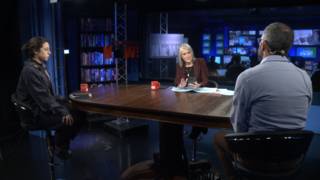
AMY GOODMAN: Welcome to Democracy Now!
MICHAEL POSNER: Nice to be here.
AMY GOODMAN: First, explain how you learned of these detentions facilities and where they are.
MICHAEL POSNER: Well, we spent several months talking both to family members of people who had been in or are in detention to local human rights groups in Pakistan, in Afghanistan, in Iraq and elsewhere, looking at media reports, trying to get information from the US government and going to other sources. It became clear to us that there are a number of facilities, we’ve identified at least 20 where people are being held. The Red Cross is not being notified of their detention. Their family members have no idea that they’re even being detained by the US. The Congress seems to have no idea of where these detention facilities are. And so our judgment is here that these facilities need to be brought out into the open. It doesn’t mean that everyone has to be publicly identified by their location, but somebody needs to know where these people are being held and there needs to be some safeguards to make sure that they’re not being abused.
AMY GOODMAN: So what exactly are you calling for right now?
MICHAEL POSNER: Well, we’re calling for really three major things. We asked Secretary Rumsfeld to do these three things. One is to say that for every person in US custody around the world, the International Red Cross should have information and access. Secondly, that family members of anybody detained by the US–immediate family members–ought to be told “We’re holding your husband, your son, your daughter, in detention.” And third, that the appropriate committees of Congress, the intelligence committees, armed service committees, ought to be told by the US government “This is our detention policy, this is where people are being held.”
AMY GOODMAN: We’re talking to Mike Posner, Executive Director of Human Rights first. Where are these facilities?
MICHAEL POSNER: A number of facilities are in Iraq and Afghanistan. Some are in Pakistan, at least one detention facility is in Jordan, although the government denies that there’s pretty clear evidence that the CIA is interrogating people in a Jordanian prison and there is a section of that prison where they have control. We’ve also had reports from other places that there are people being held on ships, there are people being held in the British Facility at Diego Garcia in the Indian Ocean and there are other reports that people have been held in Africa and other parts of the world.
AMY GOODMAN: In the last year and longer, there’s been a kind of legitimatized debate around the issue of torture. Always the question being posed, or the rationale, for example, someone like Alan Dershowitz, the Harvard professor, saying “if you know someone knows of a ticking time bomb, you have to do something about it.” What is your response to that?
MICHAEL POSNER: My response is there may be such an extreme circumstance and when there is, it’s up to whomever, whatever government official is in that situation to address it. But you don’t as a matter of law and policy legalize or justify torture in any circumstance. It’s a slippery slope and it has an incredibly negative, corrosive effect on law enforcement and on military discipline. If you start to say “These are the instances where torture is ok”, we know from experience around the world that once it’s justified in one situation, it becomes a matter of policy in many others.
AMY GOODMAN: Today the Guantanamo detainees–there are hundreds of them–are being read single-page statement that says that they are considered enemy combatants, but that they can appeal this decision, not have a lawyer, but have a military representative with them and go before a military tribunal. Can you explain how this is an answer to the Supreme Court ruling about these detainees?
MICHAEL POSNER: Well, it’s an answer, but not a very good one. The Administration is clearly trying to find the least possible safeguards that it can introduce to comply with the Supreme Court. But what they’re doing is basically saying “There are no lawyers, there is a US Military representative who has no loyalty to a client.” Nothing is confidential. And so it’s basically the shell of a proceeding without the substance or without the safeguards. It is not going to satisfy, in my judgment, what the Supreme Court said, which is there has to be a real hearing on the status of these prisoners.
AMY GOODMAN: So what happens now, if this is not an adequate response?
MICHAEL POSNER: I imagine that several or a group of the detainees–there are about 600 at Guantanamo–are going to file Habeas Corpus petitions and they are in those petitions that are going to challenge this military concoction, which is essentially not providing any, even a remote scope of due process, and the courts are going to have to take a look at it. This is going to drag on for months and months more. Meanwhile, many of the 600 people have been detained now for two and a half years.
AMY GOODMAN: The secret detention centers that Human Rights First exposed, at least their existence, who exactly is running them?
MICHAEL POSNER: Well in some cases, their US military bases are facilities. In some cases there seems to be the intelligence services, the CIA, defense intelligence, and others seem to be in control. In some cases, there are prisons in other countries run by other governments, say the Pakistanis or the Jordanians and they’re simply allowing access to or even giving a portion of the prisons over to the US to hold its prisoners in their custody. So, it’s a combination.
AMY GOODMAN: Well, Michael Posner, thank you for joining us. If people want to get your report on detention facilities, where can they go on the web?
MICHAEL POSNER: They can come to our web site, which is www.humanrightsfirst.org.
AMY GOODMAN: Thank you very much.



 Top
Top
Media Options