







 Watch Full Show

Related
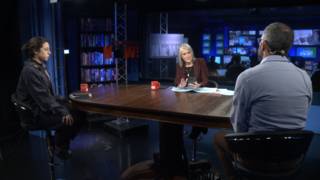
As the fate of the two Italian and two Iraqi humanitarian workers of the Italian organization “A Bridge to Baghdad” abducted last week hangs in the balance, we play an excerpt of an interview recorded in February 2004 with Simona Toretta, one of the Italian aid workers taken hostage. [includes rush transcript]
Italian Foreign Minister Franco Frattini is touring countries that neighbor Iraq in an effort to free two Italian aid workers who were abducted on September 7. The women, Simona Torretta and Simona Pari were kidnapped from their Baghdad office in broad daylight, along with Iraqi aid workers Raad Ali Abdul Azziz and Mahnouz Bassam. Two groups have taken responsibility for the kidnappings but no video or photos have been released. A deadline set by one of the groups, The Islamic Jihad Organization, expired Monday night with no word on their fate. The group said in a statement posted on the internet Sunday that they would be killed in 24 hours unless Italy withdrew its troops from Iraq. With more than 2,700 troops, Italy has the third largest military contingent in Iraq. Prime Minister Sylvio Berlesconni has said he will not pull out.
Meanwhile, numerous Islamic groups and scholars have publicly appealed for the release of the women, as has Palestinian leader Yasser Arafat. The head of the International Association of Islamic scholars issued a statement earlier this week calling on Muslims to fight the US in Iraq, but to release the women, saying they have nothing to do with the occupation.
A Bridge to Baghdad is the longest standing non-governmental organization operating in Iraq. It began working in the country in 1992, a year after the so-called Gulf War. In all of its time in the country, it has opposed the sanctions against Iraq, all of the US attacks on the country as well as the invasion and current occupation. Yesterday, Democracy Now! obtained an interview recorded in February with Simona Toretta. It was recorded by filmmaker and activist Francis Anderson. Here is Simona Torretta describing the night she arrived in Baghdad at the beginning of the US invasion.
- Simona Torretta, being interviewed in February 2004. Courtesy of Francis Anderson.
That was Simona Toretta speaking in February of this year. She is now being held hostage after being abducted on September 7. In the interview, she also talked about conversations she had with Iraqis over her years of work in Iraq.
- Simona Torretta, being interviewed in February 2004. Courtesy of Francis Anderson.
- Ornella Sangiovanni, is a coordinator of the Italian humanitarian group, A Bridge to Baghdad. Until the beginning of the invasion, she was the head of the organization’s anti-sanctions campaign. She has worked with A Bridge to Baghdad since 1996.
- Sign the petition
- More information on the case
Related Story
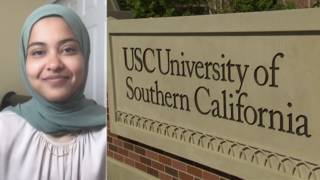
 StoryApr 18, 2024Meet USC Valedictorian Asna Tabassum: School Cancels Commencement Speech by Pro-Palestinian Student
Transcript
AMY GOODMAN: Yesterday, Democracy Now! obtained an interview recorded in February with Simona Torretta It was recorded by filmmaker and activist Francis Anderson. Here is Simona Torretta describing the night she arrived in Baghdad at the beginning of the U.S. invasion.
SIMONA TORRETTA: We reached Baghdad at 9:00 or 10:00. And when we reached Baghdad, there was the bombings. It was first impact was very hard. Very hard. I couldn’t recognize Baghdad at all.
FRANCIS ANDERSON: Were there bombings happening as you were driving in?
SIMONA TORRETTA: Yes. Yes. Me, last time that I was in Baghdad was one month ago. I found everything changed. Everything changed. I couldn’t recognize Baghdad this time. All of the shops totally closed. The city empty, dark, smoke everywhere. When I met my friends, they were just so surprised to see me, you know? They said, “Why are you coming here? It’s so dangerous for you. Go back in Italy. What are you doing here? Why you came? Are you crazy?” I say, okay, I cannot stay in Italy. I decided to come here because it’s part of my life.
AMY GOODMAN: That was Simona Torretta speaking in February of this year. She is now being held hostage after being abducted September 7. In the interview, she also talked about conversations she had with Iraqis over her years of work in Iraq. We’re going to go to the second excerpt, but first, Ornella Sangiovanni joins us. She’s coordinator of the Italian humanitarian group, A Bridge to Baghdad. We only have 30 seconds before we play this final clip, Ornella, what are you asking people to do, as we speak you to in Rome?
ORNELLA SANGIOVANNI: Well, what we are asking people to do is first of all to always remember that there are four hostages, that there are two Italian aid workers and two Iraqis. We are concerned for the lives of all four hostages and are asking people never forget that we have four people that have to go back safely to their families and loved ones.
AMY GOODMAN: And on that note, we’re he going to play the last excerpt of the interview with Simona Torretta before she was taken hostage.
SIMONA TORRETTA: When I talk with Iraqi people, they have always the same answer: “We are tired. We are tired of fight. We are tired of war. We want to be in peace. We just want to have peace in this country. We will never fight between us. We are too tired. We don’t have the energy. We don’t have the resource to fight. How I can fight if I don’t have money, I don’t have money for my family, I don’t have food for my family.” So, the main problem in the country now is the job, the occupation. There are many employees. So they are fighting. I mean, they are fighting against the C.P.A. because they are asking the C.P.A. to respect the responsibility to give jobs to the people, not to the American companies. To employees, the Iraqis in the reconstruction of the Iraqi country.
AMY GOODMAN: Simona Torretta, one of the four hostages taken on September 7. If you want more information and also there is a petition online to free them, you can go to freeourfriends.blogspolt.com. We’ll have it on our website at democracynow.org.



 Top
Top
Media Options