





 Watch Full Show

Related
Antonio Villaraigosa, a son of a Mexican immigrant, defeated incumbent Mayor Jim Hahn. Villaraigosa took about 59 percent of votes against 41 percent for Hahn, who beat Villaraigosa in a bitter 2001 election. [includes rush transcript]
The city of Los Angeles has elected its first Latino mayor in over a century. Antonio Villaraigosa, a son of a Mexican immigrant, defeated incumbent Mayor Jim Hahn.
Villaraigosa took about 59 percent of votes against 41 percent for Hahn, who beat Villaraigosa in a bitter 2001 election. Turnout was low across the city at about 30 percent. Hahn conceded shortly after midnight in a call to his opponent.
Villaraigosa said his victory was a moment of unity for a city where Latinos make up 46 percent of the population. At a victory party, he told supporters “I will never forget where I came from, and I will always believe in the people of Los Angeles.”
Villaraigosa dropped out of high school in East LA before paying his way through law school and rising to become the speaker of the state assembly. Hahn, on the other hand, comes from a powerful political dynasty and has been mayor since 2001. With last night’s defeat, Hahn became the first Los Angeles mayor to lose a reelection bid in over three decades and the first to be denied a second term since 1933.
Villaraigosa’s victory will make him Los Angeles’ first Latino mayor since Cristobel Aguilar in 1872 when the city was a frontier town emerging from its days as a Mexican settlement. Los Angeles is now the nation’s second largest city.
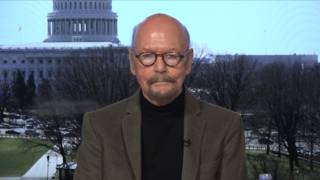
- Fernando Guerra, director of the Center for the Study of Los Angeles at Loyola Marymount University. Guerra is also an associate professor at LMU in the departments of Chicano studies and political science.
Related Story
 StoryApr 24, 2024Naomi Klein: Jews Must Raise Their Voices for Palestine, Oppose the “False Idol of Zionism”
Transcript
AMY GOODMAN: We go now to L.A. to speak with Fernando Guerra. He is the Director of the Center for Study of Los Angeles at Loyola Marymount University, an Associate Professor in Chicano Studies and Political Science. Welcome to Democracy Now!, Professor.
FERNANDO GUERRA: Well, thank you for having me.
AMY GOODMAN: Can you talk about the significance of this victory for Villaraigosa?
FERNANDO GUERRA: Well, it’s significant both in the short term and in the long term. It’s significant from L.A. politics and from Latino politics. This is a surprise from six months ago, I don’t think anybody would have been able to predict that. It’s the first time in over 70 years that a mayor has been denied a second term. And you know, in terms of Latino politics this is a trend that’s been happening here in Los Angeles, where we have seen more and more Latinos get elected at the federal, state and local level. There are now close to 500 Latino Council Members in the State of California. The county-wide sheriff is a Latino. The city attorney of the top — three of the top four cities in California are Latino: in San Francisco, Los Angeles and San Diego. So this just continues a trend of many localities in California electing Latinos. You also see Latinos being elected in four major cities: San Antonio, San Jose, Miami, Dade County. You saw Latinos make the runoff in New York, Houston, Denver, San Francisco. So, those major trends are national and certainly here in L.A. Then the particulars here in L.A. was that the mayor got himself into trouble with some very important constituent groups, and Antonio Villaraigosa was able to take advantage of that and coalesce with some of those groups. And it’s a stunning victory. I mean, it’s 60/40 that we’re seeing. These were the same two candidates four years ago, where Antonio Villaraigosa lost by eight points.
JUAN GONZALEZ: Fernando Guerra, I’d like to ask you, there were some switches in the constituency, or at least in the organized leaders of constituencies in this election. The last time around, Villaraigosa had basically unanimous support from the organized labor movement. This time around, many of the labor leaders supported Hahn, but at the same time many African Americans who previously had voted for Hahn switched over and voted for Villaraigosa this time. Can you talk a little bit about those changes in the support base? Although I understand that Villaraigosa did get the labor vote, he didn’t get the support of organized labor or many of the unions.
FERNANDO GUERRA: Yeah. I mean that’s what democracy is all about is the vote, not what leaders say, but what the voters do. Four years ago, he was very much a part of the union movement, the unions came out really strong in support of Villaraigosa. But as is the policy of unions not only in Los Angeles, but throughout the country, to continue to endorse incumbents who are very favorable, and they do this because they want to make sure that incumbents don’t look over their back — over their shoulder and not support union causes. They’re always telling them, look, if you are a good democrat or even a republican or independent, but you vote the union line, we will always support you. We will never vote against you. Even if our heart is with your opponent. And that was the case here in Los Angeles.
Mayor James Hahn was great with the union vote. He did everything that a — the union would want, so there was no reason for them not to support him. Unfortunately for the union leadership is, you know, the union memberships said, 'You know what? While Hahn may have been a good politician, Antonio Villaraigosa is one of our brothers. He came from the unions. He was a union organizer. He knows intuitively had what it is to be a union member.' And the union membership, both in the primary and in the general, overwhelmingly voted for Antonio Villaraigosa.
Really the big change is the African American vote. As we know in Los Angeles, New York and many other major cities there are tensions between African Americans and Latinos, and for a variety of reasons, mostly because of demographic shift, mostly because many African American communities see changes that are detrimental to them and the most visible change is oftentimes the Latino immigrant. And so, they’re cautious about this. And four years ago, they overwhelmingly voted for James Hahn because of that, but also in part because the Hahn family had a very strong legacy with the African American community. For a variety of reasons, mostly for the firing of the African American Police Chief, now Council Member, Bernard Parks, the black community little by little began going away from Hahn, and at the end of the day, the whole black leadership ended up endorsing Antonio Villaraigosa, from Congresswoman Maxine Waters to council members to Magic Johnson to many church leaders and business leaders. And it was so overwhelming that Hahn knew that he was in trouble.
AMY GOODMAN: Well, Fernando Guerra, we want to thank you very much for being with us, Director of the Center for the Study of Los Angeles, at Loyola Marymount University, Associate Professor in Chicano Studies and Political Science.



 Top
Top
Media Options