






 Watch Full Show

Related
Israeli bombs fell on an observer post for the United Nations peacekeeping force in Lebanon, known as UNIFIL. Four observers were killed in the blast which UN Secretary General Kofi Annan called “apparently deliberate.” [includes rush transcript]
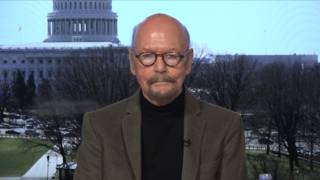
Israeli officials have agreed to launch an investigation into the incident but deny that the attack was intentional. We are joined on the telephone from Beirut by Timur Goksel. He is a former spokesperson and senior advisor for UNIFIL, the United Nations Interim Force in Lebanon. He teaches at Notre Dame University and the American University of Beirut.
- Timur Goksel, former spokesperson and senior advisor for UNIFIL. He has lectured internationally on Lebanese politics, and techniques of peacekeeping. Professor Goksel teaches at Notre Dame University and the American University of Beirut.
Related Story
 StoryApr 24, 2024Naomi Klein: Jews Must Raise Their Voices for Palestine, Oppose the “False Idol of Zionism”
Transcript
AMY GOODMAN: Timur Goksel, former spokesperson for UNIFIL, is on the line with us from Beirut. We welcome you to Democracy Now! Timur Goksel, are you with us?
TIMUR GOKSEL: Okay, yes.
AMY GOODMAN: Can you respond to the killing of the four UN workers in southern Lebanon?
TIMUR GOKSEL: It’s a big loss. It’s an unnecessary loss. These people had been working there for over 50-60 years in very [inaudible] positions. They are made up of armed officers. There are 42 nationalities there [inaudible]. And it’s a very sad loss. It’s a totally unnecessary loss, because of an [inaudible] action by the other side. That’s what it is. It’s heartbreaking, but it’s not the first time, unfortunately.
AMY GOODMAN: Can you explain what you mean, “this is not the first time”?
TIMUR GOKSEL: Well, they had UN soldiers and officers killed by [inaudible] before. One difference is that this time they attempt to apologize. In the past, they do not even apologize.
AMY GOODMAN: The Prime Minister of Israel is demanding an apology from the UN Secretary General Kofi Annan for saying that this attack on the UN base was deliberate.
TIMUR GOKSEL: I mean, I don’t know the technical background, what they mean by that. But I can only go by past experience and say that I cannot tell it’s deliberate or not. I don’t have that information. But what I know is, inside the mindset against the UN force in South Lebanon, [inaudible] very badly in the last few days, and that’s dripping down to their own people, who are not very famous for their [inaudible] anyway. And they just don’t care. That’s all I can tell you. I cannot say it is deliberate or not deliberate. What I can tell you is — and I’m not going to apologize for it — is, they don’t care. That’s it.
AMY GOODMAN: What do you mean, “they don’t care”?
TIMUR GOKSEL: They don’t care if they kill a UN man or anybody on the Lebanese side. For them, their own life is sacred, their own troops are sacred. They have a mission, and if the UN gets in the way of their efforts over there, if the UN gets hit, so be it. That’s what I’m saying.
AMY GOODMAN: Timur Goksel, yesterday on CNN the Consul General of Israel, in talking about UNIFIL, said that they were sympathetic to Hezbollah. Can you respond to that?
TIMUR GOKSEL: That is the biggest [inaudible]. UNIFIL came here in 1978. We were, because at that time there was no Hezbollah here, accused of being sympathetic to Palestinians. A peacekeeping force does not come here with pre-set enemies. There is no enemy [inaudible] in a peacekeeping force. UNIFIL is a peacekeeping force. It’s not a Israeli combat force or an anti-terror force, as they would like it to be. As long as we don’t serve their direct interests, they are going to denigrate it as much as they can.
What does it mean, the Hezbollah [inaudible]? Hezbollah people are the people — are Lebanese people. They are not from outer space. They live in those villages. And a peacekeeping force, first of all, primarily lives on its good will of the people, with the population of the area. And on this one, nobody can deny UNIFIL’s success. So if that includes — if I am [inaudible] village and at nighttime there’s [inaudible], that’s what? Am I a Hezbollah sympathizer? [inaudible] So, I mean, this is Israeli propaganda. [inaudible] focus. And they’ve been doing it all their life. I think they should [inaudible] they should find something more novel than this.
AMY GOODMAN: Timur Goksel, as you understand it, what exactly happened? Where is the UN base? And the allegation that the base was attacked and then when UN workers were going to help the bombing victims, they were attacked again. Can you explain the sequence of events? Timur Goksel? Timur Goksel? I think we have lost the former spokesperson for UNIFIL, speaking to us from Beirut, a senior advisor to UNIFIL in 1995, teaches at Notre Dame University and American University of Beirut, speaking to us again from Lebanon.



 Top
Top
Media Options