






 Watch Full Show


Guests
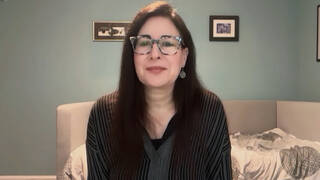
- Rozina Aliaward-winning journalist.
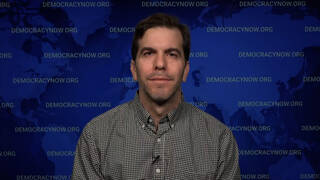
- Fahd Ahmedexecutive director of Desis Rising Up and Moving, a grassroots organization for South Asian and Indo-Caribbean immigrant workers and families in New York City.
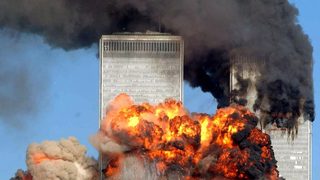
The attacks on September 11, 2001, unleashed a wave of Islamophobia in the United States that resulted in widespread harassment and persecution of Muslim Americans. In addition to vigilante attacks targeting Muslims or those perceived to be Muslim, there was also state repression including police roundups, community surveillance, prosecutions on often flimsy terrorism charges and mass deportations. Meanwhile, the wars launched by the United States in the aftermath of 9/11 have killed close to 1 million people in Afghanistan, Iraq, Pakistan, Yemen and elsewhere, according to the Costs of War Project at Brown University.
“There were so many responses to 9/11. One was obviously fear and grief and shock, but another was rage. And so much of that rage was towards Muslims and those who looked like Muslims,” says award-winning journalist Rozina Ali, author of Seasons of Fury: Four Families and the Rise of Islamophobia in America.
We also speak with Fahd Ahmed, executive director of Desis Rising Up and Moving, or DRUM, a grassroots organization for South Asian and Indo-Caribbean immigrant workers and families in New York City. He says that much of the anti-Muslim retaliation came from law enforcement.
“In New York City and in New Jersey and across the country, … we saw these massive roundups of mostly Muslim men or people that were perceived to be Muslim, and this included citizens, green card holders and undocumented people,” says Ahmed. “There was at least 1,200 men that were picked up this way.”
Transcript
AMY GOODMAN: This is Democracy Now!, democracynow.org, The War and Peace Report. I’m Amy Goodman, with Anjali Kamat.
ANJALI KAMAT: New York City Mayor Zohran Mamdani, the city’s first Muslim mayor, will be attending the 9/11 commemoration ceremony this week along with the families of victims. Former New York City Mayor Rudy Giuliani and former New York Governor George Pataki have led critics who say Mayor Mamdani should skip the ceremony.
Speaking on Newsmax, Giuliani criticized Mayor Mamdani for giving a symbolic pen to his chief legal counsel, Ramzi Kassem, during the signing of an executive order establishing September 11th as an official citywide day of remembrance and service. Ramzi Kassem previously represented several detainees at Guantánamo Bay. Giuliani then went on an Islamophobic tirade against Mayor Mamdani.
RUDY GIULIANI: Too many Americans fall for that Islamic propaganda, which is the reason they’re taking over certain parts of America and certain parts of Europe. They have every desire to take us over. This is not they want to be just another religion. They — they want to dominate us. That’s what they’re taught from the day they begin their extremist religious education. Mamdani is a clear — a clear supporter of that.
ANJALI KAMAT: A circulating online petition that expresses concern regarding Mamdani’s attendance at the ceremony has reached 100,000 signatures. This was Mayor Mamdani’s response to Giuliani’s remarks.
MAYOR ZOHRAN MAMDANI: What I want this week to be a focus on is on the families whose loved ones were stolen from them 25 years ago in the horrific act of terror of September 11th, and a focus also on the first responders who gave everything they could to this city and to the people who came together to try and help their fellow New Yorkers.
AMY GOODMAN: For more on Islamophobia after 9/11 and its impacts on communities here in the United States, we’re joined by two guests. Rozina Ali is an award-winning journalist, a New York Times contributing writer, author of the new book, Seasons of Fury: Four Families and the Rise of Islamophobia in America. She’s reported on the “global war on terror” from Egypt, Afghanistan, Iraq and Syria. And Fahd Ahmed is the executive director of DRUM. That’s Desis Rising Up and Moving, a grassroots group for South Asian and Indo-Caribbean immigrant workers and families in New York City. He also runs DRUM Beats, one of the first organizations to endorse Zohran Mamdani during his run for mayor.
We welcome you both to Democracy Now! Let’s begin with Rozina. You spent years writing this book. This is a sacred week here in New York, this 25th anniversary of 9/11. Talk about what happened after 9/11, the rise of hate against people of the Islamic faith.
ROZINA ALI: There is — there were so many responses to 9/11. One was obviously fear and grief and shock, but another was rage. And so much of that rage was towards Muslims and those who looked like Muslims. Around the country, we obviously saw a lot of hate crimes, violent killings of, actually, Brown people who were not Muslims, but they were actually Sikhs. There were also, in Bridgeview, outside of Chicago, a mass group of about 300 people who marched towards a mosque shouting “Death to Arabs!”
And I think what’s particularly fascinating, too, is what the government did, which was, in the weeks after, in the days and weeks after, they started arresting people. They started arresting Muslim and Brown men and boys from streets, from their homes, from their workplaces.
ANJALI KAMAT: I want to bring Fahd Ahmed into the conversation. Fahd, executive director of DRUM, Desis Rising Up and Moving, you’ve been a grassroots organizer with DRUM for over 25 years. Take us back to that immediate aftermath and that panic and fear that Rozina talked about. What was it like organizing? And what were people worried about? And what was going on?
FAHD AHMED: Yeah. Within a day or two after 9/11, we had printed a flyer and set up a hotline and said, “If you’re facing hate crimes, if you’re facing discrimination, if you’re facing targeting, please reach out to us.” And the calls that we started getting were largely related to people experiencing targeting by law enforcement. I remember one call being children calling us and saying, “My father left for work four days ago, and he hasn’t come home.” Women calling and saying, “The police burst down my door, and they grabbed my brother and my husband, and I don’t know where they are.” Workers called and said, “A black van pulled up and grabbed my co-worker and another guy off the street and just drove off with them.”
And so, in New York City and in New Jersey and across the country, but particularly in New York/New Jersey, we saw these massive roundups of mostly Muslim men or people that were perceived to be Muslim, and this included citizens, green card holders and undocumented people. In the beginning, it was just mass roundups. And then they held them, and then they tried to figure out: What is the reason that we’re holding them? And sometimes they would dig up, you know, false — like, they would make up some charges. But most of the time, they would be able to use immigration, immigrant status. And this was happening at — there was at least 1,200 men that were picked up this way.
AMY GOODMAN: I want to talk about one person. I want to talk about Mohammad Salman Hamdani, a New York City police cadet, trained as an EMT, who was headed to work at Rockefeller University with his Qur’an, then raced to ground zero — we only learned this later — attempting to save whatever lives he could at the twin towers, September 11, 2001. Democracy Now! spoke to his parents on the eve of the second anniversary of his death in 2003, as they joined hundreds in a quiet procession to ground zero. His mother, Talat Hamdani, remembered searching for him for days.
TALAT HAMDANI: The reality started to hit us at that moment. Something did happen to him. And the third day, we went down to the center that they had made for the families to come and write their — give the names of their loved ones. Armory, it was. Yes, it was the Armory. We went down there, and we registered his name, and we gave our swab samples for the DNA. And we made a flyer, searching for him. We put down his name as Sal Hamdani. My brother did not put down his name, the first name, Mohammad, for certain reasons. And we searched for him. Nobody had seen him.
AMY GOODMAN: So, while they searched for weeks through all hospitals, giving their own DNA samples, Salman’s parents, they then went to Mecca to pray. As they were there, the New York Post portrayed Salman as a possible terrorist. The Post article was headlined “Missing — or Hiding? — Mystery of NYPD Cadet from Pakistan.”
TALAT HAMDANI: You know, this is what the newspaper, the Post, printed, a very horrible heading, you know, “Missing — or Hiding?” And amongst the news that the way they presented it, it had, you know, insinuations that he was seen near the — at 11 a.m., he was seen near the Midtown tunnel. And is he really hiding? Most probably. Is he really missing? He’s not missing, but he’s hiding, and he could be one of the terrorists.
AMY GOODMAN: Talat Hamdani’s mother — Talat Hamdani told me how difficult it felt to be Muslim in the United States at the time.
TALAT HAMDANI: We have nieces and nephews in second and third grade, they were at that time. They were in second grade. And believe me, they changed their names. You know, Armeen became Amy, and one became Mickey, and the other one became Mikey, and the fourth one became Adam. And we asked them, “Why you change their names?” Then they said, “You know, because we don’t want to be called terrorists in the school. We are Muslims.” … So, it came at that moment, you know, like a year and half ago, like, “Islam” and “terrorism” were synonymous terms. And that is where I find myself defending myself, my faith, my people, my community, my fellow Americans who are Muslims. Islam and terrorism are not synonymous.
AMY GOODMAN: Talat Hamdani, the mother of Salman Hamdani. In fact, when she was looking for him in hospitals, she said his name was Sal, because she already knew there would be discrimination. The mayor would later apologize. The police commissioner would later apologize. He’s named in the USA PATRIOT Act. And the president, President Bush, would praise Salman for the hero that he was. How typical was this?
FAHD AHMED: It was quite, quite common. You know, a lot of the people that we were encountering in detention centers were people that were just picked out by other people who said that they look suspicious. And there was just a overall framework of anybody that looks Muslim is likely complicit, and let’s just round them up and figure things out.
And maybe just to give an example of to the extent, we heard about Talat searching for Salman. We found a Salman Hamdani in the detention center, and it turned out to be a 53-year-old man. And, you know, there was just tons of these stories of particular neighborhoods, and in particular, in New York City, Midwood and Bay Ridge, that there was just large numbers of men that just disappeared. And so — and it was really disappearance, because, as I mentioned, people would go to work and not come home.
And so, the campaign that we launched was Stop the Disappearances Campaign. And, you know, these people were held incommunicado, without access to lawyers, without being able to contact their families, some for six months, some for nine months. And there was almost, like, a whatever basic constitutional rights exist do not apply in this situation.
ANJALI KAMAT: Rozina, I want to go back to you. I know we’ve been talking about this post-9/11 dragnet and how many Muslim men were kind of caught in this. You’ve got the 1,200 men who were disappeared. But then you also had the special registration. So, talk about that and how many people were affected, and also how the Bush administration kind of used its immigration arm to deal with what they called preventing terrorism.
ROZINA ALI: So, we know one of the things that we have learned over the years is that one of the failures of 9/11, one of the reasons it happened, was because of an intelligence failure, not an immigration failure, except the Bush administration kept using immigration as a tool to clamp down on what they thought were terrorist threats.
What happened after the mass arrests of the 1,200 people was that the Bush administration thought that they should do something a bit more systematic and something perhaps a bit more orderly. And they created what is called the National Security Exit-Entry Registration System, NSEERS, which was basically a registry for men and boys of, you know, at least 15 years of age from about two dozen Muslim-majority countries. They had to register with the government. The result of that was that about 80,000 people registered. Thousands of them were deported, and not a single one was thought to — was found to have ties with terrorism. And there has been no apology about that.
And it’s interesting, because I actually — years later, I interviewed a few former officials, asking about the NSEERS system, and I found two responses. One main response was a lot of them didn’t remember that this — that the Bush administration had instituted this. It wrecked so many lives, but officials just have forgotten. But the other thing, the other response I usually get is, “We did what we had to do, and it was necessary. Civil rights may have been violated, but we did what was necessary.” The problem is, I don’t think it was necessary. My reporting has found that, actually, we didn’t find terrorists this way at all.
AMY GOODMAN: We’re going to go into the four families that you profile in Seasons of Fury, Rozina Ali, award-winning journalist, New York Times contributing writer. And we are also speaking with Fahd Ahmed, the executive director of DRUM, Desis Rising Up and Moving, on this week of the 25th anniversary of the 9/11 attacks and what happened after. Stay with us.
[break]
AMY GOODMAN: “Jaano Jot” by Sonny Singh, performing in our Democracy Now! studio. This is Democracy Now!, democracynow.org, The War and Peace Report. I’m Amy Goodman, with Anjali Kamat. Our guests are Rozina Ali, author of Seasons of Fury: Four Families and the Rise of Islamophobia in America, and Fahd Ahmed, the executive director of DRUM, Desis Rising Up and Moving. Anjali?
ANJALI KAMAT: Rozina, you write about the long shadow of post-9/11 use of terrorism prosecutions and the material support laws. And you write — one of the families you write about is the family of Matin Siraj, and he was a young Pakistani immigrant. In 2007, Siraj, then just 24, was sentenced to 30 years in prison for plotting to bomb the Herald Square subway station in New York City. Attorneys for Siraj said he was set up by a police informant who pushed the idea of bombing. Democracy Now! spoke to his attorney, Martin Stolar, soon after the sentencing. If we could just go to that clip? Siraj — while they get that clip ready.
ROZINA ALI: So, Matin Siraj was living in New York City. He was living in Queens and working in Brooklyn at his uncle’s Islamic bookstore. And this was during the time of, obviously, the Iraq War. There was a lot of conversation about foreign policy and what the U.S. was doing. Matin was very vocally critical. And he was visited one day by a man who turned out to be an undercover NYPD informant, who befriended him over months and goaded him towards a plot to blow up Herald Square.
Now, it is worth remembering and recognizing that there was actually no details of the plot. There were no weapons. There was no date or time set for the plot. And perhaps most critically, Matin actually tried to back out of this plan multiple times. And yet he was still arrested by the NYPD, convicted and eventually sentenced to 30 years in prison.
ANJALI KAMAT: We have that clip ready. This is his lawyer, Martin Stolar, speaking to Amy Goodman back in 2007.
MARTIN STOLAR: This young man becomes the symbol of terrorism in the United States. In essence, what we have is the New York City Police Department creating a crime so they can solve the crime and claim a victory in the war on terror. That is not the way to investigate terrorism, as far as I’m concerned.
AMY GOODMAN: Is he recorded on tape saying, “I don’t want to do this. I’m going to talk to my mother”?
MARTIN STOLAR: Oh, yes. He’s recorded on videotape, saying, “Wait. I better not do this. I have to check with my parents to see if I really want to go forward with this.”
ANJALI KAMAT: So, he says he has to check with his parents. And the attorney for the case, and you, as well, talk about the use of informants. So, how prevalent was the use of informants at this time? And what did this do to the sort of, you know, community of Muslims in the U.S., who could be — you know, who were dealing with infiltration, being surveilled? Can you talk about how all of that was related to the prosecutions?
ROZINA ALI: So, what’s fascinating to me is the difference between the pre-9/11 era and the post-9/11 era. Before 9/11, law enforcement really did not have good or close relationships with the Muslim community, nor did they have a lot of knowledge about Islam or the Arab world. After 9/11, they were in desperate need of any ties to Muslims, and so they started recruiting informants. And they could recruit informants by paying them or by bribing them and saying, “We’re going to speed up your immigration status or application,” or they would use a stick approach and say, “If you don’t help us, we might make things more difficult for you.”
Eventually, the FBI amassed a base of about 15,000 informants, which is absolutely wild. But what’s so critical is that Muslims became scared of going to the mosque, of going to bookstores, of going to cafes, because these undercover informants were everywhere. They were infiltrating practically every restaurant and cafes, certainly in the Tri-State area, but also around the country.
You know, we have used informants in the past. The FBI certainly has. But in those cases, usually an informant has a tie to a mafia member or a gang member. After 9/11, the only tie that informants had to another Muslim was that they were Muslim.
ANJALI KAMAT: Fahd, you’ve worked with Matin Siraj’s family. What was the impact of his arrest and his being sentenced to 30 years in prison on the community? And, I mean, 25 years after 9/11, what’s changed for the communities you’re working with, working-class South Asian and Muslim communities?
FAHD AHMED: Yeah. We worked with the Siraj family for more than 20 years, and first and foremost, this has absolutely devastated the family. Every day that Matin has spent in prison, his mother and his family have been in prison with him. Every single day. The family, it becomes hard to find work. Your own family becomes afraid: Do I stay in contact with them, or do I not? If I stay — if I support them, will I get targeted? And that same dynamic plays out in the community. People that were your neighbors now are like, “I’m not sure who — should I talk to this family? Who should I talk to?”
And what we saw was the complete devastation of the social fabric in Muslim communities for many, many years, for almost two decades, to where people were afraid to have political conversations. And, you know, if you know anything about Muslim communities and masjids, like, it’s — that’s pretty much all people do, is you do the ritual, like, religious things, and then you sit around and talk about what’s happening back home, what’s happening here, what do we think about the war, what do we think about this. And there were large number of places where people said, “No political conversations allowed.” You know, there was like Muslim student associations that started putting up signs: “Political conversations here are not allowed.”
And all of this was happening at a time that several Muslim countries were being targeted by U.S., U.S. wars, while civil rights of Muslim communities were being violated. And so, our communities were in this difficult situation that at the very moment where people needed to defend themselves, there was a high level of uncertainty on: Can and should we talk, or should we not talk? Should we engage in political activism, or should we not?
AMY GOODMAN: And this, of course, all didn’t begin 9/11. Rozina, you write about Abdeen Jabara, co-founder of the American-Arab Anti-Discrimination Committee and longtime leader of the National Lawyers Guild. In the 1970s, he exposed the Nixon administration’s surveillance program against Arab Americans and forced the NSA to admit it had been spying on him, Abdeen, since 1967. We spoke to him in 2013 about his groundbreaking case.
ABDEEN JABARA: I had been very, very active in Palestinian support work. And one day I read in Newsweek magazine, in the Periscope section, that 26 Arabs in the United States had been targeted for surveillance, electronic surveillance. So, I thought, surely, some of those had been clients of mine or had talked to me on the phone about issues and so forth. And that’s when I brought the lawsuit. …
I was surprised, after all the revelations about the Snowden-NSA brouhaha, that nobody had looked back at what had occurred back in the — in the ’70s to show that at that time it came out in the press that over 1,600 Americans had been surveilled by the NSA.
AMY GOODMAN: So, that’s Abdeen Jabara, former head, founder of American-Arab Anti-Discrimination Committee, and at the time, we had a lower third that said “friend of Alex Odeh.” Rozina, explain.
ROZINA ALI: So, Alex Odeh was one of the vice presidents of the ADC for the West Coast chapter. And in 1985, there was a bomb in that office that killed him, unfortunately. And his murder was never solved, although at the time the FBI did suspect the Jewish Defense League, and there was actually a lot of conversation about the rise of terrorism in the U.S. against Arab Americans coming, emanating from the JDL. Unfortunately, what has happened in these intervening years since then is that terrorism has become more and more aligned with Islam, and we forget that terrorists can be from any group or any ethnicity or any religion. But really, what this long history shows us, that how we think about terrorism and Arabs and Muslims has been a problem much longer than 9/11.
ANJALI KAMAT: And where do you see — I mean, your book is called Seasons of Fury, and you trace the kind of changing Islamophobia both through the institutions and practices and bigotry of people, but also different administrations. Where are we today, 25 years later? I mean, this is also a time of the rise of so many Muslim politicians, outspoken Muslim politicians, including our own mayor, Mayor Mamdani, who is once again facing Islamophobic attacks.
ROZINA ALI: I would say we’re probably at a really — a worse place than we have ever been, because it is so accepted, and policymakers are peddling anti-Muslim rhetoric. But just even take the example of Giuliani. It’s funny to me that he apologized to Talat Hamdani, because, years later, he’s essentially doing the same thing over again towards Mayor Mamdani by saying Muslims cannot be victims of 9/11, right? Muslims can only be the perpetrators. And this is a narrative that has been repeated over and over again, and certainly around election season.
AMY GOODMAN: And to be clear, this is about Giuliani and former Governor Pataki saying that Mamdani, the mayor of New York, should not be allowed at the ceremonies for the 25th anniversary of the 9/11 attacks.
ROZINA ALI: Exactly, correct, yes. And one wonders: How much longer do Muslims have to apologize for 9/11?
ANJALI KAMAT: And, Fahd, as you look back on these 25 years, and, you know, your organization, DRUM Beats, was one of the first to endorse Zohran Mamdani, you know, how do you see the community having changed, I mean, from that time of fear and putting their heads down to now having a political voice?
FAHD AHMED: Yeah, I think the — there’s divergent consequences. On one hand, we are seeing a resurgence of Islamophobia at levels that is unprecedented, and at the same time, it’s not as effective as it used to be. And I think part of what we see, you know, the emergence of Mayor Mamdani and similar politicians, a lot of it is because of a lot of the organizing efforts that built the foundations in the aftermath of 9/11, that built the communities, and also just the humiliation and the resentment that the communities had for being targeted for so long, that part of the ways of, like, being able to resist back is, like, “All right, it’s — we’ve been through it enough. We’re going to organize ourselves, and we’re going to support people that are going to be much more aligned with the experiences and the perspectives of our communities.”
And so, part of what we’re seeing in the rise of more Muslim politicians — and, you know, I don’t subscribe to identity politics in terms of just identity is enough — but there is a confidence around, like, “I’m not going to hide it anymore.” And I think that deeply resonates with our communities, who felt for two decades that they had to hide it. And I think now we’re sort of seeing the response to that.
AMY GOODMAN: We want to thank you both for being with us. Thank you to Rozina Ali, author of Seasons of Fury: Four Families and the Rise of Islamophobia in America, and Fahd Ahmed, executive director of DRUM, Desis Rising Up and Moving.
That does it for our show. On September 17th, I’ll be going home to Bay Shore, New York, on Long Island for the screening of Steal This Story, Please! — check our website at democracynow.org — and then September 22nd at the IFC. I’m Amy Goodman, with Anjali Kamat.



 Top
Media Options