






 Watch Full Show

The Bush administration is asking Congress for a second major expansion of federal surveillance powers that wouldallow for the “disruption” of what the attorney general calls suspected terrorist groups. The proposal would loosenone of the most fundamental restrictions on the conduct of the FBI that were imposed in the 1970s after the death ofJ. Edgar Hoover and the disclosures that the FBI had run a widespread domestic surveillance program, Cointelpro, tomonitor the Black Panthers, Rev. Dr. Martin Luther King, Jr, and antiwar activists.
Since then, the guidelines have defined the F.B.I.’s operational conduct in investigations of domestic and overseasgroups that operate in the United States. The rules have largely kept the F.B.I. out of politically motivatedinvestigations, protecting the bureau from lawsuits.
Cointelpro was the FBI’s secret program of the 1960s and 70s. Though the name stands for “CounterintelligenceProgram,” the targets were not enemy spies but rather “radical” political activists inside the US, and the FBI didn’trestrict itself to mere intelligence gathering. When traditional modes of repression like exposure, blatantharassment, and prosecution for political crimes failed to counter the growing insurgency of the 60s, the FBI turnedto infiltration and violence. Cointelpro’s legacy created a U.S. political police force that actively sabotaged andbroke up progressive political activity.
COINTELPRO was discovered in March 1971, when secret files were removed from an FBI office and released to newsmedia. To control the damage and re-establish government legitimacy in the wake of Vietnam and Watergate, Congressand the courts compelled the FBI to reveal part of what it had done and to promise it would not do it again. The FBIsecretly instructed its field offices to propose schemes to “misdirect, discredit, disrupt and otherwise neutralize”specific individuals and groups. Close coordination with local police and prosecutors was encouraged. Finalauthority rested with top FBI officials in Washington, who demanded assurance that “there is no possibility ofembarrassment to the Bureau.” More than 2000 individual actions were officially approved.
The “Cointelpro papers” reveal ongoing, country wide CIA-style covert action–infiltration, psychological warfare,legal harassment, and violence–against a very broad range of domestic dissidents.
Guests:
- Ward Churchill, is a longtime native rights activist, a leader of the Colorado chapter of the AmericanIndian Movement, Coordinator of American Indian Studies for the University of Colorado/Boulder, and author of manybooks, including ??The Cointelpro papers: Documents from the FBI’s Secret Wars Against Dissent in the UnitedStates.
- Akua Njeri, former Black Panther Party member, widow of Black Panther Fred Hampton, and survivor of theDecember 4, 1969 Chicago police and FBI raid during which Fred Hampton was killed. Njeri, who was nearly 9 monthspregnant, was injured during the raid. Fred Hampton, Jr. was just released from prison this September.
- Chip Berlet, senior analyst at Political Research Associates, an independent research center thatresearches and analyzes the political right in the U.S. Chip has long researched the history of political repressionin the U.S. and has compiled an online guide “Security for Activists: Overcoming Repression.”
Related link:
Related Story
 Web ExclusiveOct 28, 2016Roundtable: Four Freed Black Panthers on Party’s Legacy & Members Still Behind Bars 50 Years Later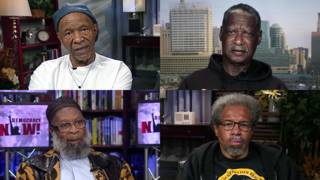



 Top
Top
Media Options