






 Watch Full Show

Related
Now we are going to go back in time to Olympics past. During the 2000 Olympic summer games in Sydney, when Aboriginal Australian Olympic sprinter Cathy Freeman lit the cauldron that signified the beginning of the games, Democracy Now! interviewed two of the most remembered Olympians of all time, bronze medallist John Carlos and gold medallist Tommie Smith. Together they helped create one of the defining moments at the 1968 Olympic games in Mexico.
The 1968 Olympics were among the most controversial Olympics ever held — buffeted by the Vietnam War, the DemocraticConvention in Chicago, and the Soviet invasion of Czechoslovakia. The U.S. Civil Rights movement was grappling with the aftermath of the assassination of Martin Luther King. And ten days before the Olympics were scheduled to open inOctober, scores of Mexico City University students were killed by army troops.
But officials at the Olympic Games managed to quell any disruption until two black Americans, Tommie Smith and John Carlos, who finished first and third in the 200-meter run, bowed their heads and, at great personal risk tothemselves, raised their fists in the Black Power salute during the national anthem as a protest against racism in the U.S.
They were immediately thrown off the team by the U.S. Organizing Committee. Thirty years have passed since that bold demonstration. We go now to a Democracy Now! interview with the two medalists. I asked John Carlos to describe the scene at the 1968 Olympic ceremony.
Guests:
- John Carlos, Bronze Medalist 200m Sprint at the 1968 Mexico City Olympics.
- Tommie Smith, Gold Medalist 200m Sprint at the 1968 Mexico City Olympics.
Related links:
Related Story
 Web ExclusiveOct 12, 2011Part 2: John Carlos, 1968 U.S. Olympic Medalist, On the Response to His Iconic Black Power Salute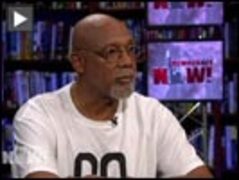



 Top
Top
Media Options