











 Watch Full Show

Related
Republicans in the House of Representatives yesterday changed their rules to allow Majority Leader Tom DeLay to keep his post even if a grand jury indicts him. We speak with Lou DuBose, author of The Hammer: Tom Delay, God, Money and the Rise of the Republican Congress. [includes rush transcript]
Emboldened by their success in the November 2 election, Republicans in the House of Representatives yesterday changed their rules to allow Majority Leader Tom DeLay to keep his post even if a grand jury indicts him. A Texas grand jury is investigating whether Delay committed campaign finance violations in 2002 when he helped state Republicans gain control of the Texas State House. In September a Texas grand jury indicted three political operatives with ties to Delay as well eight companies who made donations to a political action committee created with help from Delay. Yesterday’s vote by GOP lawmakers was held behind closed doors and was unrecorded. It effectively overturns a 1993 party rule that required leaders who are indicted to step down. DeLay told reporters yesterday he doesn’t expect to be indicted but supported the rule change.
The Republicans” defended their vote yesterday, saying that Travis County District Attorney Ronnie Earle is on a partisan witch-hunt against DeLay and that all they’re doing is taking steps to prevent Democrats from dictating the leadership of their caucus. DeLay himself says that Earle is “trying to criminalize politics and using the criminal code to insert himself into politics.” DeLay is also deploying a team of Republicans to wage a PR war against the District Attorney. New York’s Peter King called Earle a “runaway prosecutor,” while Henry Bonilla of Texas labeled him a “partisan crackpot district attorney.”
But in a recent New York Times profile of Earle, the paper points out that during his tenure, he has prosecuted 12 Democratic officials and 4 Republicans. Earle is quoted as saying, “The only people I antagonize more than Republicans are Democrats.”
House Minority Leader Nancy Pelosi, of California said, “Republicans have reached a new low. It is absolutely mind-boggling that as their first order of business following the elections, House Republicans have lowered the ethical standards for their leaders.”
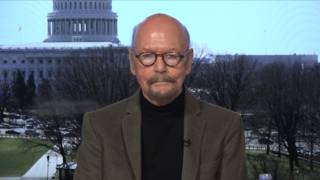
- Lou Dubose, author of a new political biography on Tom Delay called The Hammer: Tom Delay, God, Money and the Rise of the Republican Congress.
Related Story
 StoryApr 24, 2024Naomi Klein: Jews Must Raise Their Voices for Palestine, Oppose the “False Idol of Zionism”
Transcript
AMY GOODMAN: We turn to Lou DuBose, the author of the new political biography on Tom DeLay called The Hammer: Tom DeLay, God, Money and the Rise of the Republican Congress. Welcome to Democracy Now!, Lou DuBose.
LOU DUBOSE: Glad to be here.
AMY GOODMAN: Can you explain what exactly Congress did yesterday?
LOU DUBOSE: Well, I think it is terribly embarrassing, that the first act that they do is protect their leadership, and they’re not worried about Hastert or Roy Blunt being indicted. They’re worried about Tom Delay, the very real possibility that he is going to be indicted. They passed a never been indicted — they lowered the never been indicted standard and I think it signals that he’s — if he weren’t going to be or if he weren’t afraid, if there is not a real concern he will be indicted here in Texas, why would they have done this? I think it is really an embarrassing moment for the Republican leadership.
AMY GOODMAN: Well, what about this idea of innocent until proven guilty?
LOU DUBOSE: Well, of course he is innocent until proven guilty. But they passed this rule, and I don’t think that you want a leader indicted — indicted member of the leadership serving in leadership while he is indicted. This is not a political witch hunt. Despite the overblown rhetoric, there is a very strong case Ronny Earl has. You know, he has the facts and he has the law on his side. I’m turning up in the civil pleadings, Amy, memos written to, a letter to Tom DeLay from a Oklahoma corporation that says, dear Congressman DeLay, enclosed is the 25,000 dollars check that we promised. That’s illegal. You can’t raise corporate money and spend it in Texas on an election. It is very simple. The same is true, and the Washington Post has an unrelated batch of documents, Enron memos, Enron document dump, Tom DeLay asking for $150,000 from Enron. Corporate and individual contributions to be used in Texas. So, there is a real strong case here. And to dismiss it as a political witch hunt is a — the criminalization of politics is, I think, indicative of how desperate they are to try to intimidate a D.A. who is kind of the last man standing here in Texas.
AMY GOODMAN: You’ve also written an interesting piece about Alberto Gonzales, the nominee to be Attorney General, the White House counsel for President Bush. Can you just briefly summarize it?
LOU DUBOSE: Yeah. I mean, the frightening thing about Al Gonzales is that — I mean the unsettling thing about Albert Gonzales, this is a transactional corporate lawyer who the Bushes found in Enron’s law firm, that’s not that big a deal. But he has that very, very little limited legal experience and they shape him into what they wanted him to be. He is kind of a brown Pigmalion. A Hispanic, smart guy, Harvard law, good family, Catholic, grown up Catholic, Christian values. But limited legal experience and his only boss has been George W. Bush. He’s never said 'no' to Bush. So, consequently when Bush wants a torture memo for, you know, can we suspend the Geneva Conventions, he says 'yes' as he did. This is a guy who’s now the attorney general supposed to be in line for the vote for — supreme court and his entire career in public service has been shaped by George W. Bush. He’s been his only boss.
AMY GOODMAN: Finally, the significance of all of these cabinet appointments that President Bush is making now. Being his closest — the inner circle of the White House, many of them coming with him from Texas, what does this mean?
LOU DUBOSE: It means that it is all — this was Albert Gonzales, and he is a terrific guy. He is a decent guy. But he is a 'yes' man. You know, this means that the dissent in the cabinet, that the robust argument that one would expect in a cabinet are from White House advisers with the departure of Colin Powell is now gone. You know, don’t look for Al Gonzales or, you know, the new White House counsel is Harriet Miers. Well, she was George Bush’s personal lawyer when he was doing baseball deals and when he was dealing with legal affairs in Texas. He has essentially brought the family together to surround him and that the real danger is with, you know, with Margaret Spelling. She was a school board administrator, a school board lobbyist here in Texas. All these people are people whose political careers who are in Washington because, just like George Bush and Karl Rove, they are in Washington because Bush brought them there. So you have a lack of, you know, the echo chambers is a Washington political cliché. But you have no one to say 'no' to the President, and this is a President very obviously who needs someone to say 'no' to him or to say 'wait a minute, Mr. President, this is not the right advice.' Well, that’s all gone.
AMY GOODMAN: Lou Dubose, I want to thank you for being with us. Author of the new political biography of Tom DeLay called The Hammer: Tom DeLay, God, Money and the Rise of the Republican Congress. Thank you for joining us.
LOU DUBOSE: Thank you, it was my pleasure.
AMY GOODMAN: This is Democracy Now!



 Top
Top
Media Options