







 Watch Full Show

Related
Guests
- Donald Payne(D-NJ) questioning Assistant Secretary of State Roger Noreiga.
- Rep. Mark Foley(R-FL) questioning Assistant Secretary of State Roger Noreiga.
- Rep. Charles Rangel(D-NY) questioning Assistant Secretary of State Roger Noreiga.
- Rep. Maxine Waters(D-CA) questioning Assistant Secretary of State Roger Noreiga.
Two days after President Aristide defied the Bush administration and the Haitian government by returning to the Caribbean, we go to Kingston, Jamaica to get a report from a veteran Jamaican journalist. [includes transcript]
President Aristide is spending his third day in Jamaica, where he returned Monday two weeks ago after being taken by force to the Central African Republic in what he calls a US-orchestrated coup d’etat.
By returning to the Caribbean, the Haitian president defied Washington as well as the newly installed Haitian government.
The US-installed prime minister of Haiti, Gererd Latortue, said Monday he was recalling Haiti’s ambassador to Jamaica and putting relations on hold over Aristide’s return to the region. He also suspended Haiti’s participation in Caricom.
Latortue reportedly settled on a list of 13 cabinet members yesterday to form an interim government in Haiti. None of the positions include any members of Aristide’s Lavalas Family party. Latortue had pledged earlier to include Lavalas members in order to form a government of national reconciliation.
Jamaica says it will not recognize the new Haitian government at least until after a regional summit of the Caribbean Community scheduled for next week.
In addition, Venezuela is also refusing to recognize Latortue’s government. Venezuelan President Hugo Chavez said, “The president of Haiti is called Jean-Bertrand Aristide.” Chavez offered asylum yesterday to Aristide, who initially fled to Caracas after the first coup in the early 1990s.
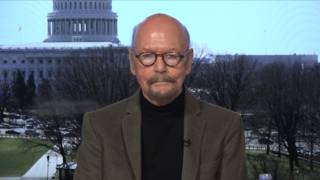
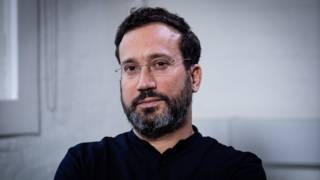
- John Maxwell, a veteran Jamaican journalist. He has covered Caribbean affairs for more than 40 years. He is currently a columnist for The Jamaica Observer. He joins us on the phone from Kingston.
Related Story
 StoryOct 19, 2022Venezuelans Seeking Asylum Are Now Turned Away at U.S. Border as Biden Expands Trump-Era Title 42
Transcript
AMY GOODMAN: We go now to Jamaica, to a veteran journalist. John Maxwell covered Caribbean affairs for close to half a century. Currently a columnist with the “Jamaica Observer,” joining us from Kingston where Jean-Bertrand Aristide first touched down on Monday. Welcome to Democracy Now!
JOHN MAXWELL: Good morning. How are you?
AMY GOODMAN: Very good —
JOHN MAXWELL: Congratulations on your intrepid adventure.
AMY GOODMAN: Well, can you talk about Jamaica right now, the response to the Aristides being there and, at least at this point, Jamaica not recognizing the new government of Haiti?
JOHN MAXWELL: Well, first of all, Jamaica is officially, shall we say, divided along political lines. The official opposition does not want Aristide here and the people on the government side, the People’s National Party members, which is a majority, want him here. We are — we welcome him as a brother, and we believe that he deserves to be back near his roots, although we believe that Haiti’s roots and Jamaica’s roots are more or less the same. So, we don’t — I don’t think he needs to hear anything from any Jamaican, even though some of us are not enthusiastic about it, but most of us are glad, I believe, that he’s found a refuge here. As far as the recognition is concerned, first of all, Mr. Latortue suspended relations with CARICOM because CARICOM had already suspended relations with Haiti. They refused to recognize the government and they said that, originally, that they were — they wanted a democratic restoration of democracy, which suggested to me that they were then backing the restoration of Aristide. But it seems fairly clear to me that pressure on the United States, while it has been able to force the Jamaican government to backtrack on the decision to give Aristide some sort of sanctuary here, has made them very nervous about the business of not recognizing the new government. What I cannot see: legally, they are committed not to recognize a government which has taken power by force. They are committed to recognize the lawful president of Haiti, who is President Aristide. There is only one president of Haiti. And so life has been very difficult when CARICOM meets because I believe CARICOM is not — they’re not all entirely on the same page in regards to this. I think there are some people who back Aristide and some people who are very nervous about the American connection. And, you know, the whole episode tells you a great deal about the American foreign policies, which does not depend so much on negotiation and, you know, friendship, but more on the exercise of force and the threat of force or coercion. In the case of the Caribbean, because we are all poor, we’ve all been castrated by the I.M.F. So we all depend on foreign currency, foreign loans, so we’re all highly vulnerable to whatever happens in the United States. So, we are, you know, almost in the position where they can make us offers we can’t refuse. It takes somebody of great intentional fortitude to tell the Americans to go peddle their papers, which is what I believe we should be doing. And I’m not sure that’s what’s going to happen.
AMY GOODMAN: Very quickly, the U.S. Ambassador to Haiti saying that Jean-Bertrand Aristide shouldn’t return within 130 miles of Haiti, and the warning of the U.S. government to P.J. Patterson, saying that he is taking a risk and a responsibility here.
JOHN MAXWELL: Well, I didn’t know that Mr. Bush was the prime minister of Jamaica, or that Mr. Foley was the prime minister of Jamaica. I think that what they’re doing is entirely improper, and I believe a lot of Jamaicans feel that way. I think that when the Ambassador to Jamaica warned the prime minister about risks that he was taking, I think that this is improper. I think this is an interference in the internal affairs of Jamaica. And also it seems to me that it is illegal because we have all signed on to various declarations in the inter-American system that we’re going to support democracy and that we’re not going to support use of force.
AMY GOODMAN: John Maxwell, on that note I want to thank you very much for being with us. Veteran





 Top
Top
Media Options