







 Watch Full Show

In addition to laying blame for counterterrorism failures on the Clinton administration, Ashcroft also defended the controverisal Patriot Act, as well as the Detain and Clear policy for immigrants. We speak with Kate Martin of the Center for National Security Studies. [includes rush transcript]
BOB KERREY, COMMISSION MEMBER: I trust that you can help me with an open mind — try to figure out where we need to preserve the Patriot Act and where we may have some provisions in there we actually don’t need. I mean, just generally, I’m very nervous about giving government too much power, frankly. And in the long-term — I don’t need to lecture you on that, but I get nervous about giving the government too much power. And it seems like the Patriot Act gave the government an awful lot of power over American citizens.
JOHN ASHCROFT, ATTORNEY GENERAL: Let me comment that in large measure, the Patriot Act extended powers in the fight against terror that were already well- understood powers in the fight against drugs and organized crime, so that we weren’t treading down new constitutional territory. The multi-point wire tap or the roving wire tap had been in existence for 14 years and 15 years. And the ability, for instance, to subpoena business records from grand juries had been in existence for a long time. Now the FISA provisions that relate to it are different from grand juries. A grand jury, frankly, operates with the U.S. attorney or an assistant U.S. attorney reaching over on a stack of forms and filling it out, and taking it out and serving it. It’s never seen by a judge unless someone resists it or protests it. Under FISA, you can’t have an order without first seeing the federal judge. Or unless it’s an emergency order, and then it has to be brought before a judge within 72 hours. So there’s a lot of safeguards here. I’d like to talk to you about it. It is important to our national security.
ASHCROFT: I would love to comment on that. We did not detain anyone that was not in violation. So people who are detained were violators of the law. And our history has been that when you detain people for immigration violations or you charge them, if you don’t detain them, they go, they just evaporate. Eighty-five percent of all people charged with violations, if they are finally adjudicated guilty, if you haven’t detained them, they just merge into the culture. Ninety-three percent of the people who come from terrorist-sponsoring states have the record of absconding, so they go into the culture. We couldn’t afford to have a situation like that with individuals who are detained in conjunction with the massive investigation following 9/11. We had to hold them, and we did.
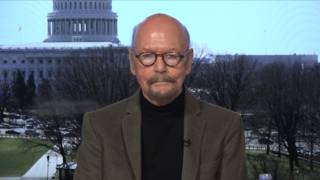
- Kate Martin, Director of the Center for National Security Studies.
Transcript
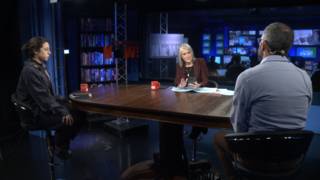
AMY GOODMAN: Attorney General John Ashcroft being questioned by 9-11 commission member Bob Kerrey, Kate Martin on the phone with us. She is the Director of the Center for National Security Studies, your response.
KATE MARTIN: I think that Ashcroft’s testimony highlights the basic problem in their counterterrorism approach, both before September 11 and still to this day. Which is that the FBI and now this Attorney General failed and refused to distinguish between individuals — those few individuals who are actual terrorists, and a large number in this case of simply immigrants from American Muslim countries. In the past, Palestinian activists, for example, who the government can kind of claim are the subject of some terrorism investigation, so, what you have is before September 11, they target people who have nothing to do with planning attacks. And then they blame it on — their failure to find the people on made-up legal barriers. After September 11, they say, “Oh we need basically limitless powers. We have to share every piece of information about everybody between the CIA and the FBI, and we have to arrest and detain 800 people who Ashcroft forgot to mention had nothing to do with terrorism.” When he, when he’s talking about they were in violation, they were in violation, perhaps, of technical immigration laws. Still, the commission needs to focus on how do we get the FBI to focus on real terrorists, and not go after the people they have always gone after, those who look like terrorists to the agents in charge.
AMY GOODMAN: I refer people to our program yesterday where we spoke for half an hour to Farouk Abdel-Muhti, who is a Palestinian activist who was picked up April 26, 2002, after being on Pacifica station WBAI over issues of the occupied territories. They ransacked his apartment as he was on once and picked him up. He has just been released after almost two full years in jail, in detention. He was never charged. He was never deported. A judge simply ordered his release. How unusual is that, Kate Martin?
KATE MARTIN: Well, it turns out that since September 11, if you look at what the Attorney General boasts of in his counterterrorism efforts, it’s mainly targeting Palestinians, and other Arabs and Muslims who had had no connection with terrorism. But they’re vulnerable under our arcane and unfair immigration laws.
AMY GOODMAN: We only have ten seconds. I want to ask you about the suggestion of a domestic spy agency.
KATE MARTIN: It would solve nothing. It would turn, and it would threaten civil liberties. It would make the counterterrorism effort less effective rather than more effective.
AMY GOODMAN: Kate Martin, Director of the Center for National Security Studies. I want to thank you for being with us.





 Top
Top
Media Options