






 Watch Full Show

Related
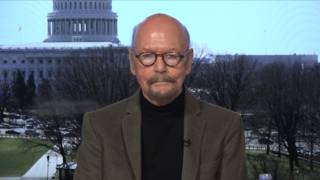
In the aftermath of the historic protests and arrests during the Republican National Convention in New York, we take a look at direct action movements and global justice struggles around the world with veteran protester David Solnit, he is the editor of a new book, “Globalization Liberation: How to Uproot the System and Build a Better World.” [includes rush transcript]
Protesters arrested during the Republican National Convention will rally in New York tomorrow to protest their treatment by the city. The group Arrestees Fight Back plans to stage the noon rally at Pier 57 where the nearly 2,000 people arrested during the convention were held.
The group is demanding an investigation into the NYPD’s tactics over the week as well as the conditions at Pier 57. Many of those released had skin rashes over their body.
The four-day Republican convention in New York was marked by historic protests and acts of dissent on the streets. Nearly half a million protesters marched in the largest demonstration ever at a political convention. Over the course of the week, thousands of people took to the streets, staging hundreds of rallies, direct actions and civil disobedience against the Bush administration. Though the protests were generally calm, arrests exceeded 1,800 for the week, a record for a political convention. 1,200 of those arrests were made in a single day.
Despite the historic protests, much of the country was unaware of what was happening in New York. The corporate media all but ignored the events in the city, reporting solely from inside Madison Square Garden.
We’re going to take a look at direct action movements and global justice struggles around the world with a veteran of direct actions.
- David Solnit, editor of the new book, “Globalization Liberation: How to Uproot the System and Build a Better World”
Related Story
 StoryApr 24, 2024Naomi Klein: Jews Must Raise Their Voices for Palestine, Oppose the “False Idol of Zionism”
Transcript
AMY GOODMAN: We’re joined now by David Solnit. He is editor of a new book called Globalization Liberation: How to Uproot the System and Build a Better World. Welcome to Democracy Now!
DAVID SOLNIT: Thank you.
AMY GOODMAN: David, you are a veteran of direct action protests. You were there in San Francisco, one of the organizers of the protests that shut down the financial district at the beginning of the invasion to Iraq. Can you put this in a global context, these protests that we have seen here?
DAVID SOLNIT: I mean, I think what we saw in New York City was folks in the U.S. and New York, in particular, stepping up to the plate and joining a time when movements are stronger, more democratic and more connected than at any point in history. So the book, Globalized Liberation was designed to make us more strategic and figure out how to build our mass mobilizations, our mass movements and our community struggles, particularly looking beyond the elections to where we are going to need strong social movements to counter either Kerry or Bush.
AMY GOODMAN: It reminds me of Fourth World War by Jacquie Soohen and Rick Rowley, the film that looks at grassroots protests in the world. Your book, in the same way. Talk about some of the struggles that you are linking what we’re seeing in this country to?
DAVID SOLNIT: I mean, we’re linking struggles from Argentina to Europe to here that a lot of us call “the new radicalism,” movements that have emerged since the Zapatistas. So south Florida we have the Coalition of the Immokalee Workers doing the Taco Bell boycott and writing what they have learned in that organizing.
AMY GOODMAN: They’re protesting because —
DAVID SOLNIT: Because of undignified and unjust sweatshop type conditions in the fields.
AMY GOODMAN: This is in Immokalee, Florida?
DAVID SOLNIT: Yes. Or folks working in Central Valley trying to stop the prison boom in California’s Central Valley. Or people in San Francisco — there’s an extended analysis piece with some of the thinking that went into the shutting down of San Francisco the day after the war, a piece by Patrick Reinsborough. And so, we call it a book of practitioners for practitioners. We are trying to get our movements to be smarter, more strategic. I have been traveling around the country getting people to form study groups so that we can have our own think tanks, especially going beyond the elections, trying to figure out how can the people in this country can step up with the rest of the folks around the world.
AMY GOODMAN: And how do you deal under the USA PATRIOT Act? We were just talking with Greenpeace about no environmental impact statement for plutonium being moved, but yes, they are investigating the people who are protesting.
DAVID SOLNIT: I mean, I was one of the folks in Pier 57, and I think what that indicates as well as the treatment at the R.N.C. is that we have to organize grassroots movements that can stand up and flex our muscles, and do what I call “people power literacy.” We have to be prepared to do what people around the world are doing, which is, you know, take action, take direct action, non-violent civil disobedience, and become skilled at it, because it’s clear the amount of impact we can have through the traditional channels is very limited.
AMY GOODMAN: David Solnit, I want to thank you for joining us. Wrote Globalized Liberation: — is the editor of this new book — How to Uproot the System and Build a Better World.



 Top
Top
Media Options