









 Watch Full Show

Related
Topics
Ecuador’s ousted president Lucio Gutierrez was flown to Brazil Sunday where he will live in exile following Congress’s decision to remove him from office amid massive anti-government protests. We go to Quito, Ecuador to speak with a member of the Center for Economic and Social Rights. [includes rush transcript]
Ecuador’s ousted president Lucio Gutierrez was flown to Brazil Sunday where he will live in exile after being forced out of office last week.
Gutierrez had been holed up in the Brazilian ambassador’s residence in Quito for four days following Congress’s decision to remove him from office amid massive anti-government protests.
He left the residence by the back entrance Sunday and was taken by a police vehicle to a helicopter. He was accompanied by his wife and one of two daughters.
In a letter requesting asylum released to reporters, Gutierrez wrote: “I feel personally threatened and unable to guarantee my liberty and physical integrity, as well as of my wife’s and of my daughters.”
Gutierrez took office in January 2003 as a populist, anti-corruption reformer but soon angered many Ecuadorians by adopting economic austerity measures. Many also were upset by growing accusations of nepotism and corruption in his inner circle.
He dissolved the Supreme Court a week ago in hopes of placating protesters who accused him of stacking the court in his favor. But the move backfired and set off even larger protests.
After removing Gutierrez from office, lawmakers named former Vice President Alfredo Palacio as Ecuador’s new president.
His supporters contend he was removed from power illegally, and the Organization of American States has decided to send a high-level diplomatic delegation to investigate whether Gutierrez’s removal was constitutional.
He is the third president of Ecuador to be removed from office in eight years.
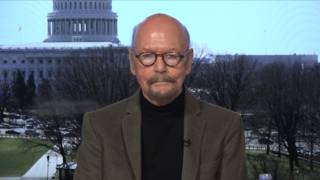
- Chris Jochnick, co-founder of the Center for Economic and Social Rights and an adjunct Professor of Human Rights at Columbia University.
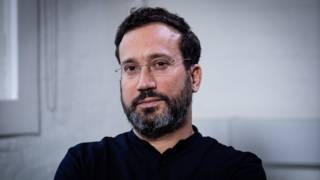
- Patricio Pazmino, Executive Director, Center for Economic and Social Rights.
Related Story
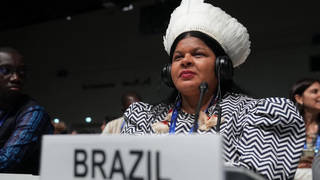
 StoryDec 22, 2023Sônia Guajajara, Brazil’s First Indigenous Peoples Minister, on Climate Crisis & Protecting the Amazon
Transcript
AMY GOODMAN: We are joined right now in our studio by Chris Jochnick. He is the co-founder of the Center for Economic and Social Rights and an adjunct Professor of human rights at Columbia University. Also, joining us on the phone from Quito, Ecuador, Patricio Pazmino. He is Executive Director of the Center for Economic and Social Rights there. Let’s turn to Patricio in Quito. Can you talk about the latest this weekend, and the protests that led to the ouster and the ultimate exile of Gutierrez, the former Ecuadorian president. Patricio, are you with us? Well, why don’t we turn to Chris Jochnick until we get him on the line. The significance of the movement that has led to Gutierrez’s ouster?
CHRIS JOCHNICK: Well, as you mentioned in your introduction there, this is the third president to have been removed over the last eight years. There has been simmering crisis in Ecuador as the economy goes up and down. People at the base do not feel any real relief from the poverty and the deprivation, and when they put in Gutierrez some years ago, there was a lot of hope that came with that that was almost immediately dashed when he immediately signed an agreement with the I.M.F. and turned on the supporters that had put him there and began down this road, that is very well known to a lot of Latin American countries, of real austerity measures. And as people have seen, oil going up and the country receiving the benefit of that, they have not felt any of the benefits because most of that money has left the country in the form of either debt payments or benefits to the oil companies, and that’s such a symbolic piece of it, but you see immediately as the new president comes in, and he starts talking about moving backwards a little bit on debt and on the oil agreements and on the Free Trade agreement, just talking about it, how much alarm that sets off in the north, and at the same time that does buoy his supporters. So with each turn, you have seen this same sort of cycle where presidents come in, off and on, on a populist platform. They create certain expectations, and then they are put into this vise of the north — the American government and the World Bank and I.M.F., putting a lot of pressure on them, and we’ll see in this latest case whether this new government can survive that.
AMY GOODMAN: We have Patricio Pazmino on the line and I’m asking Chris if you might be able to help translate for Patricio if he feels more comfortable speaking in Spanish, but to ask about the movement that ousted Gutierrez, who the people are, the population, how it organized.
PATRICIO PAZMINO: [translated by Chris Jochnick] During 27 months, Lucio never really understood what was his mandate for governing there. He was elected as an alternative to the traditional political parties and was brought there in particular by the indigenous sector of society. But very quickly, he abandoned these bases and began to instead collaborate with the traditional political parties. And very quickly, he was captured by the traditional powerful forces or parties in Ecuador. The mandate that he was brought in was — had some very simple aspects to it: Respect for the Constitution, honesty and ethics in social decision-making. So, after 27 months, people felt like all of this had now failed.
AMY GOODMAN: Now the people are calling on him to be tried, though he has instead gone into exile in Brazil.
PATRICIO PAZMINO: [translated by Chris Jochnick] So, this is an unprecedented event in the history of Ecuador where people have organized, self-organized without leadership, to demand that in this case the leadership comply with his original mandate, that being Lucio.
AMY GOODMAN: Well, on that note, I want to — one last comment.
PATRICIO PAZMINO: [translated by Chris Jochnick] So Patricio’s final comment was that in this case it was really unprecedented that the people that came out to the streets, women, children, students were first and foremost demanding a new ethical treatment by a president, and only secondary were these economic demands, but at the front of it was this concern about ethics and honesty in government.
AMY GOODMAN: Well, I want to thank you both very much for being with us. Patricio Pazmino, Executive Director of the Center for Economic and Social Rights in Quito, Ecuador, and Chris Jochnick, Co-founder of the Center for Economic and Social Rights and adjunct Professor of Human Rights at Columbia University. Thank you.




 Top
Top
Media Options