








 Watch Full Show

Related
Election polls showed Iraq as the top issue on the minds of American voters. For an Iraqi perspective, we speak with Iraqi blogger and architect Raed Jarrar. [includes rush transcript]
The Financial Times is reporting that the Bush administration has told Iraqi leaders that there will not be any dramatic changes in its Iraq policy despite Tuesday’s elections. According to the US envoy Zalmay Khalilzad, President Bush urged Iraqi leaders not to pay attention to what has been said on the campaign trail and that the president remains in charge of Iraq policy. However on Tuesday night Democrats repeatedly criticized the President’s Iraq policy.
Senate Minority Leader Harry Reid: “America’s come to the conclusion, as we did months ago, that we must change direction in Iraq. President Bush must listen. We must change course in Iraq.”
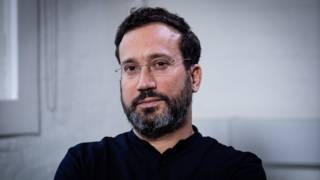
Raed Jarrar joins me now to talk more about the reaction in Iraq to the election. Raed is an Iraqi blogger and architect who now lives in the United States. He is the Iraq Project Director for Global Exchange.
- Raed Jarrar. Iraqi blogger and architect. His blog is called “Raed in the Middle.” Raed is Iraq Project Director for Global Exchange and is currently on a cross-country speaking tour.
Related Story
 StoryApr 24, 2024Naomi Klein: Jews Must Raise Their Voices for Palestine, Oppose the “False Idol of Zionism”
Transcript
AMY GOODMAN: This is the Senate Minority Leader Harry Reid.
SEN. HARRY REID: America has seen, as we’ve seen, that losing 3,000 Americans has been unnecessary, costing the American people $3 billion a week, 22,000 wounded. Our brave fighting men and women, we support 100%. But they, as indicated by the Air Force Times, by the Navy Times, by the Army Times yesterday, are calling for change. President Bush must listen. We must change course in Iraq.
AMY GOODMAN: Harry Reid of Nevada. Raed Jarrar joins us in the studio now to talk to us about this. Raed, we thought we’d end the broadcast with an Iraqi, since a lot of people say these elections hinged on US-Iraq policy. Raed Jarrar is an Iraqi architect and a blogger, does the blog raedinthemiddle.blogspot.com, and is the Iraq Project Director for Global Exchange. Your response to the Democratic sweep of the House? We’ll see what happens in the Senate.
RAED JARRAR: It doesn’t seem that there is a departure from the parameters set by Republicans, in fact. It doesn’t seem that there is any plans to include Iraqi voices and consult with Iraqis to take further steps. It just seems that there are some more unilateral plans that will be taken from the US side, for changing the course. And changing the course may be to a worse or better direction; no one can tell until now.
AMY GOODMAN: What do you think should happen? If you were in charge.
RAED JARRAR: What I think should happen is that Iraq’s unity should be kept, and this is one of the most controversial issues and an issue that is causing anxiety for Iraqi leaders, because there are a lot of Democrats who are asking to divide the country to more than one place. And what I think should happen is that Iraqi voices — between 70% and 90% of Iraqis are demanding to set a timetable for a complete withdrawal of the troops. And even a majority within the Iraqi government that was elected under the occupation is demanding to set such a timetable. So these voices should be brought to the table and discussed with, and a timetable for ending the occupation should be set with Iraqis, and other steps for fixing the mistakes they’ve committed in Iraq.
AMY GOODMAN: You recently went to Jordan, and you met with some Iraqi parliamentarians. Who do you think needs to be spoken with, and how will these forums take place in Iraq, so mired in violence now?
RAED JARRAR: There is a very high disconnectivity between what’s happening in Iraq on the street, and even within the Iraqi government, and what the US people and Congress members think is happening in Iraq. And this disconnectivity can actually be gapped easily by reaching out to the Iraqi side and asking them how to deal with the situation, because a majority of Iraqi leaders see the rising violence among Iraqis and the Iraqi-Iraqi conflict caused by the occupation, not happening despite it, and they think that pulling out the troops is the first step in dealing with the Iraqi-Iraqi problems.
AMY GOODMAN: Do you think the US elections were monitored closely in Iraq?
RAED JARRAR: I don’t think they were monitored closely. I don’t even think that the majority of Iraqi people knew that they were happening. It’s like people are having bigger disasters in their daily life, you know, like they can’t actually have maybe electricity to listen to the news or what’s happening in their own country, so —
AMY GOODMAN: Raed Jarrar, you’ve taken on a new job — we just have ten seconds — where you’re going to be talking about US foreign policy, traveling around this country.
RAED JARRAR: Yeah, I’m going on a tour with an organization called Just Foreign Policy. You can check their website, justforeignpolicy.org. We’re going on a 16-city tour around the Northwest — Northeast, in fact.
AMY GOODMAN: I want to thank you very much for being with us, Raed Jarrar, Iraqi architect and blogger, now with the group Just Foreign Policy.



 Top
Top
Media Options