











 Watch Full Show

The new documentary “Big Bucks, Big Pharma: Marketing Disease & Pushing Drugs” looks at how illness is used, manipulated, and in some instances created by pharmaceutical companies to make greater profits. We play an excerpt. [includes rush transcript]
Related Story
 StoryJul 22, 2025“Life After”: Film Exposes How Medicaid Cuts, Assisted Dying Laws May Bring Disabled to Early Graves
Transcript
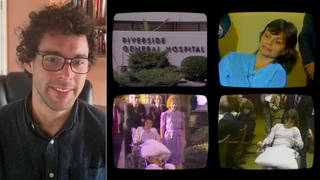
AMY GOODMAN: We move now to our last segment with a look at how illness is used, manipulated, and in some instances created by pharmaceutical companies to make greater profits. This is an excerpt of a new documentary called Big Bucks, Big Pharma: Marketing Disease & Pushing Drugs. It was produced by the Media Education Foundation. I narrated it.
DAN RATHER: Your blood pressure may have gone from normal to high overnight. New government guidelines mean millions need a check-up. Do you?
AMY GOODMAN: At the same time that drug advertising is pushing people to their doctors, experts are busy redefining what it means to be sick.
DR. MARCIA ANGELL: All you have to do is change the definition of high blood pressure, and you can increase that market by tens of millions of people, or change the definition of high cholesterol.
REPORTER: If you didn’t have a cholesterol problem yesterday, you may have one now.
REPORTER: The new guidelines call for a huge boost in use of cholesterol-lowering drugs known as statins. The new numbers mean millions of Americans may be taking statin drugs for the rest of their lives.
KATHARINE GREIDER: In some cases, it is a question of, hey, more people are getting treated for this, and this is great. In some cases, even more people should get treated probably. But what’s always muddying the waters here is that a major source of information to consumers and to doctors alike is that the industry that stands to profit from these medicines.
REPORTER: The guidelines were written by nine experts on cholesterol. The National Institutes of Health, which sponsored the report, now says six of them have financial ties, such as speaking fees, research grants or other funds with drug companies, which make the most widely used medications.
AMY GOODMAN: In recent years, Big Pharma has begun promoting more than just its treatments and products. Drug companies now increasingly advertise health conditions themselves. As a result, Big Pharma normalizes even the most obscure health disorders and presents them as common.
ADVERTISEMENT: It’s frustrating. Just when you’re ready to relax, that’s when it happens: the urge to move, along with uncomfortable sensations in your legs. They’re hard to describe, but they can even keep you from getting to sleep. You feel the urgent need to get up and move, just to get some relief. There’s a name for it: restless leg syndrome. And if you have it, you’re among the nearly one in 10 U.S. adults who do. Want to know more? Visit restlesslegs.com or talk to your doctor.
DR. BOB GOODMAN: Of all the things that industry does, this is probably the one thing that I think could be labeled as evil, that in order to make a profit, you’re disease-mongering — in other words, making population medicalizing something that is just really part of everyday life.
ADVERTISEMENT: You often feel distracted, disorganized, restless, unable to finish things, like the channel keeps changing in your mind, and you can’t control the remote. If you felt these symptoms your whole life, you may have adult ADD.
DR. BOB GOODMAN: So, in other words, a person who is not yet a patient, who is actually feeling quite good, sits down to watch the evening news, and after seeing a few commercials, says to him or herself, “You know, I’m not quite as healthy as I thought.”
ADVERTISEMENT: I’ve got to remember that appointment tomorrow. Did I send the car payment? What made me volunteer for that assignment?
Introducing Lunesta, a sleep aid that can give you and your restless mind the sleep you need.
KATHARINE GREIDER: You have this huge phenomenon then, a huge increase in prescriptions. And there’s this debate about, what is this problem? You know, has it always been around? Is it a problem of behavior? Is it really a biomedical problem?
DR. BOB GOODMAN: What’s happened now is, you’ve taken a healthy person and medicalized something that was not medical, and this person may very soon end up on prescription medication.
ADVERTISEMENT: At work, I’m tense about stuff at home. At home, I’m tense about stuff at work.
If you’re one of the millions of people who live with uncontrollable worry, anxiety and several of these symptoms for six months or more, you could be suffering from generalized anxiety disorder and a chemical imbalance.
AMY GOODMAN: Because patent life can be extended if new indications are approved, companies are constantly searching for new diseases to treat with old drugs. Antidepressants of the Prozac variety, or SSRIs, are a good example of this practice. Originally approved for major depressive disorder, these drugs are now prescribed for a variety of mood and anxiety disorders. Each new indication approved promises increased profits and must therefore be promoted heavily to the public. A striking example is how Paxil was revitalized as a treatment for social anxiety disorder. Its company hired a public relations firm to frame this condition as a major and common medical problem, and the firm launched a multifaceted campaign that moved beyond advertising to get stories about social anxiety disorder placed in print media and on television.
REPORTER: This morning, we begin a special two-part series on social anxiety disorder. Many of us have suffered from shyness or fear of social situations at some point in our lives, but for millions of Americans, their anxiety could be debilitating.
AMY GOODMAN: Paxil’s award-winning product director was quoted as saying, “Every marketer’s dream is to find an unidentified or unknown market and develop it. That’s what we were able to do with social anxiety disorder.”
ADVERTISEMENT: What it is [Friday staff meeting], what it feels like [fear]. What it is [college chemistry class], what it feels like [criticism]. What it is [Carl and Veronica’s wedding]. We know what social anxiety can feel like, and Paxil can help.
ELIZABETH PRESTON: When people begin to critique these advertisements and these campaigns, I think it’s a little easy to actually forget about the people who do suffer from social anxiety disorder, who suffer from major depression, who suffer from post-traumatic stress disorders. You know, there are people who suffer from these conditions and whose lives are radically transformed by the medications, and I think that it’s actually important to remember that. That doesn’t mean that at the same time we’re not sort of creating a culture of the worried well. People who might have this problem are sort of suddenly concerned that they have this problem.
ADVERTISEMENT: Over 10 million Americans suffer. Do you?
LARRY SASICH: If we take shyness, which is probably a part of the personality of most of us in some situations — you know, it’s an appealing part of people, part of their personality — and we turn it into a new entity and we call it social anxiety disorder, now you’ve increased the size of the market, now you can go out and you can advertise Paxil for social anxiety disorder for somebody being shy.
ELIZABETH PRESTON: The Paxil CR ad reads to me a little bit like medicalizing normal experience.
ADVERTISEMENT: If you are one of the many who suffer from overwhelming anxiety and intense fear of social situations with unfamiliar people, now there’s Paxil CR. Paxil CR helps relieve the symptoms of social anxiety disorder all day, so the real you can come through.
ELIZABETH PRESTON: You have people who look mostly comfortable, but, you know, they’re a little uncomfortable in a social setting, and we’re turning that into a condition that needs significant treatment. You know, the SSRIs have a million side effects. They are not clean drugs. And to suggest that if you have a tough time going into a meeting and introducing yourself to people, you should be on an SSRI, I think, is problematic.
CHARLES GIBSON: We are going to take a closer look tonight at the possible link between antidepressants and suicide.
LARRY SASICH: The other disturbing aspect of this class of antidepressants was the fact that these drugs were being prescribed to a large number of children.
ABC NEWS REPORTER: About one million children under 18 take such drugs now with doctors writing three times as many prescriptions as they did a decade ago.
LARRY SASICH: And we don’t know if the drugs were being used appropriately, if they were being used in children with major depressive disorder or they were being used on a 12- or a 14-year-old boy that didn’t make the football or the basketball team, and he felt sad.
AMY GOODMAN: Big Bucks, Big Pharma: Marketing Disease & Pushing Drugs. It was produced by the Media Education Foundation.




 Top
Top
Media Options