








 Watch Full Show

A coalition of Latino organizations have reached an agreement with the filmmaker Ken Burns on a forthcoming World War II documentary that had been criticized for ignoring the role of Latino soldiers. The 14-hour film, “The War,” initially included no interviews with any Latino veterans even though over 500,000 Latinos served in the war. Democracy Now! co-host and New York Daily News columnist, Juan Gonzalez, discusses the controversy. [includes rush transcript]
Related Story
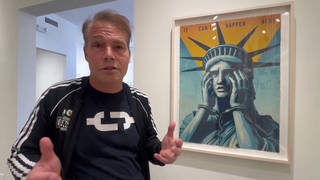
 StoryApr 20, 2026Shepard Fairey on Art, Activism & Resisting Fascism: “It Can Happen Here, and It Is”
Transcript
AMY GOODMAN: Juan, you just did your New York Daily News piece today on the whole controversy around the Ken Burns documentary, which is scheduled to air on PBS in September.
JUAN GONZALEZ: Yes. And I mentioned this agreement that was reached — actually, yesterday it was announced. It was reached the day before. But it’s not clear, first of all, that all of the Latino organizations that have been concerned about this issue have signed onto this. It was basically American GI Forum and a coalition of Washington groups of Latinos. There’s still quite a few questions, because Burns’s people are saying, or told me yesterday, that they are going to add some Latino interviews, but they’re not changing the basic film. And I asked them, “Well, how are you going to do that?” And they weren’t quite clear yet. They’re not sure that they have decided.
But interestingly, Burns left this week for the Cannes Film Festival, which begins next week, where he’s going to show the film, the current film that he has. So, clearly, I think that was part of the pressure, that they want to maintain what they consider the artistic integrity of the film that they already have, but somehow deal with what they acknowledge is a huge and growing criticism of their total elimination of the Latino experience or all the many hundreds of thousands of Latinos who participated in the war.
But, I mean, my column dealt with the historic track record of Burns on similar issues with other films that he’s had in the past. He clearly has a problem in not recognizing the important contributions Latinos have made throughout American history.
AMY GOODMAN: His special documentaries on jazz and on baseball.
JUAN GONZALEZ: Yes. On jazz and on baseball, especially. The baseball is most glaring, because there are a lot more baseball fans than there are jazz followers in the United States. But I think that the jazz — his failure to recognize the enormous contributions that Latinos have made to jazz from the very beginning in New Orleans in the 19th century is just glaring and has all musical experts — have had them in an uproar for many years now.
And, you know, I think the important thing about Burns to understand is he is perhaps the person who has most presented history to more people in the United States than any actual historian, more people — and his films are used in public schools. And that’s the other thing. He has a huge marketing campaign for the public schools to take this as a teaching instrument. So that’s why it’s so especially important that if he’s marketing that way and expecting to make a lot of money off the sales to public schools, then I think he has a special responsibility to make sure his history is accurate.
AMY GOODMAN: Well, we’ll certainly continue to follow this controversy around his World War II documentary, The War.



 Top
Top
Media Options