



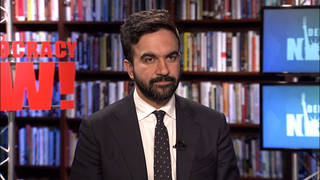



The Supreme Court has upheld a controversial anti-terrorism law that makes it a crime to give any form of aid, including training and advice for legal activities, to groups on the State Department’s list of foreign terrorist organizations. The material support law was first adopted in 1996 but strengthened by the PATRIOT Act in 2001. In a six-to-three decision, the Supreme Court ruled the law doesn’t violate free speech rights. Center for Constitutional Rights senior attorney Shayana Kadidal warned the ruling could open the door to prosecution of even former President Jimmy Carter for conducting election training in Lebanon.
Shayana Kadidal: “President Carter went to Lebanon in 2006 to do election monitoring. And while he was there, he met with representatives of all parties involved in the election, including Hamas [in the Occupied Territories] and Hezbollah, which are on the FTO lists, and told them things like what constitutes a fair election, what the international law standards are, and this kind of thing. Now, under today’s ruling, those things that former President Carter did — all in the interest of promoting nonviolent conflict resolution and involvement in the democratic process by supporters of groups that are on the FTO list — all those things could be serious crimes landing him in prison for fifteen years.”
The ruling came in a lawsuit filed on behalf of the Humanitarian Law Project. The group provides nonviolent dispute resolution and human rights advocacy training to the Kurdistan Workers’ Party and several groups of Tamil Americans who sought to provide humanitarian relief in war-torn areas of Sri Lanka once controlled by the Tamil Tigers. Shayana Kadidal said the decision could likely harm similar reconciliation efforts by US groups.
Shayana Kadidal: “I think we can expect that the material support statute, which was modified, in part, by the PATRIOT Act, will now cast a very broad chill on not only humanitarian aid efforts in crisis zones, in areas that are afflicted by war, sometimes controlled by rebel groups, but that also will cast a really broad chill on journalists and on other humanitarian groups that, like our plaintiffs, were intending to go and talk to parties that have been sort of put on these blacklists and try to get them to turn away from the behavior that ended up putting them on these blacklists in the first place.”



 Top
Top