







 Watch Full Show

An HBO documentary, Critical Incident: Death at the Border, premieres tonight that examines the alleged cover-up of the murder of Anastasio Hernández Rojas, an undocumented Mexican immigrant who died while in U.S. custody at the border. His 2010 death occurred under the watch of Rodney Scott, the man who now heads Customs and Border Protection under President Trump. At the time, Scott was deputy chief of the San Diego sector of the Border Patrol.
“Anastasio was tortured and beaten to death in public,” says director Rick Rowley. “It was a killing and a cover-up that went absolutely to the top of the organization and implicated the entire chain of command.”
Related Story
 StoryOct 04, 2024“Separated”: Film Shows How Trump Tore Immigrant Families Apart, 1,300 Kids Still Alone
Transcript
AMY GOODMAN: This is Democracy Now!, democracynow.org. I’m Amy Goodman.
As CBS cancels a 60 Minutes segment on the Trump administration’s deportations of hundreds of men, we turn now to a documentary premiering today on HBO and HBO Max called Critical Incident: Death at the Border. The film looks at the possible cover-up of the killing of Anastasio Hernández Rojas, an undocumented Mexican immigrant fatally beaten by border agents. In 2010, he was crossing the southern border in an attempt to return to San Diego, where he had lived for a quarter of a century, to reunite with his wife and five kids after being deported. He was stopped by border agents, who brutally beat and tased him while he was handcuffed, until Rojas died of heart failure, his death later ruled a homicide.
Rojas’s death occurred under the watch of a man who is now the head of Customs and Border Protection under Trump, Rodney Scott. At the time of Anastasio’s killing, Scott was deputy chief of the San Diego sector of the Border Patrol.
This is the trailer for Critical Incident.
WITNESS: I heard a blood-curdling scream. Oh my god.
UNIDENTIFIED: In 2010, Anastasio Hernández died after being shocked with a stun gun.
JOHN CARLOS FREY: When Anastasio was killed, I knew that I had to look into this. My entire career as a journalist has been reporting on the border.
RON NEWQUIST: There was no crime scene investigation, so we did not have a clear picture of everything that occurred there.
JOHN CARLOS FREY: All of these agents, the way that they’re lined up, are to block the view.
WHISTLEBLOWER: It’s very hard to come forward to expose the truth. But when you see things like Anastasio, it raises a lot of questions that you can’t ignore.
ROXANNA ALTHOLZ: This is a case about impunity at the border.
JOHN CARLOS FREY: They are tampering with evidence.
We’re doing a story on Anastasio Hernández.
UNIDENTIFIED: He was an illegal immigrant that officers were trying to take back to Mexico. But at the border, something went wrong.
BORDER PATROL AGENT: Roger, 10-4.
ROXANNA ALTHOLZ: They took lives, and they took hope. And that cannot stand.
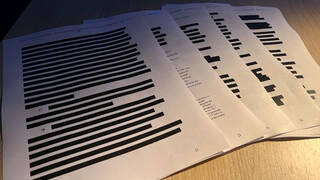
AMY GOODMAN: In Critical Incident, a whistleblower describes how the Border Patrol’s so-called Critical Incident Teams, CITs, conduct off-the-books investigations when federal border agents are involved in in-custody deaths, but to evade accountability.
In this film clip, we hear from the lawyer representing Anastasio Hernández Rojas’s family, Gene Iredale, who sued to demand justice in the courts.
GENE IREDALE: I understood that with a civil case like this against the Border Patrol, it’s like killing the king: You want to make sure that you don’t miss. We knew this may be difficult, but we also knew from the very beginning that there was something more than this case, because the Border Patrol was requested to turn over certain evidence and information, and in certain critical respects, they failed to do so.
AMY GOODMAN: Earlier this year, the Inter-American Commission on Human Rights found Customs and Border Protection agents who fatally beat Rojas are responsible for torture, and called for the investigation into his death to be reopened. Rojas’s case also drew attention from investigative journalists, like John Carlos Frey, who is also featured in Critical Incident.
JOHN CARLOS FREY: I’ve been a reporter for a long time, and my entire career as a journalist has been reporting on the Border Patrol. So, when Anastasio was killed, I knew that I had to look into this, and I started calling whoever, whoever was responsible, Border Patrol, San Diego Police Department. And there was really very little information. But there were eyewitnesses.
AMY GOODMAN: Reporting by John Carlos Frey and others prompted congressional investigations that led Customs and Border Protection to disband the CITs, the Critical Incident Teams, in 2022.
Ahead of Critical Incident's premiere tonight on HBO, we're joined by its director, Rick Rowley, an Academy Award-nominated, three-time Emmy-winning director.
Rick, welcome back to Democracy Now!
RICK ROWLEY: I just lost you.
AMY GOODMAN: Explain what happened so many years ago, almost 15 years ago, and why this matters today. If you can talk about Rodney Scott, who he was then and who he is today?
RICK ROWLEY: I just lost the connection.
AMY GOODMAN: It sounds — it sounds like Rick Rowley has just lost the connection. He’s joining us from Athens, Greece. Rick Rowley is the Academy Award-nominated, three-time Emmy-winning director of the new HBO documentary film, Critical Incident. We’re going to see if we can play another clip right now from the documentary being aired tonight, Critical Incident.
RON NEWQUIST: I think it was around noon, we had heard something from the news about an in-custody death at the border from the night before. Somebody was on life support, a Mr. Anastasio Hernández. Normally, in a regular homicide investigation, usually there’s a briefing that occurs right after the event. Once they know that death has occurred or death is imminent, then the homicide unit will come out. But in this case, the Border Patrol didn’t tell us about it.
AMY GOODMAN: That’s Ron Newquist, who is a San Diego police detective.
Rick Rowley, thanks so much for being with us. We only have a few minutes. So, first, describe what happened to Anastasio so many years ago, 15 years ago, and then what Rodney Scott, a man you interviewed, had to do with it then and who he is today.
RICK ROWLEY: Thanks a lot, Amy. It’s great to be with you.
You know, I mean, at this moment, when masked Border Patrol agents are in the streets in cities across America, we know so little about this secretive and powerful organization. So, this film uses a deep dive investigation of this single killing, the killing of Anastasio, as a way to sort of pull back the veil on the impunity and violence at the heart of the patrol.
So, Anastasio was beaten to death in public. The International Court on Human Rights has already determined his death to have been the result of torture and that there was a cover-up afterwards of those crimes. And that was all presided over by Rodney Scott, the man who Trump chose to lead the entire CBP.
You know, in the 100-year history of the patrol, hundreds, you know, and almost certainly thousands, of people have been killed by the patrol, and not a single agent has ever been successfully prosecuted for an on-duty killing. James Tomsheck, the former head of internal affairs for the Border Patrol, who we interview in the film, estimated there was a 10% level of active corruption inside the patrol. Ron Hosko, former executive director of the FBI, heard estimates as high as 20% of the patrol were actively corrupt. I mean, those kinds of numbers and that kind of violence indicate an agency that is in crisis. I mean, this is like the NYPD before Serpico. It’s like the LAPD before Rodney King. This is a law enforcement agency whose day of reckoning is long overdue. And Trump has taken someone implicated in one of its most obvious and clear crimes, and put him in charge of the entire CBP.
AMY GOODMAN: Your reporting on this is incredible, and also following John Carlos Frey and how it took years to get the video that showed what happened to Anastasio. But if you could tell us exactly what happened, the people screaming, what the border agent said actually happened, that he was hitting his own head against the — against the road, against the cement, and that they were trying to save him?
RICK ROWLEY: Yes, I mean, in one of the most chilling kind of moments of the film, we have the depositions that the agents and officers who were on the scene gave for the civil trial, in which they — this is before the video had been released, before we had an actual image of what happened — in which they described this completely impossible situation where Anastasio was rolling on the ground like a crocodile, that he was banging his own head on the ground, and that they were trying to save him and help him, before his heart stopped beating because they were tasing and beating him to death.
What really happened was Anastasio was tortured and beaten to death in public at one of the most — at one of the busiest border crossings in the world, where hundreds of people were on a pedestrian bridge at that time of night directly looking down at what was happening there.
And the problems with the investigation begin while Anastasio is still alive. Border Patrol agents were deleting cellphone video that people were taking. They were destroying evidence of the crimes. They were intimidating and dispersing witnesses. They did not preserve the crime scene at all. To the contrary, they got rid of witnesses and didn’t take down their contact information, so it was — when the police showed up, they couldn’t — it was very difficult for them to reconstruct what happened.
The Border Patrol, Ron Newquist told us, didn’t even inform them of the incident. They were called by a local TV reporter, and that was how they discovered what happened and began their investigation. Then they failed to produce evidence. There were multiple security cameras there that they failed to provide surveillance video for, and then, ultimately, said it didn’t exist or it had been destroyed. And, you know, it just — all the way through this process, there was obstruction.
Oh, James Tomsheck, in one of the most damning statements in the film, says that he was specifically ordered by the deputy chief of the Border Patrol to falsify reports about the killing of Anastasio. So, this, really, it was a killing and a cover-up that went absolutely to the top of the organization and implicated the entire chain of command.
AMY GOODMAN: And can you tell us again the role of Rodney Scott, Border Patrol chief during the Obama administration, now the BP commissioner under Trump, what he said to you about Anastasio’s death?
RICK ROWLEY: Yeah, so, we have a long interview with Rodney Scott that’s woven through the film. So, he was deputy chief of San Diego sector during the entire Anastasio — during Anastasio’s killing and the beginnings of the cover-up. His signature is on some of the — on a subpoena that was filed by the Border Patrol to take Anastasio’s medical records before they could be given to the police department. Also, you know, one of the things that our reporting and investigation around this film revealed was the existence of these Critical Incident Teams, these off-the-books investigative teams that report directly to — outside of the normal chain of command, report directly to sector leadership, which would have been at that time Rodney Scott, among others. So, he knew about this case. And, you know, he has the details of the case fresh in his mind when we talk to him many, many years later in this film. And, you know, I mean, he says — he denies many things, and he contests many things. But, you know, he’s on camera kind of talking about this and being forced to address this, I think, maybe for the first time.
AMY GOODMAN: Rick Rowley, I want to thank you for being with us. This is a very important documentary. Rick is director of the new HBO documentary premiering tonight. It’s called Critical Incident. And you can see all our interviews on the killing of Anastasio over the years, including with his wife and an eyewitness, at democracynow.org. That does it for our show. I’m Amy Goodman. Thanks so much for joining us.




 Top
Top
Media Options