Shows featuring Greg Mitchell
Editor of Nuclear Times magazine from 1982 to 1986. He has written widely about the Hiroshima and Nagasaki atomic bombings, including Hiroshima in America: A Half Century of Denial, with Robert Jay Lifton. His latest is Atomic Cover-Up: Two U.S. Soldiers, Hiroshima & Nagasaki and The Greatest Movie Never Made. Mitchell is a daily contribute to TheNation.com and has been chronicling the lead-up to the bombing in a series of blog coasts called "Countdown to Hiroshima 1945."
-
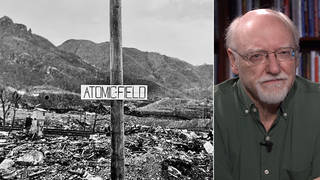
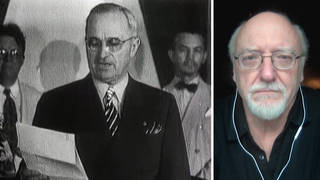
Atomic Cover-Up: The Hidden Story Behind the U.S. Bombing of Hiroshima and Nagasaki
As radiation readings in Japan reach their highest levels since the Fukushima Daiichi nuclear power plant meltdowns, we look at the beginning of the atomic age. Today is the 66th anniversary of the U.S. atomic bombing of Nagasaki, which killed some 75,000 people and left another 75,000 seriously wounded. It came just three days...August 09, 2011 | Story -
U.S. Facing Global Diplomatic Crisis Following Massive WikiLeaks Release of Secret Diplomatic Cables
The whistleblowing website WikiLeaks has begun releasing a giant trove of confidential U.S. diplomatic cables that is sending shockwaves through the global diplomatic establishment. Among the findings: Arab leaders are urging the United States to attack Iran; Washington and Yemen agreed to cover up the use of U.S. warplanes to...November 29, 2010 | Story -
So Wrong for So Long: Greg Mitchell on How the Press, the Pundits — and the President — Failed on Iraq
As the Iraq war passes its fifth anniversary, we take a look at the corporate media’s coverage of five years of war with Greg Mitchell, editor of Editor & Publisher. He has just written a new book chronicling the media’s failing on covering Iraq titled, So Wrong for So Long: How the Press, the Pundits—and the President—Failed on Iraq. [includes rush transcript]March 24, 2008 | Story
By Amy Goodman with Denis Moynihan
Gen. John Allen, commander of U.S. Forces Afghanistan, spoke Wednesday at the Pentagon, four stars on each shoulder, his chest bedecked with medals. Unlike Allen, many decorated U.S. military veterans left the streets of Chicago after the NATO summit without their medals.
In an extended interview, David Bronner, president of Dr. Bronner’s Magic Soaps, discusses the history of the company, why they put sustainability and social justice ahead of profits, the organic and GMO labeling movements, the U.S. war on hemp, and why they refuse to sell out. [includes rush transcript]
Human Rights Watch’s Kenneth Roth examines why the U.S. has not pressured Bahrain to release pro-democracy activists. He also discusses Syria and the conditions in Israeli jails and courts that prompted 1,550 Palestinian prisoners to go on a hunger strike. [includes rush transcript]