









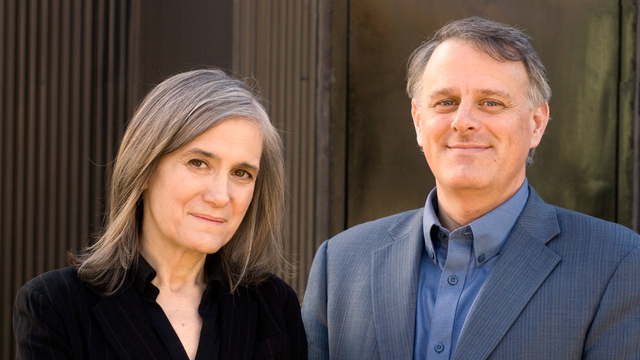
By AMY GOODMAN
GUEST COLUMNIST
As the world marked International Human Rights Day, one of the century’s most notorious dictators, Gen. Augusto Pinochet, died under house arrest in Chile at the age of 91. His 17-year reign left a deep scar on Chilean society. Yet Pinochet’s legacy includes an ironic upside: His regime and the U.S. support for it galvanized the modern-day international human rights movement.
On Sept. 11, 2001, as the planes hit the towers of the World Trade Center, on our daily broadcast of “Democracy Now!,” we were looking at the connection between terrorism and Sept. 11, 1973. It was on that day that the democratically elected government of Chilean President Salvador Allende was overthrown in a violent coup, and the forces of Pinochet rose to power. The coup was supported by the U.S. government. Henry Kissinger, national security adviser and U.S. secretary of state, summed up the policy this way:
“I don’t see why we need to stand by and watch a country go communist due to the irresponsibility of its own people. The issues are much too important for the Chilean voters to be left to decide for themselves.”
As Pinochet seized power, first among the dead was the president himself, Allende. Then there were the thousands rounded up. Among them was Victor Jara, the legendary Chilean folk singer. Jara was beaten, tortured, then executed. His body was dumped on a Santiago street and found by his wife in the morgue.
Charles Horman was a U.S. journalist working in Chile. He, too, disappeared in those days following the coup. His body was found buried in a cement wall. His story was immortalized in the Academy Award-winning Constantin Costa-Gavras film “Missing.” His widow, Joyce Horman, sued not only Pinochet for the death of her husband but also Kissinger and others at the U.S. State Department.
Pinochet’s reign of terrorism extended beyond Chile’s borders. On Sept. 21, 1976, the former foreign minister of Chile, Orlando Letelier, and his American colleague, Ronni Moffit, died in a car bombing, not in Chile, but on Embassy Row in Washington, D.C.
Then there was Chile’s current president, Michelle Bachelet. Her father was a general under Allende and opposed the coup. He was arrested and died of a heart attack in prison. She and her mother were detained and tortured at the notorious Villa Grimaldi, a secret torture site in Santiago. Bachelet and her mother survived and went into exile. Her return to Chile and eventual election as president on the Socialist ticket has brought Chilean politics and history full circle. In October 2006, she returned to Villa Grimaldi. In November, Pinochet was placed under house arrest and charged with the kidnap and murder of prisoners there.
This was not the first time Pinochet was arrested. In 1998, while on a medical visit in London, he was put under house arrest after Spanish judge Baltasar Garzon issued a warrant for his arrest for the torture and murder of Spanish nationals. After 18 months, Britain finally allowed Pinochet to return to Chile for health reasons, avoiding extradition to Spain.
Pinochet’s death allows him to escape conviction. Kissinger, whose support for the Pinochet regime is increasingly well documented, is still alive and still of interest to those seeking justice. Kissinger has been sought for questioning by Judge Garzon and by French Judge Roger Le Loire, both investigating the death and disappearance of their citizens in Chile. While Kissinger is frequently questioned by the media in this country, he is almost never asked about his own record. Instead, he is treated like royalty.
Questions remain about the brutal regime of Pinochet. Kissinger likely holds many answers. If we are to have a uniform standard of justice, then answers need to be demanded of the genuine terrorism experts such as Henry Kissinger.
© 2006 Amy Goodman and Denis Moynihan
Amy Goodman hosts the radio news program “Democracy Now!” Distributed by King Features Syndicate.
Related Story
 StoryDec 08, 2025“Domestic Terrorism”: Leaked DOJ Memo Targets “Anti-Americanism, Anti-Capitalism, Anti-Christianity”




 Top
Top