






April 29, 2010
'The Curse of Abundance': Alberto Acosta on the Failure of Extractive Industries and Alternative Models of Development in Ecuador
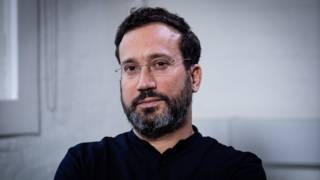
Alberto Acosta is the Former President of the Constituent Assembly as well as a former minister of Energy in Ecuador. Democracy Now! producer Sharif Abdel Kouddous caught up with Acosta at the World People’s Summit on Climate Change in Cochabamba, Bolivia last week.
The government of Ecuador is pioneering a new strategy to promote development in poor countries while also minimizing environmental damage caused by extraction of natural resources.
Under Ecuador’s proposal known as "ITT Yasuni," Ecuador will refrain from exploiting an oil field under the Amazon rainforest park, noted for being the most biodiverse region in South America.
In exchange for leaving the oil in the ground, funds will be provided to Ecuador for development. The trust will be comprised of voluntary contributions from developed countries, international or multilateral organizations, civil society organizations, private sector companies, and citizens worldwide.
Alberto Acosta is the former President of the Constituent Assembly as well as a former minister of Energy in Ecuador. Democracy Now! producer Sharif Abdel Kouddous caught up with Acosta at the World People’s Summit on Climate Change in Cochabamba, Bolivia, last week.
Recent ShowsMore Shows
Stories
Headlines
- Egyptians Vote in 2nd Day of Presidential Election
- EU Summit Split on Bonds, Shared Debt
- Suspect Arrested in Mexico for Murder of U.S. Journalist Brad Will
- Obama Hails "New Era of American Leadership" in Speech to Air Force Grads
- Pakistan Faces U.S. Warning for Sentencing of Doctor Who Aided CIA
- Poll: U.S. Support for Same-Sex Marriage at All-Time High
- Facebook, Morgan Stanley Face Lawsuits over IPO
- Hewlett-Packard to Fire 27,000 Workers
- Secret Service Head Apologizes for Prostitution Scandal
- Journalist: CNN Host Piers Morgan Boasted of Phone Hacking
By Amy Goodman with Denis Moynihan
Gen. John Allen, commander of U.S. Forces Afghanistan, spoke Wednesday at the Pentagon, four stars on each shoulder, his chest bedecked with medals. Unlike Allen, many decorated U.S. military veterans left the streets of Chicago after the NATO summit without their medals.
In an extended interview, David Bronner, president of Dr. Bronner’s Magic Soaps, discusses the history of the company, why they put sustainability and social justice ahead of profits, the organic and GMO labeling movements, the U.S. war on hemp, and why they refuse to sell out. [includes rush transcript]
Human Rights Watch’s Kenneth Roth examines why the U.S. has not pressured Bahrain to release pro-democracy activists. He also discusses Syria and the conditions in Israeli jails and courts that prompted 1,550 Palestinian prisoners to go on a hunger strike. [includes rush transcript]