














The 2011 U.N. High-Level meeting on AIDS kicked off on June 8 in New York, with more than 30 world leaders attending to discuss the progress and future of the global AIDS response. Outside, hundreds of AIDS activists rallied to call on the world leaders to fulfill their commitment from the 2006 meeting: providing universal access to treatment for the 15 million AIDS patients in critical need. Democracy Now! was there.
PROTESTERS: AIDS could be defeated, if the people are treated!
JENNIFER FLYNN: We’re out here today to make sure that the world leaders who are meeting across the street at the United Nations know that we want to hold them to their promises. The commitment that they made last time was that we would actually have universal access to treatment by 2010. Here we are in 2011, and we still have 10 million people who don’t have access.
TIDO VON SCHOEN-ANGERER: We are here today at the U.N. because this is a critical time for the AIDS response. We know a lot how we can respond to AIDS, and we even know that if we put more people on treatment, we can prevent the transmission of the virus. So there’s a lot of great news, how we can affect and break the back of the epidemic. But now it really comes down to governments and world leaders here at the U.N. to agree to take the right steps forward.
PROTESTERS: Keep your promise! End AIDS now! Keep your promise! End AIDS now!
LUCY CHESIRE: We just passed 2010, the year where we were saying each and every person who requires universal access to HIV prevention, care and support needs to get it. One year down the line, we haven’t seen that dream come true. So are we still just going to watch and let people die in the 21st century from AIDS, whether it’s going to be due to pneumonia, whether it’s going to be TB? I mean, these deaths are preventable. If we can spend more than a billion dollars in Iraq, we can spend $24 billion to ensure that the dream of many people who are out there waiting to get treatment will live to happen, so they can be able to continue going about their day-to-day activity without being hampered by the AIDS situation.
GUILLERMO CHACON: In the United States, over one million people are living with HIV and AIDS. And even here, we have more than 8,000 people on a waiting list. This is a crisis. And we believe that today, even though we’re going through a terrible economic crisis globally, we must keep the promise to secure treatment to these people, because without treatment, people will die. And the most important thing that I would like to remind all of us is to be in solidarity with those living with HIV. And one way to do it is to reduce the stigma, to reduce homophobia, and to raise awareness and to take the HIV test, and keep advocating until we reach the goal, that is, reaching 15 million people in treatment by 2015. United, we can.
PROTESTERS: ¡Sí, Se Puede! Yes, we can! Yes, we can! Thank you!
Related Story
 Web ExclusiveAug 02, 2022In-Depth Steven Thrasher Interview: How Racism, Capitalism, Borders & Ableism Create a “Viral Underclass”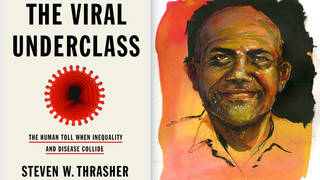



 Top
Top
Media Options