In the wake of the successful pushback against the Susan G. Komen Race for the Cure’s decision to defund Planned Parenthood, the Obama administration should listen to the majority of Americans: The United States, including Catholics, is strongly pro-choice.
Democracy Now! Host Amy Goodman joined a panel of journalists, analysts and academics on MSNBC’s "Up w/ Chris Hayes" to discuss topics of the day, ranging from the Susan G. Komen Foundation’s Planned Parenthood reversal to the Republican Primaries.
Part 2: "Who Killed Che? How the CIA Got Away with Murder": New Book Ties Johnson Admin to Che Death
In an extended interview, co-authors Michael Ratner and Michael Steven Smith discuss the life of Cuban revolutionary Ernesto "Che" Guevara and the chilling story behind his murder by the Bolivian military. In their book, "Who Killed Che?" Ratner and Smith draw on previously unpublished U.S. government documents to argue the CIA played a critical role in the killing. [includes rush transcript]
Watch a 2011 interview with Spanish Judge Baltasar Garzón, who is on trial in Spain after right-wing groups objected to his investigation of atrocities committed by supporters of the dictator Francisco Franco. Garzón is known for seeking to indict members of the Bush administration for their role in torturing prisoners.
Start 2012 off right with a contribution to Democracy Now!
Topics
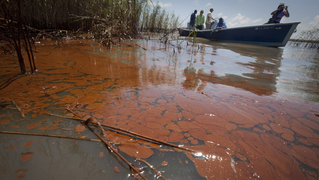
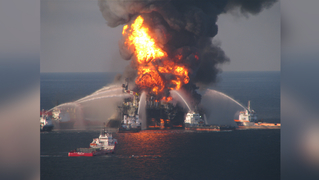
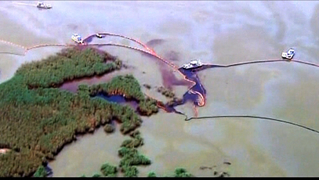
On April 20, 2010, the BP-operated offshore oil rig Deepwater Horizon exploded and sank into the Gulf of Mexico becoming the worst industrial environmental disaster in U.S. history. Democracy Now! reported from the Gulf Coast, and continues to interview experts, government officials, local residents, and environmental activists about aftermath of the disaster.
“Making Art in America is a Political Statement in Itself”: Grammy Award-winning Singer Steve Earle on Music, Writing and Acting
Singer-songwriter, actor and author Steve Earle joins us in the studio to talk about his art and perform two songs from his new album, I’ll Never Get Out of This World Alive. He is being awarded an honorary degree today from the City University of New York School of Law. Last year, he was honored by the National Coalition to Abolish the Death Penalty for his years of involvement with the anti-death penalty movement. “Making art in America is sort of a political statement in and of itself,” Earle says. “I don’t think I’m a political songwriter as much as I am just a political person.” [includes rush transcript]
"A Sea in Flames": Ecologist Carl Safina on First Anniversary of Deepwater Horizon Oil Rig Blowout
Today marks the one-year anniversary of the worst maritime oil spill in U.S. history. Last year on April 20, the Deepwater Horizon rig, leased by oil giant BP, exploded in the Gulf of Mexico, killing 11 workers and releasing nearly 200 million gallons of oil, tens of millions of gallons of natural gas and 1.8 million gallons of other chemicals. A year later, how much has changed? “[Another spill] could happen again tomorrow. And if it did, the response would be as bad,” says Carl Safina, author of the new book, A Sea in Flames. Safina reviews BP, Halliburton and TransOcean’s role in the disaster and reflects on how little the government has done to prepare for another offshore drilling accident. [includes rush transcript]
Voices from the Gulf: "One Year Later, We’re in the Same Situation as Last Year"
One year after the BP Deepwater Horizon oil rig blowout in the Gulf of Mexico, residents of affected coastal communities have reported health ailments such as severe coughing, migraines and irritations that are consistent with common symptoms of chemical exposure. Fishermen and shrimpers have reported record losses in sales and fear the spill will cause long-term damage to marine life and the economy of the region. Many residents report problems with receiving compensation claims from BP. We’re joined by David Pham of Boat People SOS, a national Vietnamese American organization working with fishing communities impacted by the BP oil spill in Alabama. We also speak with Tracie Washington, president of the Louisiana Justice Institute in New Orleans. [includes rush transcript]
Deepwater Drilling Resumes Despite Unclear Impact of BP Spill: "It is All about Hiding the Oil, Not Cleaning It Up"
Many scientists remain concerned that chemical dispersants used during the BP oil spill recovery effort may have damaged marine habitats, affecting many endangered species. "You’ve got this unbelievable chemical soup out there on the order that’s never been seen before,” says our guest, Kieran Suckling, director of the Center for Biological Diversity. Meanwhile, the federal government has awarded its first permit for deepwater drilling in the Gulf of Mexico since lifting a moratorium imposed in the aftermath of the BP spill. [includes rush transcript]
Death Toll from BP Spill Still Rising as Residents Die from Spill-Related Illnesses
"We’ve had many deaths of humans directly attributed to this disaster," says investigative journalist Dahr Jamail. "I recently spoke with Dr. Mike Robichaux, a doctor in Louisiana who’s treated scores of people. And he said, if we do not have federal government intervention immediately to deal with this and start treating people and start really cleaning this up appropriately, we’re going to have a lot of dead people on our hands." [includes rush transcript]
Father of Deepwater Horizon Victim: The Blowout Was “Inevitable” Due to BP’s Lack of Safety Precautions
One year ago today, 28-year-old Gordon Jones was one of 11 workers killed aboard the Deepwater Horizon oil rig that exploded April 20. Today we speak to his father, Keith Jones, who has been critical of the operators of the rig. “BP and Halliburton and Transocean peeled back layer after layer after layer of safety protections, one after another, until this blowout was inevitable,” says Keith Jones. [includes rush transcript]
"5 Million Barrels of Oil Does Not Disappear": Author, Activist Antonia Juhasz on the BP Spill, One Year Later
This week marks the one-year anniversary of the worst maritime oil spill in history. Last year on April 20 an oil rig leased by oil giant BP exploded in the Gulf of Mexico, killing 11 workers and releasing nearly 200 million gallons of oil, tens of millions of gallons of natural gas and 1.8 million gallons of chemicals. We speak to Antonia Juhasz, author of the new book, Black Tide: The Devastating Impact of the Gulf Oil Spill. Juhasz attended the BP shareholders meeting in London last week and spoke on behalf of Gulf Coast residents denied entry. [includes rush transcript]
Gulf Coast Fisherwoman "Disrupts the Peace" at BP Shareholder Meeting
Security officers at BP’s shareholder meeting today in London blocked the entrance of a delegation of fishermen and women from the Louisiana and Texas Gulf Coast area heavily damaged by last year’s Deepwater Horizon oil spill. Among them was Diane Wilson, a fourth-generation fisherwoman from the Texas Gulf Coast. She described the scene to Democracy Now! [includes rush transcript]
“My Fear is that Climate Change is the Biggest Crisis of All”: Naomi Klein Warns Global Warming Could Be Exploited by Capitalism and Militarism
Award-winning journalist Naomi Klein has been reporting on global warming and the climate justice movement for years. “My fear is that climate change is the biggest crisis of all,” Klein says. “If we don’t come up with a positive vision of how climate change can make our economies and our world more just, more livable, cleaner, fairer, then this crisis will be exploited to militarize our economies, to create fortress continents. And we’re really facing a choice. What we really need now is for the people fighting for economic justice and environmental justice to come together.” [includes rush transcript]
"Deepwater Horizon’s Final Hours:" The Explosion that Killed 11 Workers and Led to the Worst Oil Spill in U.S. History
It has been eight months since the explosion aboard the Deepwater Horizon set off the worst offshore oil spill in U.S. history. Eleven workers were killed and more than 200 million gallons of oil were dumped into the Gulf of Mexico. A major investigation by the New York Times takes an in-depth look into how explosion occurred. Based on interviews with 21 crew members and testimony from 94 others, the investigation concludes every single one of the rig’s defenses failed. We speak with Pulitzer Prize-winning journalist David Barstow. [includes rush transcript]