







 Watch Full Show

Guests
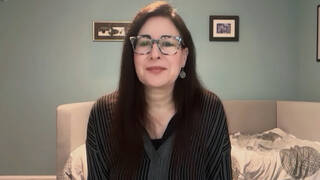
- Rhiannon Giddensaward-winning multi-instrumentalist musician who won the 2023 Pulitzer Prize for Music for her opera Omar.
“If we don’t connect those dots between the struggles, we’re never going to get anywhere,” says Pulitzer Prize- and Grammy-winning multi-instrumentalist Rhiannon Giddens. “That’s what music is for. … We have to make music with people from different backgrounds, because then we have that conversation.”
Giddens has had a wide-spanning career, including her time with The Carolina Chocolate Drops, an old-time Black string band, and her work as a musical consultant on Ryan Coogler’s landmark film Sinners. She won a Pulitzer Prize for Music in 2023 for her opera Omar about Omar ibn Said, a Muslim scholar in Africa who was sold into slavery in the 1800s. Her new album, Hope Is the Thing with Feathers, comes out on Friday.
Transcript
AMY GOODMAN: This is Democracy Now!, democracynow.org.
We turn now to the Pulitzer Prize-winning, two-time Grammy-winning multi-instrumentalist Rhiannon Giddens. In 2023, she won the Pulitzer Prize for Music for her opera Omar about Omar ibn Said, a Muslim scholar in Africa who was sold into slavery in the 1800s. Rhiannon has had a remarkable career with her time with The Carolina Chocolate Drops, an old-time Black string band, to her work as a musical consultant on Ryan Coogler’s landmark film Sinners. Rhiannon Giddens recently launched the Biscuits & Banjos Foundation, which celebrates the African diaspora’s role in shaping American identity and culture through music, literature, food and community. Rhiannon Giddens’ new album is out today, Hope Is the Thing with Feathers.
On Thursday, we sat down together in our studio, and Rhiannon performed her song “Wish in Vain” with Dirk Powell.
RHIANNON GIDDENS AND DIRK POWELL: [performing “Wish in Vain”]
I wish I were the evening star
I wish, I wish, I wish in vain
For then I’d guide you from afar
To join me in this sad refrain
I wish my heart were made of brass
I wish, I wish, I wish in vain
For then I’d let you go at last
And likewise too you’d do the same
I wish we’re on some shady rock
I wish, I wish, I wish in vain
And all the fighting was forgot
And it was peaceful once again
I wish that you and I my love…
AMY GOODMAN: Rhiannon Giddens and Dirk Powell performing “Wish in Vain” in our studio. After they performed, I spoke to Rhiannon Giddens.
AMY GOODMAN: And “Wish in Vain,” that you’ve just performed in the studio, what was the inspiration for it? Can you talk about the world we’re living in now, the world refugee crisis?
RHIANNON GIDDENS: Oh yeah. It’s really hard to know what to do. You know, as an artist, as a musician, I feel really grateful to be able to use the art that I was given to try to deal with these emotionally huge and complex issues that have been a part of humanity for generations, for millennia, right? The idea of having to move from one place to another under no fault of your own, whether it’s environmental disaster, whether it’s nationalism, or whether it’s, you know, all of these things that are happening all over the world.
But at the center of it are human beings, and we all miss and love the same things. You know, we all miss each other. We love each other. We love our food. We love our music. You know, we have the same loves and hates. And I think part of the job of folk music, folk music idiom, is to connect those things emotionally to each other, because, like, that’s really the only way forward, is to recognize ourselves in that other person. So, that’s just thinking about, like: If I was in that situation, what would I be thinking? You know, like, what would I — I’d be missing my family. I’d be missing my friends. I’d be missing — you know, like, will I ever see you again? You know, will I ever get to talk to you again? Will I ever hear my language again? You know, all of those things.
AMY GOODMAN: Talk about collaborating with your sister with the song “Walk with Me.”
RHIANNON GIDDENS: My sister is my first — you know, kind of my first everything. She’s been there for me since I was born. She’s seven years older. And through all the ups and downs of childhood and family strife and all that stuff, we’ve been rocks for each other. And she’s the first person I sang with and has shaped how I think about even singing harmony. So, to have that so prominently highlighted on the record feels really good, you know. And it’s also sibling harmony, which is very special. And it’s also a tradition in North Carolina of sibling gospel harmony, you know, that we are also pulling from.
RHIANNON GIDDENS AND LALENJA HARRINGTON: [performing “Walk with Me”]
Walk with me, Oh Lord
Walk with me
While I’m on this tedious journey
RHIANNON GIDDENS: You know, Fannie Lou Hamer is part of the story of that song. And so, these things —
AMY GOODMAN: Tell us about Fannie Lou Hamer.
RHIANNON GIDDENS: Well, Fannie Lou Hamer was an amazing activist, a woman who, like, lived her life, lived her convictions in her life and, you know, really didn’t get her flowers in her lifetime. You know what I mean? Like, and it just — it just makes me so distraught thinking about, like, what that woman went through, you know? But —
AMY GOODMAN: Can you tell us what she went through?
RHIANNON GIDDENS: Well, I mean, like, just in trying to get rights for her people, just, you know, coming from such a hard background and just being just completely laser-focused on what she was trying to do, while her body is taking all of this abuse, like physical abuse but also the emotional abuse of how she had to go through, walk through life, the weight that that life, particularly when she was alive, the weight and the tear that that does on Black bodies. And just for her to have to go through all that and to not really be able to see, you know, the — well, I don’t even know where we are right now. I mean, it’s really hard to talk about the civil rights movement and to think about where we are right now, I’m going to be honest with you, you know, because — what they went through! You know, what Fannie Lou Hamer went through. Like, she was, like, beat, and her life, just so that we can vote, you know?
AMY GOODMAN: Beat by prison guards in jail.
RHIANNON GIDDENS: Yeah, absolutely. And, like, was trying to do something for her people, you know? And, like, the selflessness of that. And, like, here we are. Like, where are — like, it’s just — I can’t even really be articulate about it, because it’s just so distressing to think about what folks went through, and here we are with our voting rights being challenged and, you know, the whole system being destabilized kind of day by day by day. And it’s just like: What was it for? You know, if we don’t figure out a way to stop what’s happening, I don’t know. I don’t know. But what it does, when I think about what’s happening now, is, boy, it just puts a whole ’nother light on what those folks were doing and the strength that they had. You know? And we just have to figure out how to draw from that and find that again in this fractured landscape.
AMY GOODMAN: Rhiannon Giddens, you talk about having this conversation today and coming back to the United States. I mean, you go back and forth, North Carolina, Ireland, where you also live. And it makes me think about what is happening right now as we speak, you know, the Ed Sheeran musical tour through the stadiums of the United States, all these bands and his own backup band. And now he has asked Macklemore not to be a part of the act, because he says “Free Palestine.” He sings a song called “Hind’s Hall” about Rajab Hind, a 5-year-old girl, who Israeli soldiers killed in Gaza along with many members of her family. I’m wondering, you coming from Ireland — you have Ed Sheeran, not only the musical acts he’s with have quit the tour, but his own backup band, the Irish folk band Beoga, and the Irish musician Aaron Rowe dropped out, as well. And Rowe said in a social media post, “As Irish people, we know all too well about genocide, forced famine and violent occupation. I cannot stand by and allow billionaires to use their position of power to silence the rightful voices of those who speak up against Israeli genocide and who highlight the savage murder of children.” Your thoughts?
RHIANNON GIDDENS: I mean, it’s been really interesting to watch the fallout. I’ve been really thinking a lot about celebrity and a lot about, like, multimillionaire musicians. And what does it all mean? You know, because I think we have a really unhealthy relationship with who we lionize and who we put out in the world. And I just think — this is a crossroads, right? I mean, because, like, Ed Sheeran is a guitar player. You know, he writes songs, and he’s a lovely musician, and I’m sure he’s a lovely person. And he’s, like, you know, contributed a lot to charity, and I’m sure he treats his people well. None of that is at issue here.
At issue for me is that when you hire somebody like Macklemore, who’s been very pro-Palestinian in his — I mean, this is not a surprise, right? It shouldn’t be a surprise. And when you hire Irish musicians, Ireland has been one of the only steadfast, like, Palestinian-informed countries, like, that I know of. You know, and, look, I’m also just a banjo player, but from what I see — and I’m like, to hire —
AMY GOODMAN: You’re not just a banjo player; you are a “just” banjo player.
RHIANNON GIDDENS: Thank you. I like that. I’m going to get a shirt made. I’ll give you credit.
But I’m still just like, we’re — like, these people are not gods. You know what I mean? And they’re fallible human beings. And it’s like he hires all these Irish people and then Macklemore, and then is like — I don’t know. It’s just like, I don’t know what he was expecting. You know? So, this is the thing that really disturbs me, is, you know, as a musician, you have to think about what you’re doing in the world. And he has every right to do whatever he wants, and people will pile on as they will.
But I just — I really think that there’s two things. One, he can do whatever he wants, right? Doesn’t mean that we don’t take him to account for that. We have the right to take him to account for that, because that’s what being in the public eye means, you know? And you the benefits and the detractions from that. But, number two, OK, like, let’s talk about that. As a musician, I’m like — I’m very interested in that, because I’m like, “You have power there. Why are you not using that power?” Right? He’s folding. And I’m just like —
AMY GOODMAN: And folding to — let’s talk about Robert Kraft, who’s the owner of the New England Patriots, also Gillette Stadium. And he said he has organized a boycott of other stadium owners, so if Ed Sheeran wants to continue through his tour, Macklemore can’t be a part of it.
RHIANNON GIDDENS: Right. And so, that’s the pressure that’s on Ed Sheeran. And, like, I sympathize with him. He’s got all these people who have their jobs depending on these stadium shows.
AMY GOODMAN: Though many of them have now quit.
RHIANNON GIDDENS: Right. And I understood that that was a difficult decision. But for me, it wasn’t a difficult decision. You know what I mean? Like, you’re a multimillionaire.
But anyway, look, the second thing is, is just what you said. I’m like, OK, Ed Sheeran, whatever, but if it doesn’t direct the attention to Robert Kraft and if it doesn’t direct the attention to the people who actually have the power who are doing these things, that’s — then it’s for naught. You know, so, like, we have to — we have to be informed. We have to inform ourselves and stop expecting celebrities to do it for us. Like, we have to go, “What do we stand for?” What are we putting our money towards? What are we putting our time towards?” The entertainment complex is massive. It’s too big. There’s too many people out there. Like, you know what I’m saying? Like, put me out of a job. Pick up a banjo, play some music, write your own song, not to perform for other people, but to just like process the emotions that are going on right now. People need art to do that, but they need to do it themselves. And, like, be inspired by somebody who’s a really good songwriter or whatever — I’m not saying that. There’s room for both.
AMY GOODMAN: In 2024, you led the Silkroad Ensemble in releasing Palestinian Lullabies.
RHIANNON GIDDENS: Mm-hmm, yeah. It’s like, you know, one of our members is Lebanese. Like, you know, being in a group that includes somebody from the Congo — right? — that includes somebody from the Armenian diaspora — right? — that includes somebody from India, like, being in a group where people are bringing the histories with them and telling personal stories, telling what this means — you know what I mean? — puts it all in a different light. And you’re just like, “If I can’t do something like this, you know, what am I doing? What am I doing?” Like, we now do “Wein a Ramallah” in our show, you know, and I’ve interpolated — inter — whatever. I’ve put in — I’ve written verses about Tulsa, Oklahoma, and Wilmington, 1898, into.
And it’s like, if we don’t pull our struggles together, if we don’t connect the struggles together and the overall larger patterns of extraction, the larger patterns of colonialism, the larger patterns of empire, the larger patterns of massive moneymaking — if we don’t connect those dots between the struggles, we’re never going to get anywhere. So, for me, that’s what music is for. That’s what art is for. And that’s why we have to make music with people from different backgrounds, because then we have that conversation, and then it turns into a song, and then it turns into a performance.
AMY GOODMAN: As you talk about what’s happening today, the final question is about President Trump saying he may well rip down the JFK Center for the Performing Arts, which many take as a metaphor for the performing arts, for the role of arts in our culture.
RHIANNON GIDDENS: Yeah.
AMY GOODMAN: Unless he gets his name inscribed in the marble in the building.
RHIANNON GIDDENS: The new normal is insane. You know what I mean? Like, just consider what we’re talking about, you know, the tantrums of a person who has unbelievable amounts of power. I don’t really know — it’s really hard to articulate, but I will say it’s also tied to generative AI, because generative AI is controllable, and artists are not. Just look at the Macklemore thing, right? Why people want generative AI to make the music is because they can make it do whatever they want. And this is tied to taking the Kennedy Center down, because, like, artists, our job — and this is — you know, there is no apolitical stances, right? Because artists’ job — now, I’m not talking about — you know, I think part of the problem is that we have a commercial music industry where music is a commodified product, you know, and artists survive in that framework, but in spite of, not because of. Right? So, you sell what you gotta sell in order to make the statement that you’re trying to make, right?
But I think that artists’ job is to push on, you know, these fissures in society, is to make people uncomfortable, is to make people think about what they’re doing, is to make people think, “Who are we morally?” Right? So, people who are in power only want the things that are going to keep them in power and that are going to not challenge them. So, artists are going to challenge them, because that’s what we do.
So, yeah, let’s take it down. Take down the Kennedy Center. Take down, you know — what, 40% of new music on Spotify is AI? Like, you see, it’s happening. It’s happening. People don’t even know that they’re listing to AI music, you know? Like, the Grammys have — like, they’re not making a stand on how much of music is AI. We have to label — it should be labeled, it should be regulated, it should be — you know, so people can choose whether they opt in to AI or not. But this idea, this myth of inevitability — “Well, it’s going to happen anyway, so we’ve got to get in front of it” — no! Nobody agreed on this. Just the people with the money and the power agreed on this. You know what I mean? So, we deserve the opportunity to say, “No.”
AMY GOODMAN: Rhiannon Giddens, Pulitzer Prize- and Grammy-winning artist. Her new album is out today, _Hope Is the Thing with Feathers.”
This is Democracy Now!, democracynow.org. I’m Amy Goodman. Coming up, with Juan González, we look at the legacy of Occupy Wall Street. Fifteen years ago this week, activists began an encampment in New York that sparked an international movement and popularized the slogan “We are the 99%.”
[break]
AMY GOODMAN: “Wish in Vain,” performed by Rhiannon Giddens and Dirk Powell in our Democracy Now! studio. Today is the release of Rhiannon’s new album, Hope Is the Thing with Feathers.



 Top
Top
Media Options