












 Watch Full Show

Guests
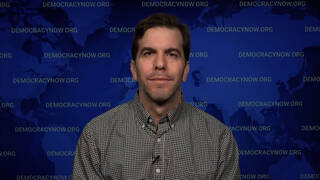
- Paul Ortizprofessor of labor history at Cornell University.
- Saya Taylorsophomore at Cornell University and a member of Students for a Democratic Cornell.
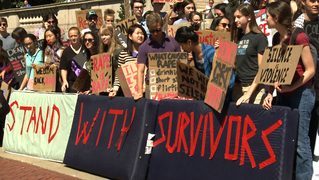
University students across the United States held a national day of action in solidarity with “Jane Doe,” the anonymous former student whose lawsuit alleging she was gang-raped by seven Cornell University Chi Phi fraternity members in 2024 has reignited outrage over how campuses and local law enforcement mishandle sexual assault cases and fail survivors. We go to Cornell’s campus in Ithaca, New York, where faculty have introduced a no-confidence resolution against the university administration.
“The number one message that Cornell students have is that Jane Doe’s ordeal is the tip of the iceberg, that there have been many, many other cases where women have been sexually assaulted and raped at Cornell University, and they’re afraid of coming forward. They’re afraid of going to the authorities because the investigation may be botched or they may be shamed,” says Paul Ortiz, a professor of labor history and the lead sponsor of the resolution.
“Rape culture and sexual assault culture thrives on campus,” adds Saya Taylor, a Cornell sophomore and a member of the group Students for a Democratic Cornell. “The true outrage in this case doesn’t just come from what happened to Jane Doe. It comes from the fact that it could have happened to anybody, and they still would have not received any justice.”
Related Story
 StoryJan 28, 2015“The Hunting Ground”: Film Exposes How Colleges Cover Up Sexual Assault and Fail to Protect Students
Transcript
AMY GOODMAN: This is Democracy Now!, democracynow.org. I’m Amy Goodman, with Juan González.
We turn now to the national outcry over the recent revelations of sexual assault at Cornell University. And a warning to our audience: The following stories contain graphic descriptions of sexual assault.
The former student who has sued Cornell University alleging she was gang-raped in 2024 by seven male students at the Chi Phi fraternity house has reportedly gone into hiding in her parents’ home after receiving death threats. Lawyers for the woman, known only as “Jane Doe,” described her deteriorating mental state to CNN after an escalating series of violent threats. That included a so-called swatting episode in which heavily armed police officers showed up at her family home, guns drawn, on a bogus tip that people had been killed inside.
Since Jane Doe filed her civil suit, prosecutors have reopened a criminal investigation, and New York Governor Kathy Hochul appointed Attorney General Letitia James as special prosecutor in the case. Cornell University hired Sally Yates, a top former U.S. Justice Department lawyer, to lead an independent review of how the school handled the allegations.
Thursday was a national day of action in solidarity with Jane Doe and against impunity for sexual abusers, with high schoolers, college students, advocates holding walkouts, rallies, vigils in 40 states. Here in New York, scores of students from Columbia University and Barnard College protested outside Columbia’s gates, demanding administrators cut ties with associates of the late convicted sex trafficker Jeffrey Epstein, including Barnard College trustee Francine LeFrak, who was invited to spend a holiday with Jeffrey Epstein in 2010, two years after Epstein was convicted of soliciting prostitution from a minor. This is Marisol Bonifaz, a sophomore at Barnard College.
MARISOL BONIFAZ: As I reel in the actions of Cornell University, I remind myself that Jane Doe’s case is not one standalone incident. It is a campus rape culture that is permitted on every campus nationwide. It is a culture of ignoring survivors and diminishing their demands. And it is a system that maintains sexual assaulters in their powerful positions.
AMY GOODMAN: Meanwhile, at Cornell University, faculty members introduced a resolution calling for a no-confidence vote in university administrators’ handling of the alleged gang rape at a fraternity house. On Wednesday, students held a sit-in on campus, following a large demonstration on campus Monday. This is student protester Saya Taylor speaking Monday.
SAYA TAYLOR: Jane Doe deserved an administration that delivered a fair and proper judicial process. Jane Doe deserved a police department that would actually follow up on her case. Instead, she was silenced, her rapists free to walk the grounds of Cornell under a system that chose the university over the students.
AMY GOODMAN: For more, we’re joined by Saya Taylor from Ithaca, New York. She’s a sophomore at Cornell University majoring in environment, sustainability and government, a member of the Students for a Democratic Cornell. And we’re joined from Ithaca by Paul Ortiz, professor of labor history at Cornell University, leading sponsoring faculty senator for the vote of no-confidence resolution.
Let’s begin with you, Professor Ortiz. What actually are you calling for? What is this vote?
PAUL ORTIZ: Amy, this is a resolution that states that the faculty has no confidence in the ability of the central administration of Cornell to effectively address the ongoing crisis of sexual assault at Cornell. Students have been approaching faculty, Amy. Many of us have been holding open office hours. And the number one message that Cornell students have is that the Jane Doe — Jane Doe’s ordeal is the tip of the iceberg, that there have been many, many other cases where women have been sexually assaulted and raped at Cornell University, and they’re afraid of coming forward. They’re afraid of going to the authorities because the investigation may be botched or they may be shamed. And so, after hearing student after student coming in — and, Amy, not just students, current students, but alumni. I’ve had alumni share stories about how they were raped at Cornell in years past. And so, this is what leads us to call for a vote of no confidence in Cornell’s central administration.
JUAN GONZÁLEZ: And, Professor Ortiz, how do you respond to those who say that this is largely a symbolic vote, if it occurs, and will not lead to the removal of the president or the provost?
PAUL ORTIZ: Well, we respond to that by saying the — many people approached us as we were putting this resolution together. This is a collective process. And what we came up with was that even if you could remove Mike Kotlikoff or other administrators — and, believe me, there are many students and many faculty who would like nothing less — the problem is, if you remove one person, it doesn’t change the culture. It doesn’t change — it doesn’t change the culture of rape culture on campus. It doesn’t change the fact that generations of Cornell students and staff and alumni have been victims of sexual assault, and the central administration has failed to address those traumas. And so, sometimes Americans have this idea that if you just replace the person at the top, things will change. Well, this wouldn’t change anything at Cornell.
AMY GOODMAN: I want to go back to our guest, the student, Saya Taylor, who is 18 years old and a sophomore at Cornell University. If you can explain what you understood took place? This was several years ago when Jane Doe, as we are calling her, says she went into this frat house, Chi Phi, and says she was raped by seven male students. At this point, the college newspaper has named those students, right? Two of them expelled, and several of them still going to class. One was assigned writing an essay, and so we saw signs on campus that protesters were holding saying “Sentence sentencing, not essays.” Can you explain what you understood took place and why this has exploded on the campus now, Saya?
SAYA TAYLOR: What took place, as released by The Cornell Daily Sun, was a very horrific, very detailed and very graphic incident. What happened to Jane Doe wasn’t just the fact that she went to the Chi Phi house and seven men took advantage of her. The entire system of Cornell University failed her.
Students are outraged, not because they’re outraged solely at these seven men; they’re outraged at the system that the university perpetrates. Rape culture and sexual assault culture thrives on campus. Even though I’m a sophomore and I’m 18 years old, in my one full year that I’ve seen Cornell University, I have seen it firsthand, where Cornell has a very corrupt judicial process. They would rather brush many cases under the rug than actually give people fair trials, fair investigations and fair due process. So, the true outrage in this case doesn’t just come from what happened to Jane Doe. It comes from the fact that it could have happened to anybody on campus, and they still would have not received any justice.
JUAN GONZÁLEZ: And, Saya, I wanted to ask you — at universities across the country, faculty and staff every year undergo training on sexual harassment and sexual assault and what to do about it and the Title IX requirements. And yet, these events continue to happen. What is fundamentally wrong with the process that these universities are undertaking to educate their students and staff?
SAYA TAYLOR: As a member of Students for a Democratic Cornell, us, our organization, along with 40 other coalition partners on campus, released five demands that we want the university to see and to put into action in response to this case. And one of the demands does indeed talk about how mandatory sexual assault prevention training needs to take place. As it stands right now at Cornell University, you need to complete a module in the summer before you become a freshman at Cornell. It is 30 minutes long, and most students that I’ve interacted with have entirely skipped it. And even besides for the education level, Cornell University does not make sexual assault seem like a big thing. They make sexual assault prevention modules into a quick, 30-minute course, which is not the — which is not the severity that this situation or that these events require.
AMY GOODMAN: Let me ask Professor Ortiz — just going through what has taken place, Jane Doe said in the lawsuit that she arrived at the Chi Phi fraternity house one night to meet a friend. Despite already being intoxicated, she says, two of the frat brothers, including her friend, pressured her to snort ketamine and gave her marijuana. She says they proposed a threesome, she was too impaired to consent, then raped her. One of the men then sent a Snapchat message to a fraternity group, that chat, saying that there was, quote, “free [bleep]” upstairs. For the next several hours, Jane Doe says the seven named plaintiffs in the lawsuit took turns assaulting her. Now, Governor Hochul has called for an end to the intoxication loophole — I think 20 states have this — that says if you’re intoxicated, you can’t charge something like rape. And it is said that the Cornell police, in handing over the case to the Ithaca police and to the DA, omitted the phrase that she said, “I am 100% sure I was raped.” Professor Ortiz?
PAUL ORTIZ: Yes, these are all facts, Amy. And I think this is the reason that Jane Doe’s ordeal has galvanized students, faculty, alumni, and we’re hearing from people all across the country. My students have approached me, all women, to talk about their ordeals. And the reason Jane Doe’s case galvanized them is, they said, “We recognize our ordeal at Cornell in Jane Doe’s experiences. We have been sexually assaulted, and when we tried to speak out, we were silenced.”
There is a real culture of fear at Cornell, Amy. It’s not just Cornell, but we’re focusing on Cornell right now. Students have been afraid to speak out and to say anything that the administration might view as being unpopular. We know that there is repression of pro-Palestinian protesters, of antiwar protesters. What my students report to me is there’s a continuum of fear about speaking out to any experience that the university doesn’t want us to be making — being made public.
AMY GOODMAN: [inaudible] shut down? Was Chi Phi shut down?
PAUL ORTIZ: Yes, it was shut down. And, Amy, this morning, there was a powerful op-ed written by a former Chi Phi member in The Cornell Daily Sun. And I really want to lift up the Daily Sun as really a beacon of amazing reporting on campus, the independent student newspaper. But that former member of Chi Phi detailed the brutal hazing and very sexualized —
AMY GOODMAN: We —
PAUL ORTIZ: — hazing rituals. Yes.
AMY GOODMAN: We have to leave it there, but I want to thank you so much for being with us. We’ll certainly continue to cover this case. Paul Ortiz, professor of labor history at Cornell, and Saya Taylor, 18-year-old sophomore at Cornell, majoring in environment, sustainability and government, member of the Students for a Democrat at Cornell.
That does it for our show. Steal This Story, Please!, the documentary about Democracy Now!, will be viewable online for the first time in an exclusive special event starting Tuesday, October 13th, at 8 p.m. Eastern Time. If you live in Canada and the United States, you can watch the film in your own home, be part of the post-screening question-and-answer with me and the filmmakers, moderated by the Pulitzer Prize-winning journalist Maria Hinojosa. Find out more at StealThisStory.org. I’m Amy Goodman, with Juan González.






 Top
Top
Media Options