









 Watch Full Show


Topics
Guests
- John Pilgerone of the leading journalists in Britain, Pilger has also made many important films, including Death of a Nation, about East Timor, and films about Cambodia, Burma, Iraq and, most recently, globalization and Indonesia.
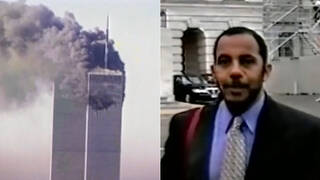
British Prime Minister Tony Blair was in New York yesterday visiting ground zero, where the World Trade Center once stood, and pledging British military assistance in what seems is an imminent U.S. war against Afghanistan. Britain lost more than 300 of its citizens in the attacks last week, this as thousands of Afghans flee their country in terror and the U.N. warns of massive starvation if food and other aid is not brought in immediately.
This morning, British journalist and filmmaker John Pilger wrote in The Guardian newspaper, “During my lifetime, America has been constantly waging war against much of humanity: impoverished people mostly, in stricken places. Moreover, far from being the main perpetrators of terrorism, Islamic peoples have been its victims — more often than not of an American fundamentalism and its proxies.” The Bush administration’s march to war, and British support, Pilger argues, promises more of the same.
Related Story
 StorySep 14, 2026Trove of Evidence Sheds New Light on How Saudi Intelligence Asset Helped 9/11 Hijackers Before Attack
Transcript
AMY GOODMAN: British Prime Minister Tony Blair was in New York yesterday visiting ground zero with a group of U.S. senators and pledging British military assistance in what seems to be an imminent U.S. war against Afghanistan. Britain lost more than 300 of its citizens in the attacks last week. Blair’s visit — thousands of Afghanis have fled the country in terror, and the U.N. is warning of massive starvation if food and other aid is not brought in immediately.
This morning, British journalist and filmmaker John Pilger wrote in The Guardian newspaper, “During my lifetime, America has been constantly waging war against much of humanity: impoverished people mostly, in stricken places. Moreover, far from being the main perpetrators of terrorism, Islamic peoples have been its victims — more often than not of an American fundamentalism and its proxies.” The Bush administration’s march to war and British support, Pilger argues, promises more of the same.
John Pilger is a world-renowned journalist and filmmaker. Among his films, Death of a Nation, about East Timor, films about Cambodia, Burma, Iraq and, most recently, globalization and Indonesia. He joins us on the telephone from London. I spoke to him just before the program began and asked him about the British response to the attack on the World Trade Center towers and the Pentagon, and now President Bush’s response to that.
JOHN PILGER: Well, the opinion polls are saying that two-thirds of the country support military action, and a third are opposed to it, but that half the country is opposed to any all-out war. Now, I don’t know what — really, what the questions that led to that kind of result in the polls, but at the moment, a majority would support the Blair government’s policies, which have been, as you know, to unequivocally support the Bush administration.
AMY GOODMAN: Last night, in President Bush’s speech, he said, “America has no truer friend than Great Britain. Once again, we’re joined together in a great cause. I’m so honored the British prime minister has crossed an ocean to show his unity with America. Thank you for coming, friend.”
JOHN PILGER: Yeah. Well, once together, they’re joined to — they’re joined together in yet another uncertain imperial adventure. I mean, when Britain handed the imperial torch to the United States shortly after the Second World War, its consolation was to be given the status of lieutenant. And that’s what it has been, very faithfully, over the years. So, putting aside the irony in — the unintended irony in President Bush’s remarks, he speaks — what he said is correct.
AMY GOODMAN: Two days after the attacks, you wrote a piece, “Far from being the terrorists of the world, the Islamic peoples have been its victims.” Can you talk more about that?
JOHN PILGER: Well, undoubtedly, the whole notion that the Islamic peoples are now the terrorists of the world is absurd. Just in numbers, they must be among the single greatest number of victims of terrorism. Just the Palestinian peoples have been that for 34 years and longer. The people of Iraq have lost at least a million people and half a million children in the Anglo-American-imposed embargo against that country. The so-called Afghan Arabs, as they’re referred to people of South Asia, were, of course — the mujahideen were partly the creation of Anglo-American intelligence. And so it goes on. I mean, it goes back longer than that. It goes back to the breakup of the Ottoman Empire, the deep anger felt in Egypt, where one of the extreme Muslim organizations, the Muslim Brotherhood, was founded.
It’s much — much of the so-called Islamic extremism comes from — is a legacy of imperialism. And the Muslim and Arab peoples have certainly been victims of that imperialism. Middle East and the Gulf have been a cockpit of upheaval, partly because of war, partly because of strategic struggle between the various imperial powers for a very long time. The Royal Air Force of Britain has been bombing that part of the world since the 1920s. So, I wouldn’t like to make a league table of who are the victims of terrorism, but at a guess, I would have thought the Islamic people, those peoples are near the top.
AMY GOODMAN: We’re talking to British filmmaker and journalist John Pilger. His latest film is The New Rulers of the World. You write in your piece how at the time of the attacks you were writing about Palestine and censorship. BBC and CNN recently, in the last months, have sent out memos to their staff, BBC not to call killings of Palestinians assassinations, CNN not to talk about the Jewish settlements in the West Bank, Gaza, in the Occupied Territories, “illegal settlements.” How would you — how do you describe the media that you are seeing right now?
JOHN PILGER: Well, in the case you mentioned of the BBC, I mean, the BBC has a very considerable reputation because of its very high production values. And really, that makes the kind of broadcasting that it does and the distortions in the coverage of the Middle East even greater, in my opinion. The BBC has long drawn a moral equivalence between oppressor and oppressed in the Middle East. And the example that you’ve just mentioned doesn’t surprise me at all.
Although over here, I think maybe in contrast to the United States, I’m not sure, but I think over here there’s been considerable enlightenment in recent years about the Middle East. People, I think, are no longer intimidated against being critical of Israel, so with the fear that they might be called antisemitic. I think that’s going rapidly. But all the same, the general coverage over here of the Middle East really still adheres to an Israeli news agenda. The Palestinians are generally cast as the people who plant bombs and blow up people and are the terrorists. Israel is seldom, almost never, identified as a terror state operating as an invader against an occupied people.
AMY GOODMAN: How is the British press covering the drumbeat to war? For example, President Bush’s address, did it air on nationwide television in Britain? And how are they framing it?
JOHN PILGER: Well, I think the majority of them are beating the drum, but there has been more discussion than I’ve known for a long time, much more discussion, open discussion, than, say, during the NATO action against Yugoslavia a couple of years ago. I think there has been — I think there has been a response to a real public hunger, a need, to make sense of all this and to debate it, and a fear, a fear of what America and Britain are about to do next, whilst they support, the majority support, the pursuit of — the pursuit of the people who are responsible for the atrocities in the United States. There’s widespread misgivings. And I think this has been reflected, unusually, perhaps, in the press, which usually closes ranks, as it did, as I say, during the Kosovo operation, as it did during the Gulf War. The Guardian newspaper, which took a very pro-war position in the last two instances I mentioned, has allowed a number of articles very critical of the Blair administration, including one by me, which is in The Guardian this morning. So, that, to me, represents a response to certain tensions within the public here at the moment, and confusion as to what is — what is happening, and, as I say, fear and insecurity about what might happen.
AMY GOODMAN: John Pilger, President Bush said last night, “If you are not with us, you’re with the terrorists.”
JOHN PILGER: Well, President Bush says a lot of things that kind of just come out of the sort of B movies I used to watch in Australia as a kid. And The Guardian's principal political cartoonist, a minor genius called Steve Bell, represents President Bush daily as, frankly, an idiot. I don't think it really matters what President Bush says. I think President Bush is just one of a Bush team. And that team goes back to the great — the great warlord George Bush Sr. I think that Bush — that it seems to me that Cheney and all the others from his father’s era are really running the show. And, you know, Ronald Reagan used to say pretty stupid things. But I think that there are some very serious and worrying people behind him.
AMY GOODMAN: John Pilger, speaking to us from London. We’re going to come back to him in just a minute. He is a well-known British journalist and filmmaker. His latest movie is called The New Rulers of the World, about globalization. And he has written many books, his last called Hidden Agenda. You’re listening to Democracy Now! in Exile. We’ll be back with him in a minute, and then we’re going to find out about a Muslim rally that was just canceled by police in New York. We’ll speak with students around the country who protested yesterday. And then we’ll go to Belgrade to find out about people there who were recently under a rain of bombs, how they feel about what happened in the United States. Stay with us.
[break]
AMY GOODMAN: You’re listening to Democracy Now! in Exile, The Exception to the Rulers, as we broadcast for you these daily two-hour specials on The War and Peace Report, and continue with British filmmaker John Pilger.
AMY GOODMAN: John Pilger, you’re well known for your films on East Timor, Death of a Nation, and also on Cambodia. One of the frequent guests on U.S. television, I assume on international TV, as well, is Henry Kissinger as an expert on terrorism, but not in the sense —
JOHN PILGER: Well, his is, in a strange way, yeah.
AMY GOODMAN: What’s that?
JOHN PILGER: He’s — he would — he would have personal knowledge of it, I’m sure.
AMY GOODMAN: What about that, framing him as an elder statesman?
JOHN PILGER: Well, you know, the Kissinger record is there. I mean, it’s on — it’s in the public domain. I don’t see really what the debate is. But I think — I think there’s a growing public awareness, consciousness, of just — of what Kissinger has done over the years. As far as East Timor is concerned, we’ve seen the minutes of his meetings at the State Department in 1975, when he was approving the — when he was approving the covert shipment of weapons and aid to the Indonesians just as they were beginning their slaughter in East Timor. I think his historical role is becoming assured, and it’s not really the one that he would want.
AMY GOODMAN: Finally, you write that only someone who has never seen the effects of cluster bombs could talk as Tony Blair and Bush have. Well, we just spoke to family members who saw the effects of terror and destruction at the World Trade Center towers. One lost her brother, another her husband. And they want nothing to do with bringing more death to more people. What is your response? They are rarely seen, these views. Though they’re brought on to describe, you know, their family member that they’ve lost and what happened in those hours, they’re rarely asked a second question, the actual victims. And that is: What would you like to see done?
JOHN PILGER: It’s very difficult to talk to grieving people. I’m not really for that. I don’t like doing that. I think it’s wrong to ask them their opinions when they’re consumed by grief. But some of them have given them voluntarily, some very brave opinions. And we’ve had some of the British victims of the World Trade Center bombings. One man is quoted this morning as saying that Bush ought to be caged. This is not — I think it was his brother. I’m not sure. But I think it was his brother who died. And he — just paraphrasing him, he felt his brother didn’t die for a lot of other innocent people to die. That’s a very — that’s a very admirable logic expressed by someone who must be grieving so deeply.
My own public opinion poll would be that most human beings would believe that, that there’s only — there’s one truth in all of this. And that is, the killing of innocent people in New York and in Washington is indefensible and cannot be justified, and the killing of innocent people anywhere in the world is indefensible and cannot be justified.
AMY GOODMAN: John Pilger, British journalist and filmmaker. His latest film is The New Rulers of the World. His book is Hidden Agenda. Speaking to us from London, as we continue with this media special. We are broadcasting on the internet at WebActive.com and WBIX.org. We’re broadcasting on public access television, channel 56 on Manhattan Neighborhood Network. You, too, can get us on your public access station. You can just record from Dish Network, Free Speech TV, and you can call them in Boulder, Colorado. And we’re also broadcasting on Pacifica affiliates around the country, as well as Pacifica station KPFA in Berkeley, broadcasting from near ground zero, just blocks from where the World Trade Center once stood.





 Top
Media Options