












 Watch Full Show

Guests
- Isobel YeungCNN International correspondent.
- Yael Schacherdirector for the Americas and Europe at Refugees International, co-lead of Third Country Deportation Watch.
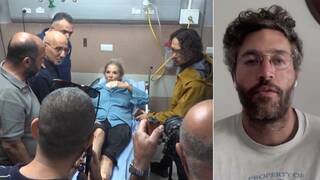
As part of its mass deportation campaign, the Trump administration is secretly deporting immigrants to countries that they have no ties to. CNN correspondent Isobel Yeung recently traveled to the Central African Republic, which in recent months has accepted dozens of immigrants who had previously been granted deportation protections because they risk facing torture in their home countries. Despite the fact that the State Department warns U.S. citizens not to travel to the Central African Republic “under any circumstances,” the Department of Homeland Security has now deported dozens of immigrants from countries including Afghanistan, Cuba, Russia and Iran to a legal limbo in a country wracked by civil war between Muslim and Christian militias and officially ruled by a Russia-backed authoritarian dictator.
We play excerpts of Yeung’s report, which features interviews with immigrants who now live precarious lives in the Central African Republic capital of Bangui, without family, friends or even a common language, and at risk of malaria, extortion and violence. “Many of them did not know where they were going to until they stepped foot on the flight,” Yeung tells Democracy Now! They have been placed in temporary lodgings for three months, but after that, continues Yeung, “I don’t think anyone knows where they’re supposed to go.”
According to Third Country Deportation Watch, the United States has signed so-called third-country deportation agreements with as many as 35 governments around the world. Most of the over 20,000 people deported under these agreements have been turned back at ports of entry to Mexico, but an increasing number are being placed on deportation flights and sent to countries like Costa Rica and Ghana, far from their countries of birth. By carrying out this scheme and by threatening other immigrants with the possibility of third-country deportation to coerce them into choosing to “self-deport,” the Trump administration “is really attacking and undermining the entire architecture of refugee protection,” says Yael Schacher, a co-lead of Third Country Deportation Watch.
Related Story
 StoryJul 16, 2026Victor Salgado Araujo Saw ICE Agent Kill His Brother in Texas. He Is Now Detained, Faces Deportation
Transcript
AMY GOODMAN: This is Democracy Now!, democracynow.org. I’m Amy Goodman, with Juan González.
We turn now to look at how the Trump administration is secretly deporting immigrants from around the world to countries they have no ties to. CBS News reports that in the span of 10 days, the Trump administration recently deported more than a hundred immigrants from the U.S. to countries across Africa.
CNN’s international correspondent Isobel Yeung recently traveled to the Central African Republic, CAR, to find out what happened to a group of migrants who had been sent there. These were migrants from Afghanistan, from Tajikistan, from Georgia, from Iran. In a moment, Isobel Yeung will join us, but first, here is an excerpt from her CNN report.
ISOBEL YEUNG: Here’s what we know about how these migrants wound up here. At 8:58 p.m. on June 11th, 18 migrants from all over the world were brought to Alexandria Airport, Louisiana. They say they were handcuffed and shackled. Several claim they were severely beaten. Two of the migrants say they refused to board the ICE deportation flight and were forced into a full-body restraint. Public records show ICE spent tens of thousands of dollars last year on restraints, like the ones seen here in a demo video, specifically for use on such flights. Other migrants we spoke to testified to witnessing this. A U.S. official called the allegation a “flat-out lie” and denied anyone was beaten. The maker of one such restraint said it’s a last-resort tool intended to promote safety and prevent escalation.
ROBERT GUITELMAN: His family member informed me that he was actually removed. And I paused for about 10 to 15 seconds, not understanding what is going on, because I didn’t receive any sort of information. I had no knowledge, no notice.
ISOBEL YEUNG: This is the plane that was used. A return flight likely cost around $1.2 million, according to flight trackers, Human Rights First, local journalists and publicly available figures from ICE. The charter company did not reply to us. Nearly 20 hours after takeoff and a refueling stop, it touched down in Bangui, Central African Republic. Since we’re unable to enter the building they’re being held in, we managed to arrange for them to meet us nearby. For some, this is the first time they’ve been outside since their arrival several weeks ago.
Maybe I can just start with: Where are you from originally?
GEORGIAN MAN: I’m from Georgia.
ISOBEL YEUNG: You’re from Georgia?
GEORGIAN MAN: Yes.
EGYPTIAN MAN: Egypt.
ISOBEL YEUNG: Egypt.
AFGHAN MAN: Afghanistan.
ISOBEL YEUNG: Afghanistan.
IRAQI MAN: Iraq.
ISOBEL YEUNG: Iraq.
JORDANIAN MAN: Jordan.
ISOBEL YEUNG: Jordan. So, all different countries. How are you all doing here?
EGYPTIAN MAN: Doing here? Like hell.
ISOBEL YEUNG: Like hell?
EGYPTIAN MAN: Yeah. No internet, no electric, too much of mosquito. Everybody have malaria. No safety. One time I’m going to travel outside and get some shopping. They arrested us.
JORDANIAN MAN: [translated] [The police] detained us and then demanded money from us. Since that day, we have not left the building.
ISOBEL YEUNG: One of the most confounding questions is why migrants were sent here. The U.S. State Department warns people, “Do not travel” here, for risk of kidnapping and terrorism, and advises those who must to leave behind a DNA sample so they can be identified by their family.
AMY GOODMAN: That was an excerpt of a report from CNN’s Isobel Yeung. In the report, she also examined the money behind these third-country deals.
ISOBEL YEUNG: Most of the migrants we spoke with had won protection orders from U.S. judges. This stops the government from sending them back to their home countries, where they’re likely to face persecution, torture or death. Until recently, it was incredibly rare for someone with protection orders like these to be deported, including to a third country. But that’s all changed.
Very little is known about what terms the CAR government agreed to with the U.S. What we do know is that on May 18th, just one month before the first deportation flight, State Department diplomats traveled here to meet with the president. For the past decade, the U.S. has given just a few million dollars a year to the U.N. migration agency IOM’s operations in CAR. But this year, that figure shot up to $85 million. The U.S. committed an additional $50 million to the CAR Humanitarian Fund. This is at a time when the Trump administration has been slashing billions of dollars in foreign assistance. We asked the IOM about the money they’re receiving. They didn’t respond to our specific questions, but told us the IOM has a long-standing presence in the CAR, and they’re receiving funding from a range of donors.
AMY GOODMAN: CNN International correspondent Isobel Yeung, joining us now from London. And we’re joined by Yael Schacher. She’s director for the Americas and Europe at Refugees International and helps run the Third Country Deportation Watch database, joining us from Washington, D.C.
Isobel Yeung, let’s begin with you. A really, a significant report you did from the Central African Republic. And, you know, this is really interesting. I also went to the Central African Republic, but during the George W. Bush government, when the U.S. deported the Haitian President Jean-Bertrand Aristide and his wife to CAR. They could be sure that in this autocratic regime, he would be held there. And I followed a delegation that went to take him back to the Western Hemisphere. Now it’s the Trump administration. And talk about what the Trump administration is doing with CAR and who these deportees are.
ISOBEL YEUNG: Yeah, I mean, it is remarkable. And as you said, Amy, I mean, it’s not a country where a lot of people travel to. In fact, the U.S. State Department themselves warn people not to travel there under any circumstances, for any reason, because there is a real legitimate risk of, you know, kidnapping or terrorism. This is a country that is under an ongoing civil war right now.
But, you know, this is one of the countries, and the most recent country, that the Trump administration has signed these so-called third-country deportation deals with. You know, very little is known about these deals. They are tended to be shrouded in secrecy. Not a lot of it is made public. What we do know is that a significant amount of money — in fact, $85 million — was sent to the IOM, the U.N. migration agency’s operations in the Central African Republic this year, on top of an additional $50 million to the CAR’s Humanitarian Fund.
And what we know — I mean, we were looking into this because we saw that there was the very first flight that was sent to the Central African Republic full of 18 migrants back in June. And so, we had been following and tracking this flight, and we had been in touch with some of the migrants. These migrants are from all over the world. Some of them come from Afghanistan, from Iran, from Iraq, from Jordan. And over the months and weeks, we were speaking to these migrants.
And, you know, they are in shock. They are living in a country which they have absolutely no ties to. Many of them have never set foot in Africa before, let alone the Central African Republic. Many of them did not know where they were going to until they stepped foot on the flight. In fact, one of the migrants told me that, you know, she was looking on the screen in front of her on the seat, and she saw the words “Bangui, Central African Republic,” and was desperately trying to figure out where that was and where it was that she was going to.
And so, now that they are there, many of them are living in fear. Many of them are stuck inside these apartment buildings, unable to go out. They are living in limbo, because the Central African Republic has given them three-month visas in which they can stay, so very temporary. So, they don’t know what their situation is. And many of these migrants, in fact, the majority of them that we spoke to, have been given these court protection orders by U.S. judges, which means that they cannot be deported back to their home countries.
So, for example, I spoke to a young Iranian pro-democracy activist who was very active in Iran several years ago. She said that she was threatened by the Islamic Revolutionary Guard and fled to the U.S. And after months and months of traveling and trekking through the Darién Gap and a lot of hardship, she arrived in the U.S. at the end of 2024, was granted this withdrawal of removal, which means that she could not be sent back to Iran, for fear of persecution. But, obviously, the Trump administration has found a loophole around that and has instead sent her to the Central African Republic, where she’s living an extremely uncertain life right now.
JUAN GONZÁLEZ: And, Isobel, you mentioned that they have basically a three-month visa to be in the Central African Republic. Where are they expected to go after that? And did you have any communications with the U.S. Embassy in that country about their situation?
ISOBEL YEUNG: Well, that’s a good question. I mean, I don’t think anyone knows where they’re supposed to go after that. We did not really get much of a response from the Central African Republic government. We don’t know if they were aware that they would have to — you know, beyond just accepting these migrants for a temporary stay, whether they would actually have to try and come up with some form of solution. It seems that the IOM hasn’t really been able to provide a solution for these migrants. It seems that the UNHCR hasn’t really been able to provide a solution for them. As I said, many of them have won court protection orders, so they’re absolutely terrified to go back to their home countries, because they could face persecution, torture or death, and there is a legitimate reason for many of them to fear exactly that.
You know, when we reached out to the — well, first, we went to the U.S. Embassy whilst we were in the country. They were not very forthcoming with us, and they told us to — they gave us a bit of a runaround. We did eventually hear back from the U.S. State Department, who, you know, said that all these people had gone through due process and had been deported under legitimate grounds and that, you know, they do make deals with countries who are willing to help the U.S. with their immigration priorities. And, in fact, they do even use foreign assistance, where necessary, to establish these deals, which we took as a sort of tacit admission that, you know, this money, this $85 million and the $50 million that I mentioned, could be tied to these deportations.
JUAN GONZÁLEZ: And briefly, do you think that this effort by the Trump administration is meant to signal to other immigrants or migrants in the U.S. that they’d better head back to their own countries, or this will happen to them, as well?
ISOBEL YEUNG: Well, yeah, I mean, it doesn’t seem like the Trump administration is slowing down with their deportation efforts. And in fact, even just this weekend, there was another flight that was sent to the Central African Republic with what we understand to be over 40 migrants on board, many of them from Iran, some of them from Afghanistan. In fact, one of them, their family members had fought with the U.S. military in Afghanistan. And so, it does seem like, you know, perhaps this is a warning, but perhaps, you know, this is also the Trump administration willing to do whatever it takes to try and meet their deportation goals.
AMY GOODMAN: And the woman you spoke to from Iran particularly interesting, given the latest breaking news, Isobel. Newly released emails show U.S. immigration officials worked with Tehran to deport more than a hundred Iranians on three flights between September 2025 and January 2026. Now, she was deported later, the woman you have done pieces on, and her fear that if after three months she has to leave and if she’s sent to Iran, she could be killed.
ISOBEL YEUNG: Yeah, I mean, you’ve got to remember it wasn’t so long ago — in fact, earlier this year — that, you know, Trump himself was encouraging protesters in Iran to go out and protest and to keep fighting, and that the fight — that help was on the way. You know, this particular individual that we spoke to in the Central African Republic, you know, she’s in her early thirties. She told us that she was thrilled when the U.S. and Israel went to war with Iran, and that she celebrated the death of the ayatollah and hoped that she could return to Iran safely. But that obviously hasn’t been the case, and, you know, now she is stuck in a situation.
She is absolutely terrified that she could be repatriated or even refouled back to Iran. She says she fears execution. We spoke to her uncle and her family members, who said that, you know, she could be killed, and it’s a very legitimate fear, if she was to return to Iran. So, she’s really stuck in this very difficult situation. I mean, obviously, holding an Iranian passport doesn’t really buy you a free pass to many countries right now. And she’s also scared that the circumstances could change. I mean, she says that she’s living in fear. She’s not really able to leave her apartment without, you know, help or without someone there with her. She says that the local police have been extorting her, extorting for — people, including her, for cash every time she goes to the shops — this is something that the local authorities deny — and that she doesn’t feel safe there as a woman, as an Iranian, but she really does not know where she can go or what her options are right now.
AMY GOODMAN: I want to bring Yael Schacher into the conversation, director, one of the directors, at Refugees International and a Third Country Deportation Watch co-lead. If you can talk about this database and what these bilateral agreements are, secret deals the U.S. has with other countries across Africa, beyond the Central African Republic?
YAEL SCHACHER: Yeah. Thanks for having me.
The U.S. has signed over 30 of these bilateral agreements, not made many of the terms transparent at all, used all the sort of carrots and sticks in the diplomatic toolbox to — you know, from tariffs to visa bans, to economic investment, to security and military aid, to humanitarian aid — to kind of get countries to agree to take third-country nationals. And by the terms of the agreement, which are really boilerplate, you know, these countries say they’ll accept these third-country nationals. Usually, as Isobel was saying, they think that they’re taking them temporarily. They agree — there’s some boilerplate language in these agreements that everybody will abide by their international obligations not to send people back to harm, to abide by the U.N. Refugee Convention, to abide by the Convention Against Torture.
But what we’ve seen is that the Trump administration, as Isobel was mentioning, is targeting for removal to these third countries people who have been found to be refugees in the United States and gotten these withholding-of-removal grants, saying that they would likely be persecuted or tortured if returned to their home countries. So, the Trump administration is targeting them and people seeking asylum in the United States to send to these third countries, who then think that they are only responsible for holding them for a little while and can repatriate them. So, what you’re seeing with these deals is the Trump administration really targeting these very vulnerable populations for removal to countries that think that they can repatriate them, and, by doing this, is really attacking and undermining the entire architecture of refugee protection, the international architecture set up with these treaties, the Convention Against Torture, for example.
Some agreements are with countries who are detaining people indefinitely, like in Eswatini, in Equatorial — some of the agreements are with corrupt, extremely corrupt leaders, Equatorial Guinea, one of the most corrupt governments in Africa, direct money being given by the Trump administration to basically hold these third-country nationals. And again, many of them are being repatriated to the countries that they fled.
And so, what we’re seeing is, for me, I really think this should be seen — and our website really shows this — that these agreements are sort of trying to institutionalize this attack on refugee protection, not only in the United States by depriving people of their day in court, of the right to seek asylum, of staying in the United States after they’ve been granted refugee protection, coercing them, as was mentioned, into sort of leaving on their own because of the threat of being sent to these third countries, but also actually undermining international protection globally, ’cause many of these countries who have also signed on to these treaties are just violating them, too, keeping people arbitrarily detained and then repatriating to the very countries — to persecution in the very countries which they fled.
AMY GOODMAN: We have 20 seconds. Can you talk about how many countries have these agreements with the United States in Africa, in Latin America, and how many tens of thousands of immigrants have been sent to countries that are not their own?
YAEL SCHACHER: So, we know of 35 agreements. There may be more we don’t know of yet. And over 22,000 people have been sent. And a lot of people have already had their cases canceled and have the threat hanging over them of being sent to these third countries.
AMY GOODMAN: Yael Schacher, I want to thank you for being with us, director for the Americas and Europe at Refugees International, co-lead of the Third Country Deportation Watch database. We’ll link to it all. And thank you so much in London to Isobel Yeung, CNN International correspondent. We’ll link to your report, “How Trump is secretly deporting migrants to Africa.”
Coming up, we look at Puerto Rico’s escalating water crisis. Amidst a historic drought, Puerto Rico is rationing water. Back in 20 seconds.
[break]
AMY GOODMAN: “Contra Todo,” “Against Everything,” by the Puerto Rican singer and songwriter iLe, performing in our Democracy Now! studio.






 Top
Top
Media Options