









 Watch Full Show

Guests
- Neta Crawfordprofessor of international relations at the University of St Andrews, co-founder of the Costs of War Project.
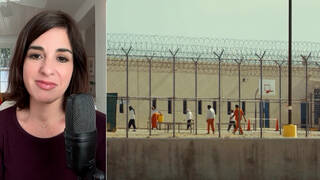
As part of our weeklong coverage marking the 25th anniversary of the September 11 attacks and the launch of the United States’ so-called war on terror, we take a look at the human, financial and environmental costs of U.S. military intervention around the world with Neta Crawford, co-founder of Brown University’s Costs of War Project. Researchers at the Costs of War Project estimate that nearly a million people have been killed as a direct result of U.S. military violence in the Middle East since 2001. At least half are estimated to be civilians. An additional 3.8 million deaths can be attributed to the indirect effects of war, including injuries, famine and long-term health conditions. And the wars have also increased the U.S. debt, military footprint, greenhouse gas emissions, destruction and destabilization abroad and unchecked executive power at home. “The consequences are all around us,” says Crawford.
Related Story
 StorySep 10, 2026“Reign of Terror: How the 9/11 Era Destabilized America and Produced Trump”: Spencer Ackerman
Transcript
AMY GOODMAN: This is Democracy Now!, democracynow.org. I’m Amy Goodman, with Nermeen Shaikh.
NERMEEN SHAIKH: We end today’s show with a look at the human, budgetary and environmental costs of these forever wars. According to the latest numbers from the nonpartisan Costs of War Project at Brown University, close to 1 million people were killed due to war violence in Afghanistan, Iraq, Pakistan, Yemen, Syria and beyond. At least half of them are estimated to be civilians. The indirect death toll from these wars is far higher, between 3.6 and 3.8 million people.
AMY GOODMAN: In terms of budget costs, the U.S. federal government has spent more than $8 trillion on the post-9/11 wars through 2021.
For more, we’re joined by Neta Crawford, the co-founder of the Costs of War Project.
In these last few minutes that we have, lay out the costs of war, as we are here today on this 25th anniversary of the 9/11 attacks.
NETA CRAWFORD: Well, you’ve already touched on the direct death, the killing that results when bombs and bullets and fire are rained down on people. And the soldiers who were fighting for the United States and its allies died. But there’s the indirect death, the consequences of the destruction of infrastructure, which can be two or three times the number of people who are injured. And this is because there’s no longer hospitals or healthcare available to people, because food has been — production has been disrupted. So, the harm to bodies is substantial.
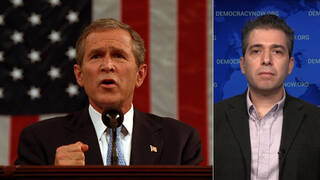
A second harm, which Spencer Ackerman discussed briefly, was the harm to U.S. democracy. There’s decreased congressional and judicial oversight of the executive, increased executive power. There’s been a decline in the rule of law. The United States waged preventive war in Iraq. That’s a real consequence, which has led to more easily waging war in Iran.
So, there’s the human toll, the political consequences, and the environmental consequences are devastating, because not only did the United States increase its use of force immediately after the attack on Afghanistan began, the United States military has increased its use of force even after those wars ended. The United States has a global military presence, more than 750 bases around the world. And its presence has caused environmental harm because of the greenhouse gas emissions associated with the world’s largest petroleum user, which is the Department of Defense.
So, it’s human, political, and now just to conclude with the economic costs, which are increased debt to the United States, increased military spending, but also, because these wars were not paid for through taxes like previous wars — they were paid for by borrowing — the United States’ debt has grown, and the interest to pay the debt will be coming out of the Treasury for many years to come. So, the consequences are all around us.
AMY GOODMAN: I want to thank you so much for being with us, Neta Crawford, co-founder of the Costs of War Project, which we will link to.
That does it for our show. Tomorrow, on September 11th, we’ll be joined by Jameel Jaffer and Azmat Khan, who have been running an event, “The Forever War and the First Amendment: A symposium on how the 'War on Terror' has shaped the freedoms of speech and the press.”
I’ll be speaking on September 17th after the screening of Steal This Story, Please!, about Democracy Now!, in Bay Shore, New York. Can’t wait to go home to see my friends at Bay Shore High School. Then, on September 22nd, we’ll be at the IFC for the screening of the film with Tia Lessin and Carl Deal.
That does it for our show. I’m Amy Goodman, with Nermeen Shaikh, for another edition of Democracy Now!, democracynow.org, The War and Peace Report.



 Top
Top
Media Options