










 Watch Full Show


Guests
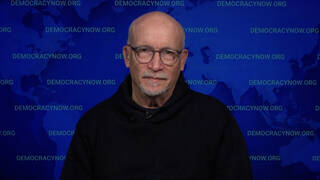
- Laís Martinsreporter with The Intercept Brasil, where she covers technology, politics and human rights.
Brazilian voters are heading to the polls on Sunday for the presidential runoff between incumbent President Luiz Inácio Lula da Silva and far-right Senator Flávio Bolsonaro, with polls showing a tight race that will decide whether Brazil remains led by the left or joins the right-wing surge across Latin America.
We speak to reporter Laís Martins of The Intercept Brasil.
Related Story
 Web ExclusiveSep 24, 2026“Gilded Rage”: Author Jacob Silverman on Elon Musk & Right-Wing Extremism in Silicon Valley
Transcript
AMY GOODMAN: This is Democracy Now!, democracynow.org. I’m Amy Goodman in Los Angeles, with Juan González in Chicago.
We go now to Brazil, where Sunday’s presidential runoff could determine the future of Latin America’s largest democracy. The incumbent President Luiz Inácio Lula da Silva is facing off against Senator Flávio Bolsonaro, the son of the far-right former President Jair Bolsonaro. The elder Bolsonaro is currently in house arrest for decades for his role in a failed military coup and assassination plot after he lost to Lula in 2022. Despite his father’s attempted coup, Flávio Bolsonaro is the front-runner in Sunday’s race, after coming out slightly ahead in the first round of voting earlier this month, and he promises to free his father.
Flávio Bolsonaro and President Luiz Inácio Lula da Silva sparred in their first and only debate Sunday, a week before the presidential runoff. During the debate, Lula attacked Bolsonaro for supporting his father’s response to the COVID pandemic. This is a portion of their debate. This is Flávio Bolsonaro speaking first.
SEN. FLÁVIO BOLSONARO: [translated] The PT, the Workers’ Party, has been governing Brazil for 20 years, and nothing has changed or improved for you when it comes to healthcare.
PRESIDENT LUIZ INÁCIO LULA DA SILVA: [translated] Only someone who knows nothing about healthcare, someone who has never used the public health system, could say something like that. They had a four-year run, and it was the greatest disaster in this country’s history: 716,000 people died due to the government’s irresponsibility. Half of those deaths could have been prevented if they had listened to science, if they had believed in science, but they didn’t.
AMY GOODMAN: Meanwhile, President Lula has requested the disqualification of Flávio Bolsonaro over alleged interference by social media company Meta. The president’s petition, filed to Brazil’s top electoral court Wednesday, accuses Meta of limiting the reach of Lula’s posts on Facebook, Instagram and WhatsApp to boost Bolsonaro’s campaign. This comes after a report led by U.N. special rapporteur on freedom of expression expressed concern over discrepancies in the ability of each campaign to reach voters over Meta’s platforms. Meta has denied favoritism.
For more, we’re joined now from São Paulo, Brazil, by Laís Martins, a reporter with The Intercept Brasil, where she covers technology, politics and human rights. Her latest piece is headlined “Exclusive: Flávio Bolsonaro Paid 600,000 Reais to a Company in the U.S. That Sells an AI System to Manipulate Elections.”
Welcome to Democracy Now!, Laís. If you can explain what you found in this explosive exposé?
LAÍS MARTINS: Thank you, Amy. Sure.
So, the story that we published just last week was based on reports from a whistleblower in the United States, this citizen that came to us with material, including troves of data and documents, showing that this company, called Elytron Cybersecurity, a company that is based out of Brazil but also out of Portugal, that has been hired by the Flávio Bolsonaro campaign, had reportedly, allegedly, offered manipulation, political manipulation, services to people connected to the Trump campaign in 2024.
It’s important to say there is no confirmation as to whether the Trump campaign effectively hired the service or the Flávio Bolsonaro campaign hired the service. But the motivation for this whistleblower to come to us was that the material and the capabilities of this tool that he saw were so serious that he decided to reach out to reporters in Brazil once he saw that the Flávio Bolsonaro campaign had hired this same company.
After we published last week, a legal group connected to the Lula campaign requested the Federal Police start investigating this matter, so we expect to see some other developments related to the possibility of this tool having been used.
JUAN GONZÁLEZ: And, Laís, what about this whole issue of Meta’s role in, and especially with its various companies — Facebook, Instagram and WhatsApp — having an impact on the first round of the Brazilian elections and the current round?
LAÍS MARTINS: Yeah, I think Meta has become a big character in this electoral race. Even before the first round, we had seen some movement. For example, Lula’s campaign page on Facebook had been disabled from running ads. The company called it a technical issue. They apologized for the inconvenience. We also had this very viral profile connected to a group of journalists that had been producing videos, kind of explainer videos, on scandals connected to the Bolsonaro family. This profile was taken down without any explanation. Again, Meta apologized for the inconvenience, is what they called it. So, we’ve seen evidence pile up that something is not right, that this playing field is not equal. This has, of course, motivated the Lula campaign to go to the electoral court, as Amy said.
But we have also seen Meta’s measures affect regular citizens. So, journalists, independent journalists, activists, student body unions, that have been using social media to rally support in favor of Lula, have also seen their profiles taken down, technical restrictions. People have been unable to share content on social media. So, this evidence has been piling up that Meta’s content moderation decisions have possibly favored the Flávio Bolsonaro campaign.
I want to mention there was a really important report last week from Folha de São Paulo — actually, earlier this week — that kind of confirmed what people were feeling, you know, this weird feeling that something might be off. It was based on internal messages, and it confirmed that there was a technical restriction placed upon Lula’s profile, which would explain the different engagement and reach numbers. After this story was published, again, the Lula campaign went to the electoral court and also the Federal Prosecution Service in Brazil. The Federal Prosecution Office is starting a separate — they requested federal courts open a separate investigation looking into what could have happened.
JUAN GONZÁLEZ: I also wanted to ask you about the impact and the role of the Pentecostal movement in Brazil. I mean, throughout Latin America, in terms of a base of support for right-wing movements, but especially in Brazil, how that has developed over the recent decades?
LAÍS MARTINS: It’s an important — definitely an important group of voters, right? And they’ve been looked at, analyzed, as the group of voters that could decide elections. So, historically, this group has voted in favor of the right, right-wing parties, including one of the parties that we have that is part of the Bolsonaro coalition. Republicanos is very much the evangelical church party, connected to big pastors. But in this election, we have seen this sort of divide because moral issues have come at play. So, lots of the scandals involving Flávio Bolsonaro and his family are moral scandals, right? Scandals related to prostitution or even just corruption scandals, you know, money laundering. So this divides this electoral group.
I think it’s important we understand they are not a very homogeneous body. They vote differently. Evangelical women vote differently. So, I think this is always a vote that candidates look as a vote to be conquered. And it’s been interesting to see how this election, you know, this vote, has kind of changed based on the things that have been surfacing.
AMY GOODMAN: If you, Laís, could talk about this controversy around leaked memos, a film about Jair Bolsonaro called Dark Horse, and what’s in these voice memos?
LAÍS MARTINS: So, in May, my colleagues and I at The Intercept in Brazil, we published this scoop based on leaked documents and leaked conversation, WhatsApp conversations between banker Daniel Vorcaro, who is currently being investigated for what could potentially be the largest financial fraud in Brazilian history, and Senator Flávio Bolsonaro. So, in one of the voice notes, Flávio asks the banker for 134 million reais to fund this biopic about his father, Jair Bolsonaro. We were able to confirm that 61 million reais were effectively paid from this money that was requested, and they were transferred to a fund in the United States that is controlled by lawyers connected to Eduardo Bolsonaro, Flávio’s brother and the other son of Jair Bolsonaro.
So, there are lots of very off things about this story. The first would be that the production company that is behind this movie is a production company with zero experience in audiovisual productions. So, also, the budget for the movie, this is a very expensive movie. It’s more expensive than, for example, Oscar-winning movie I’m Still Here; the Brazilian movie that won the Oscars last year is around 48 million reais, the budget, if I’m not mistaken. So, it’s a very expensive movie with, you know, B-role actors. Jim Caviezel was cast as Jair Bolsonaro. So, lots of things didn’t match.
And Flávio’s first response when, you know, he was asked about this movie was to say, “This is private money.” They played it as a private sponsorship. But it’s important to say what is being investigated about this financial fraud scheme is that this bank, called Banco Master, they were taking money from pension funds. They were convincing governors, banks across — public banks across Brazil to invest pension funds into their bank to kind of keep them afloat. So this is actually not private money. It’s money that belongs to elderly citizens in Brazil who are counting on their pension funds, right?
What the police is currently investigating in Brazil — and this is a Federal Police investigation — is whether this money that was transferred to the fund in the United States was actually diverted, not used for the movie, but to fund Eduardo Bolsonaro’s activities in the U.S., including his political activities, because he has been effectively and constantly lobbying with the Trump government to take measures against Brazil, such as the tariffs, the application of the Magnitsky Act against our Justice Alexandre de Moraes. So, it’s not a story about a movie. It starts out as a story about a movie, but it’s actually about something way bigger and still an investigation.
AMY GOODMAN: Laís, we just have about 30 seconds, but let’s end by you talking about the use of AI and deepfakes that are targeting Lula’s campaign.
LAÍS MARTINS: This is very interesting. We’ve seen, even before the campaign started, you know, the use of hyperrealistic deepfakes that speak about the grievances that voters in Brazil have against Lula. And this has evolved into placement inside WhatsApp groups. We’ve seen, you know, when candidates or other political adversaries cannot themselves communicate these things, deepfakes step in. So, we’ve seen very hyperrealistic deepfakes being used to communicate and target voters on specific issues, you know, such as corruption, again, but more narrow issues around work and the minimum salary in Brazil. So, we’ve seen this use of AI, as we’ve seen in other election processes recently.
AMY GOODMAN: Laís Martins, we want to thank you so much for being with us, reporter with The Intercept Brasil, where she covers technology, politics and human rights, speaking to us from São Paulo.
Coming up, Dying in Detention, a new Fault Lines Al Jazeera documentary on the soaring death rates in immigrant jails here in the United States. Stay with us.
[break]
AMY GOODMAN: “Nuba Noutou” by Alsarah & The Nubatones, performing in our Democracy Now! studio. Again, to see our interview and the performances, go to democracynow.org.




 Top
Media Options