





 Watch Full Show


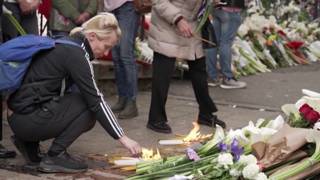
Serbia’s longtime leader Aleksander Vučić has been swept out of power by a historic student-led opposition movement against Vučić’s right-wing Serbian Progressive Party. Candidates from the Student List, who are not students themselves but largely first-time politicians selected by student-led popular assemblies, won a majority of seats in Sunday’s parliamentary elections, marking a seismic shift in Serbian politics. Their victory comes two years into a student-led movement sparked by the collapse of a roof at a train station in the city of Novi Sad, which killed 16 people. The disaster became a focal point for anti-government protests over corruption, cronyism, political violence and democratic backsliding.
“Students really changed the whole political landscape of the country, and maybe even more important, they changed political imagination. They changed our understanding of what’s politically possible for all of us,” says journalist Lela Vujanić, who speaks to us from Belgrade about the groundbreaking elections. “This was a great democratic opening and democratic awakening, not only for the students, but for the rest of the country also.”
Related Story
 StoryMay 12, 2023“Shock & Surprise”: Serbia Reels from Two Mass Shootings, Demands Stronger Gun Control
Transcript
AMY GOODMAN: This is Democracy Now!, democracynow.org. I’m Amy Goodman in Colorado, with Juan González in Chicago.
In Serbia, longtime nationalist leader Aleksandar Vučić conceded defeat following elections Sunday in a contest that pitted Vučić and his right-wing party against a student-led movement that had weakened his hold on power after two years of anti-government protests. The student-led movement first rose up in November 2024 following the collapse of a roof at a train station in the city of Novi Sad, which killed 16 people. The disaster became a focal point for protests over government corruption, cronyism, political violence and democratic backsliding. President Vučić conceded defeat after early results showed the Student List poised to win more than 135 seats in the 250-member parliament, compared with only 105 for Vučić’s party. The historic defeat marks the end of a 14-year rule and a seismic shift in Serbian politics.
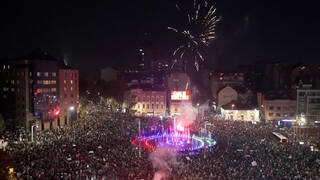
Tens of thousands of residents flooded into the streets to celebrate following the concession.
SEJLA KIPIC: The feeling is surreal. I laughed. I cried. I screamed. I jumped. It’s just unbelievable. After so many years of this tyranny and dictatorship, we are finally free. And that’s — you cannot put it in words.
AMY GOODMAN: The candidates on the newly formed Student List aren’t students, but political newcomers including farmers, athletes, artists and little-known experts. Students traveled through rural areas on foot and on bicycle to speak directly with voters in rural areas — traditional strongholds of Vučić.
This is Student List candidate Radomir Saičić.
RADOMIR SAIČIĆ: [translated] This is a victory of courage over fear, a victory over unrest. Serbia can and must be different. Thank you for every step, every hour, every sacrifice and for every moment you chose not to give up. Thank you to everyone who raised their voice, stood by one another and showed that the future of this country does not belong to a select few, but to all its citizens.
AMY GOODMAN: For more, we go to Belgrade, Serbia, where we’re joined by
Lela Vujanić. She’s a journalist and media researcher covering both media and social movements.
Lela, welcome to Democracy Now! If you can talk about this stunning victory of the Student List movement and what Vučić represented, and the changes you think will happen as a result of something we’re seeing not only in Serbia, but student-led movements across Europe right now?
LELA VUJANIĆ: Hi, Amy. Thank you for having me. I was listening the Brazilian segment, and I’m super happy for Lula’s victory and for Brazilian people voting this way.
But, yes, we have something quite historic and extraordinary happening in Serbia, as you said. Yesterday, it was Election Day, parliamentary elections. And our mass civic, social movement, that’s led by Serbian students, was able — that lasts already for two years — was able not only to challenge Vučić and his ruling SNS party, but to win popular vote in a landslide victory, winning 52% of the votes.
What’s also important, that they campaigned individually, I mean, their electoral list called Student List. When I say “individually,” on the other hand, people of Serbia actually did the campaign and campaigned together with the students and with their Electoral List. What’s interesting, that students wiped out everybody else. Former established oppositional parties didn’t pass the electoral threshold, which is actually set very low in Serbia, around 3%. So, as you can see, this changes everything. In a way, students really changed the whole political landscape of the country, and maybe even more important, they changed political imagination. They changed our understanding of what’s politically possible for all of us.
People were celebrating throughout the night across Serbia and Belgrade. There was also a moment of disbelief, because only few people in Serbia yesterday would say that everything — that Vučić will — that everything will resolve peacefully. Most of the people even expected some sort of the state of emergency, election being rigged. So, everybody was quite surprised when the former president got on TV yesterday around 10 p.m. and said, “Yes, students won, and I acknowledge the results.”
JUAN GONZÁLEZ: And —
LELA VUJANIĆ: Sorry?
JUAN GONZÁLEZ: Lela, I wanted to ask you — the press has described the Student List movement as being leaderless. And could you talk about how it became organized and whether it is, in fact, leaderless?
LELA VUJANIĆ: Thank you. Great question. So, for Serbia, what happened yesterday, it’s extraordinary and historic for Serbia, but I think it’s quite extraordinary globally and that this Serbian case will be studied and researched in the years to come.
So, the movement really is horizontal. And from its beginning, it was based and organized through — we say in Serbian plenums, so popular assemblies, based on direct democracy principles. So, after the fall of the canopy, of newly rebuilt canopy of the train station, students demanded political accountability from political class in the country, and they occupied literally all faculties in the country, across all four university centers in Serbia. They organized based on direct democracy principles, made their decisions through deliberations on plenums, and actually spread the model throughout the country. And citizens also adopted the model and organized based on the same principles, organized in their locales. So, citizens run — and this is still active — popular assemblies in their neighborhoods and in their municipalities. So, yes, this was great, great democratic opening and democratic awakening, not only for the students, but for the rest of the country also.
JUAN GONZÁLEZ: And the impact of these election results on the rest of Europe, especially since Serbia for years has been one of the countries, I guess, closest to Russia of the European countries?
LELA VUJANIĆ: Yes, Serbia has a somewhat specific position. It’s not member of the EU. It’s for 12 years already a candidate country. It didn’t introduce sanctions to Russia. But you need to remember — and Serbia is no stranger to Democracy Now! Democracy Now! reported almost 30 years ago about this controversial NATO bombing of Yugoslavia. So, Serbia was under sanctions itself back then. And this is also the reason why people, Student List included, not only previous government, don’t want to introduce sanctions to Russian Federation. So, when I say “specific,” non-EU, non-NATO country, but trying to join European Union.
Regarding student programs and our future relations of Serbia with other countries and world powers, so, students said no sanctions to Russia. We continue negotiations with Europe. We continue our strategic partnerships with China. And what’s probably the most interesting, that we will not be complicit, or we will not contribute, or we will not participate in the systemic erasure of Palestinian people.
AMY GOODMAN: Speaking of Palestinian people, we turn next to the occupied West Bank. Lela Vujanić, we want to thank you for being with us, Serbian journalist and media researcher covering both media and social movements, joining us from Belgrade after the stunning victory of the Student List.
Coming up, we look at Israel’s escalating crackdown in the occupied West Bank ahead of Tuesday’s election in Israel that will determine whether Netanyahu remains prime minister. Stay with us.
[break]
AMY GOODMAN: “Bear Witness, O World,” performed by the New York City Palestinian Youth Choir.




 Top
Media Options