












 Watch Full Show

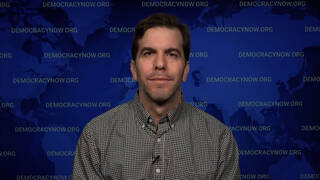
Revelations of sexual assault at a Cornell University fraternity in 2024 and how the university responded have sparked national outrage, reigniting a public debate about “the extent to which fraternities, the extent to which athletics really support this kind of culture that allows perpetrators to escape with little or no accountability,” says law professor Deborah Tuerkheimer.
In 2024, seven male students avoided criminal prosecution after allegedly drugging and gang-raping a female student at the Chi Phi fraternity house. Cornell is now under intense scrutiny for its handling of the original investigation, which found that the student identified as Jane Doe was sexually assaulted by two of seven men, resulting in expulsions for two and lesser consequences for the other five. Tompkins County District Attorney Matthew Van Houten has admitted that his office at the time did not independently investigate the case when it declined to bring charges. The DA has now reopened the case, and New York Governor Kathy Hochul has named Attorney General Letitia James as special prosecutor to investigate how the case was handled.
“Around the country, we see a pattern of investigators, police officers and even prosecutors deciding at the outset that the allegations are not worth pursuing, and dismissing the case before any kind of investigation gets off the ground,” says Tuerkheimer.
Related Story
 StorySep 29, 2026Afghans “Have Been the Victims” of U.S. Military, Taliban, Cartels & More for Decades: Nagieb Khaja
Transcript
AMY GOODMAN: This is Democracy Now!, democracynow.org. I’m Amy Goodman.
We turn now to the case of the Cornell Seven. A warning to our audience: This segment includes discussion of rape.
“I am Jane Doe.” That’s become a rallying cry as public outrage grows over how Cornell University and local prosecutors handled a female student’s allegations of sexual assault at a fraternity house in 2024. Last month, a 20-year-old former Cornell University undergraduate student filed a lawsuit alleging she was gang-raped by seven male students at the Chi Phi fraternity house, October 2024, and that Cornell failed to protect her when she reported what happened to Cornell police three weeks later.
Cornell University President Michael Kotlikoff issued a video statement over the weekend, pledging Cornell would support an independent investigation.
MICHAEL KOTLIKOFF: You have my commitment that this will not be a moment that passes. We will continue taking every step necessary to make Cornell an institution that leads not just in what we say about these issues, but in the work that we do to address them. We are listening. We are learning. We are committed to communicating more openly. And where we can do better, we will. That is our responsibility, and it is one I take personally.
AMY GOODMAN: There have been mounting calls for Cornell President Michael Kotlikoff to resign.
Jane Doe, as she’s referred to in the lawsuit, says she arrived at the Chi Phi fraternity house one night to meet a friend. Despite already being intoxicated, she says two of the fraternity brothers, including her friend, pressured her to snort ketamine and gave her marijuana. She says they proposed a threesome when she was too impaired to consent, then raped her. One of the men then sent a Snapchat message to a fraternity group chat saying there was, quote, “free [bleep]” upstairs. For the next several hours, Jane Doe says the seven named plaintiffs in the lawsuit took turns assaulting her.
The story gained national attention after the student newspaper, The Cornell Daily Sun, first reported on the lawsuit, interviewed Jane Doe and demanded answers from the university. The college paper also published the name of the seven accused students in an editorial headlined “Cornell Won’t, We Will.”
Last week, The New York Times obtained more than 1,000 pages of transcripts, police reports, investigative records in the case. The unsealed documents include a 120-page transcript of Jane Doe’s hourslong sworn statement to Cornell police and a university investigator. Her full statement included the sentence, quote, “I can say with 100% confidence that I was raped,” unquote.
But this was not included in the report sent by the university police to the Tompkins County District Attorney’s Office. Tompkins County DA Matthew Van Houten has admitted his office at the time did not independently investigate the case, instead relying entirely on Cornell’s initial investigation and what was handed over to their office. The DA has now reopened the case. They did not interview Jane Doe.
The university’s own Title IX investigation found Jane Doe was sexually assaulted by two of the seven men. Those men were expelled, while the other five received lesser consequences, including essay writing.
New York Governor Kathy Hochul has named New York Attorney General Letitia James as special prosecutor to investigate how the case was handled. The case has also highlighted what’s referred to as the intoxication loophole in New York state law.
Students at universities across the country, but especially at Cornell, are calling for the moment to be a reckoning over sexual assault on campus.
SHAY THOMAS: I am Jane Doe. And I think this is a movement that is meant to help bring light to the issues of women who have to deal with, like, sexual harassment or assault, both, like, harassment, like mentally, physically, emotionally, and I also feel like this is helping bring, like — give courage to other women to, like, speak about their experiences without being targeted or, like, brought down.
CYNTHIA LU: The whole movement, I think it was really eye-opening just hearing about, like, how there are so many similar cases, like, all across, like, the U.S. and, like, across different colleges, and how, like, honestly, it kind of really shocked me how, like, you know, so many administrations, like the whole system in general, like, I feel like it’s failed, like, so many different people and so many different women and young girls.
HAZEL CORNWELL: I hope that people in future generations, like, I hope my little sister doesn’t have to deal with the same things and sort of push for the same goals that have been pushed forward now.
AMY GOODMAN: For more, we’re joined by Deborah Tuerkheimer, professor of law at Northwestern University, author of Credible: Why We Doubt Accusers and Protect Abusers.
Professor Tuerkheimer, thank you so much for being with us. I mean, one of the stories here — you know, there are so many issues raised, but also, at the heart of it, a woman being taken seriously. The information is handed over to the Ithaca — to the county police and the investigator, the DA, and she is not even interviewed? Professor Tuerkheimer, what are the issues that are raised here, including Governor Hochul taking on this intoxication loophole, saying it must be closed, that whether or not a victim is drunk or drugged or on drugs or whatever, that that is not a reason to throw out rape allegations?
DEBORAH TUERKHEIMER: Well, Amy, as you say, there are so many issues raised by this case. We can start with the failure to investigate the allegations in any serious way. An investigation begins with building trust with the alleged victim, so that over time she may be able to thoroughly and completely recount what happened in the incident in question. These are really difficult cases. When sex crimes allegations come to the fore, the environment should be comfortable. Again, there needs to be that trusting relationship. And a trauma-informed investigation takes into account that memory works differently when it comes to these kinds of traumatic incidents, including sexual assault. Memory is differently encoded, stored, retrieved. And you’d want an investigator to be very cognizant of all of that when speaking with the alleged victim over the course of many sessions.
And that’s only the beginning. You would then want the investigator to gather corroborative evidence, or at least to look for it, physical evidence, maybe clothing, cellphones, social media, witnesses to the lead-up, witnesses to the aftermath. On a college campus, there were so many students who presumably had information about what happened on the night in question. You’d want all of those individuals to be interviewed. You’d want the men accused to give their side of the story, if they were willing to do that.
So, that’s what a thorough investigation might look like. And unfortunately, around the country, we see a pattern of investigators, police officers and even prosecutors deciding at the outset that the allegations are not worth pursuing, and dismissing the case before any kind of investigation gets off the ground.
AMY GOODMAN: And talk about this alcohol — talk about the intoxication loophole.
DEBORAH TUERKHEIMER: Right. In this case, the district attorney was able to point to New York rape law, which, like about half of the states, treats voluntary intoxication differently from involuntary intoxication. When we talk about intoxication, we’re talking about alcohol or drug use. And New York’s law makes it much more difficult for prosecutors to go forward in cases where the victim ingested drugs or alcohol and chose to do that.
This is really a form of legal victim blaming. It trains the light on the, in this case, woman, who may have consumed — may have consumed voluntarily. And it says that if you are so impaired that you are unable temporarily to appraise or control your conduct, well, that’s only a reason to be defined as a victim if you were forced to do those drugs or alcohol. So, this blame shifting is really baked into the law. We see it in our culture, but we also see it in the statutes themselves. And it is a loophole that the New York state Legislature is expected to take up when the session reconvenes in the new year.
AMY GOODMAN: And about 20 states have this loophole. Also, the mayor of Ithaca, Robert Cantelmo, in a statement released last week, has proposed imposing suspension of Greek life — that’s fraternities — and other student events, saying, “Despite the severity of these crimes, Cornell University administrators and police failed to contact or coordinate any response with the Ithaca Police Department. Furthermore, the University failed to hold the perpetrators to account.” Contrast that with Cornell University and the president breaking his silence this weekend and saying he supports an independent investigation.
DEBORAH TUERKHEIMER: Well, I think the case has brought back to the surface the culture of impunity on college campuses and beyond. So, this is a national conversation that has been reignited, the extent to which fraternities, the extent to which athletics really support this kind of culture that allows perpetrators to escape with little or no accountability.
I think when the national conversation was ignited in the way it has been over the last week, Cornell has responded, to a certain extent, by allowing this independent investigation into its own role in sort of allowing this to continue on college campuses, because over a third of Cornell women in a recent survey have said that they were — they have been victims of this sort of nonconsensual sexual conduct on campus. And so, this is an enormous problem, again, not just at Cornell, but across the country.
AMY GOODMAN: And if you can say, how is it possible that Cornell handed over some of their investigation to the county DA without including her sentence that she was 100% sure that she was raped? But, of course, then the county DA, they didn’t interview Jane Doe.
DEBORAH TUERKHEIMER: So, the Cornell police summarized the interview that they had done in this six-page statement. And my understanding from press accounts and from the district attorney’s statement is that he relied on that six-page summary to determine that there was no possibility of criminal charges going forward. So, without speaking to Jane Doe, without making any effort to break down some of the legal conclusions in that statement, without making any effort to, as I said earlier, build the kind of trust that would enable the most complete account to be gathered, you know, the district attorney pointed to this voluntary intoxication loophole in New York state law and decided that there was no possibility of pursuing charges.
I think that that is a decision that has now come under a lot of scrutiny, and for good reason. And we see now that the New York attorney general is going to be picking up the baton and investigating the case before deciding whether there are provable charges.
AMY GOODMAN: Deborah Tuerkheimer, I want to thank you so much for being with us, professor of law at Northwestern University, author of Credible: Why We Doubt Accusers and Protect Abusers. The case is now being handed over to the New York state Attorney General Letitia James. And, of course, we’ll continue to follow it.
Coming up, we go to the occupied West Bank to speak with the Palestinian human rights defender Issa Amro, detained by the Israeli military for documenting settler violence. Stay with us.
[break]
AMY GOODMAN: “Build Your Palaces,” composed by the dissident Egyptian musician Sheikh Imam, performed by the New York City Palestinian Youth Choir.







 Top
Top
Media Options