





 Watch Full Show

Topics
Guests
- Franklin Humberto Coral GarridoColombian activist, political analyst and digital content creator known as Beto Coral.
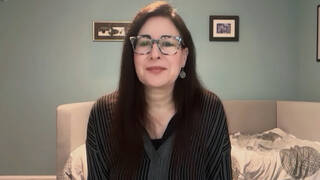
- Elizabeth Shawattorney and partner at Humanitas Legal Group, one of the lawyers representing Beto Coral.
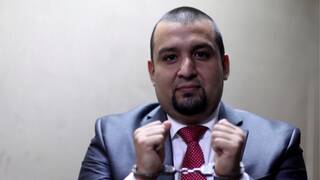
A prominent Colombian activist left the United States after he was arrested by immigration agents and detained for over a month in an ICE jail. Franklin Humberto Coral Garrido, known as Beto Coral, was a frequent online critic of far-right President-elect Abelardo de la Espriella, a Trump ally, in the run-up to Colombia’s election.
In a memo obtained by The New York Times in June, U.S. Secretary of State Marco Rubio pushed for Coral’s deportation and accused the activist of undermining U.S. foreign policy and interfering in Colombia’s democratic process by supporting current Colombian leftist President Gustavo Petro and attacking de la Espriella.
Coral arrived in the United States in 2015 on a tourist visa and had a pending asylum application.
“The treatment I received was inhumane,” says Coral of his time in ICE custody. He says that while in detention, he was beaten, denied food and water, and kept in solitary confinement.
“The problem that Marco Rubio and the Trump administration has,” explains Elizabeth Shaw, one of Coral’s attorneys, is that Coral’s opinion “is against what they are in support of.”
Related Story
 StorySep 02, 2026“Went to Sea and Never Came Back”: Families of Fishermen Seek Answers After Deadly U.S. Boat Strikes
Transcript
AMY GOODMAN: This is Democracy Now!, democracynow.org, The War and Peace Report. I’m Amy Goodman.
As we talk about a case that is quite remarkable, we’re joined right now in Bogotá, Colombia, by Beto Coral. He was living in Phoenix, Arizona, when federal immigration agents arrested him at his home in June after he filed criminal charges against the Colombian now far-right President-elect Abelardo de la Espriella.
In a memo obtained by The New York Times back in June, U.S. Secretary of State Marco Rubio wrote, quote, “Allowing Coral Garrido to remain in the United States … undermines U.S. foreign policy interests in Colombia’s democratic processes and signals that foreign nationals may use U.S. platforms to conduct politically motivated disinformation campaigns and litigation targeting foreign democratic actors without consequence,” unquote.
Beto Coral is a supporter of the current Colombian president, Gustavo Petro. In his memo, U.S. Secretary of State Marco Rubio claimed, quote, “Coral Garrido has used his presence in the United States to conduct political activity in support of the Petro government,” unquote, and accused Coral of attacking de la Espriella and undermining Colombia’s democratic process.
Since Trump’s return to office, Rubio has used his powers as secretary of state to target individual immigrants for prosecution and deportation, including student protesters such as the Palestinian advocate Mahmoud Khalil. But according to The New York Times, this memo appeared to be the first to recommend the deportation of an activist in relation to a presidential election in a foreign country — in this case, Colombia.
Beto Coral reportedly arrived in the U.S. in 2015 on a tourist visa and had a pending asylum application. He was deported to Colombia on July 16th after about a month in ICE custody.
We go now to Bogotá, Colombia, to speak with Beto Coral himself. We’re also joined in Boston by his attorney, Elizabeth Shaw, who is a partner at Humanitas Legal Group.
Beto, let’s begin with you. Can you talk about the day of your arrest and what happened to you in ICE detention?
FRANKLIN HUMBERTO CORAL GARRIDO: Hi. Good morning. Thank you for joining me.
I was detained on June 16th by no ICE agents, HSI agents, while — detained me. I was grocery shopping with my son. And when I arrived home, they raised their weapons. But as soon as they saw that I was with my young son and my dog, they lowered them, the guns. They then allowed me to go into the apartment to put away the groceries, leave my son and my dog there, because, you know, the weather in Phoenix in June. And I tried to call my son’s mother. So, she called me, pick me — picked him up, my son and my dog.
And they never presented me with a warrant or any other legal document. They simply handcuffed me once I got into the vehicle, put me in the shackles. What was most surprised was that after we started driving, one of the HSI agents asked me what you did it. And I’m very surprised, because that guys that tell me, and they don’t have reason, don’t know their reason. It’s very — I am very surprised, and this situation —
AMY GOODMAN: Beto?
FRANKLIN HUMBERTO CORAL GARRIDO: — was very [inaudible].
AMY GOODMAN: I want to explain to our viewers and listeners around the world, when you say HSI agents, that’s Homeland Security Investigations. So, they take you, and you end up in ICE detention — which jail? — for a month. And explain what happened to you there.
FRANKLIN HUMBERTO CORAL GARRIDO: Yes, after that, I was taken to detention facility in Florence, in Arizona, where I was beaten. And within, sorry, the days, the ICE agents in Florence don’t give me water, don’t give me a food. They struck me, my legs, and put me the shackles on my hands and my feet and my hips. I was held there for about four hours. Then, around 3 p.m., they kicked my legs and show me out to detention facility, put me into a van and drove me through northern Arizona, crossing the border into New Mexico. However, when then headed south, which seemed very strange, looking out the window, I noticed that we were approximate to El Paso, maybe 10 p.m. And soon after, I realized we were arriving on the detention facility in El Paso. In El Paso, I was not given any food or water. I remained there for day — one day and half. After that, I was transported via plane to Omaha, Nebraska, then to Minneapolis, then to Alexandria, Louisiana. From there, I was taken by bus to Mississippi. And after five days in Mississippi, I was transferred to Jena in Louisiana. Through this entire time, I was always kept in solitary confinement. During the transfer, I was never given any food, only after we arrived to each detention facility. I was not given water, either. And the treatment I received was inhuman. And I was always singled out and hunger, thirst.
AMY GOODMAN: I want to bring your lawyer into this conversation, Elizabeth Shaw, one of the lawyers representing our guest from Colombia, because he was deported there, Franklin Humberto Coral Garrido, better known as Beto Coral. Elizabeth Shaw, explain exactly, after being here for over a decade, why Beto was picked up, and the clarity of this memo that The New York Times got a hold of, written by Marco Rubio, the secretary of state, specifically talking about his support for candidates in his own country of Colombia.
ELIZABETH SHAW: Right. I think we only really need to look at the timeline of events that took place here. The weekend before Beto was arrested in Arizona, he was actually in Miami, Florida, with other Colombian expats, and they were demonstrating and speaking out about their political opinion in regards to the upcoming election that was happening the following weekend. And when he arrived back home, there was the memo issued by Marco Rubio that morning. And by that afternoon, he was detained by HSI agents. And on the same day, the incoming president, de la Espriella, had made tweets that, honestly, looked like they did allude to Beto’s arrest. And so, it’s very clear that he was exercising his First Amendment speech in Miami, returned home, and then was arrested for that speech.
AMY GOODMAN: This is a part of a clip you posted on Instagram outside a luxury apartment building in Miami, Bristol Tower, where far-right Colombian President-elect Abelardo de la Espriella at one point owned property. He’s a lawyer and a businessman who’s faced scrutiny over the source of his fortune and his alleged links to Colombian clients, including Alex Saab, an ultrawealthy fixer for former Venezuelan President Nicolás Maduro, who’s currently in federal custody in a Brooklyn jail awaiting trial. Let’s go to that clip of Beto Coral.
FRANKLIN HUMBERTO CORAL GARRIDO: [translated] This apartment was purchased with money belonging to Venezuela’s poor, which is why I’m here in Miami, a city teeming with such stories — fortunes, luxury apartments and properties acquired by individuals directly or indirectly linked to the Venezuelan regime. And yet, from here, they spend their time criticizing.
AMY GOODMAN: So, clearly, Coral is speaking as an activist. If you can, Elizabeth Shaw, respond to Marco Rubio saying, quote, “Coral Garrido has used his presence in the United States to conduct political activity in support of the Petro government”? Petro, a democratically elected president in Colombia.
ELIZABETH SHAW: What he is condemning is everyone’s right here in the United States to have and hold their own political opinion. And the problem that Marco Rubio and the Trump administration has is that that stated opinion, which is widely followed on Beto’s various accounts across social media — is that that is against what they are in support of.
AMY GOODMAN: And so, where does his case stand now, already deported to Colombia?
ELIZABETH SHAW: And I would like to clarify that point. Beto was not deported. We, his legal team, had negotiated a deal for him to accept voluntary departure, meaning that he is not deported from the United States. He left on his own accord and without expense to the United States government. And so, at this point, he has withdrawn his asylum application in accordance with the grant of voluntary departure and is now in Colombia making his plans for his next steps for safety.
AMY GOODMAN: And if you can tell us, Beto, as we wrap up now, what are you afraid of at this point as the Trump-backed president-elect is about to become president, in the next weeks, of Colombia?
FRANKLIN HUMBERTO CORAL GARRIDO: Yes, I have fear for my family. My family is the most important to me. Do you hear my lawyer? The reasons why I was detained, already know everyone. The memorandum issue by Marco Rubio contains defamatory, ridiculous and nonsensical allegations. It reflects a cynical form of fascism. They are essentially saying that I was detained simply because I expressed a different opinion. I was also targeted because I supported a different candidate than the one — that one picked by the United States government. I repeat, it’s unavailable.
I never spoke about United States. If you ask me when the election in the United States are held, I honestly would — I don’t know, because it’s not something that concerns me. It’s not my business. I can’t vote in the United States, so I don’t believe — I don’t believe it’s my my place to express opinions about your country. It’s what it is. I only speak about politics of my country of origin. There is there — there is not international law that requires an asylum applicant to remain silent about the political affairs of their own country. On the contrary, the United States Supreme Court has held that all people living in United States are protected by the First Amendment. And the United States —
AMY GOODMAN: Beto Coral, we’re going to have there, but I thank you so much for being with us. We’ll continue to follow your case. Beto Coral is a Colombian activist, political analyst, digital content creator, back in Colombia after being arrested and detained by ICE. And Elizabeth Shaw, an attorney with Humanitas Legal Group, speaking to us from Boston.
Next up, we go to Berlin, Germany, where a man drove a van into a Pride celebration, killing one, injuring 29. We’ll speak to Berlin’s queer commissioner. Stay with us.
[break]
AMY GOODMAN: “A New Horizon” by Baptiste and Ornella Thiry.




 Top
Top
Media Options