













 Watch Full Show

Topics
When Kabul fell to the Northern Alliance, Western governments and the U.N. hailed the development as a new opportunity to import humanitarian aid to millions of starving Afghans. Uzbekistan, where over a thousand U.S.troops are based, would become the humanitarian corridor.
But Uzbekistan is the only nation in the region whose border with Afghanistan remains firmly shut.
Tons of relief aid is piling up, and independent aid groups are increasingly frustrated by their inability to get itacross the border. A spokesman for the French relief agency, Action Against Hunger, says that it is only a matter ofdays for the Afghan people. “From one day to the next is fast enough for an Afghan to die.”
Even Iran has set aside its anti-U.S. sentiment and fear of refugee influx and opened its border with Afghanistan.Uzbek officials say the border is closed for security reasons. But the opposition northern alliance, an ally ofUzbekistan, controls the Afghan side.
The humanitarian crisis again raises the question of just who the U.S. is drawing into its wartime alliance, and whatthe alliance will look like after the war is over. Uzbekistan is renowned for its brutal regime and history of humanrights abuses. In addition, the Islamic Movement of Uzbekistan, a distant relation to the Taliban, has strong rootsin Uzbekistan, and hopes to install a regime similar to the Taliban.
We’re going to spend the rest of the hour with Tom Squitierri, a reporter with USA Today who has just returnedfrom Uzbekistan. He has spent time speaking with the family members of victims of the Uzbek regime, and in theFergana Valley, home of the Islamic Movement of Uzbekistan.
Guest:
- Tom Squitieri, reporter with the USA Today.
Related Story
 StoryDec 01, 2025Trump Vows to Pause Migration from “Third World Countries” After Fatal National Guard Shooting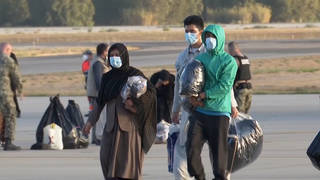



 Top
Top
Media Options