





 Watch Full Show

Democracy Now! speaks with the renowned Iranian filmmaker Sepideh Farsi, the director of the new documentary Put Your Soul on Your Hand and Walk. The film is based on regular video calls Farsi made with the Palestinian photojournalist Fatma Hassona in Gaza over the course of a year from April 2024 to April 2025.
Hassona was killed with her family by an Israeli missile that targeted her apartment building in northern Gaza. The strike occurred just one day after she learned that the film centered around her life and work had been selected to premiere at the Cannes Film Festival. “It’s something that I will never get over,” says Farsi.
Related Story
 Web ExclusiveAug 14, 2026Dr. Thaer Ahmad & Dr. Feroze Sidhwa on Volunteering in Gaza & New Film “American Doctor”
Transcript
AMY GOODMAN: This is Democracy Now!, democracynow.org. I’m Amy Goodman.
We end today’s show with the renowned Iranian filmmaker Sepideh Farsi, the director of the new documentary, Put Your Soul on Your Hand and Walk. The film, based on regular video calls Sepideh made with the Palestinian photojournalist Fatma Hassona in Gaza over the course of a year, from April 2024 to April 2025. This is the trailer for the film.
SEPIDEH FARSI: Where are you now, your position?
FATMA HASSONA: I’m in North Gaza. This is my neighborhood. No one lives here or here or there. There’s no one.
SEPIDEH FARSI: When the war started on October 7th, I started filming Palestinian refugees who were just arriving from Gaza. Through one of them, I came to know Fatem.
FATMA HASSONA: I am a photographer.
SEPIDEH FARSI: Yes, I saw. I saw your photos.
FATMA HASSONA: This is my world. I find myself in this. I am trying to find some life in this world, in this death. Every second you walk in the street, you put your soul on your hands and walk.
I’m shaking. It’s very close.
SEPIDEH FARSI: Each of our conversations could be the last one, so every time we connect and I can see her face, it feels like a miracle.
FATMA HASSONA: Just like that, gone. Gone without any goodbyes.
SEPIDEH FARSI: Meeting her was like a mirror held in front of me, how much both our lives are conditioned by walls and wars.
You look good. You look good.
FATMA HASSONA: How are you? We live a very simple life, and they want to take this simple life from us. Why?
I don’t know if this will end or not. I must keep going, and I must document everything. To be me.
AMY GOODMAN: Look at that smile. The trailer for the new documentary, Put Your Soul on Your Hand and Walk, by the acclaimed Iranian filmmaker, Sepideh Farsi, based on calls with the Palestinian photojournalist Fatma Hassona in Gaza. Last April 15th, the documentary was accepted to the Cannes Film Festival. On the following day, Fatma was killed along with almost her whole immediate family, except for her mother, in an Israeli airstrike on her home in northern Gaza.
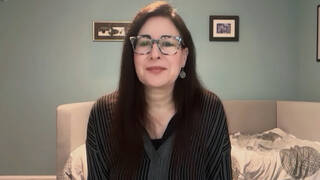
Sepideh Farsi joins us now in our New York studio, here for DOC NYC, where the film is playing on Thursday at 12:45 in the afternoon at Village East. Incredible documentary. Talk more about Fatma, who you call Fatem.
SEPIDEH FARSI: Yes.
AMY GOODMAN: And you had to change the end of the documentary. We spoke to you the day after she was killed.
SEPIDEH FARSI: I first — hi, Amy. I first didn’t want to change the film at all, because I wanted it to remain as it was when she was alive. And it took me a few weeks. And a few days only before the Cannes premiere, I decided to end the film with the last moments we spent together, when she learned about the selection.
And it’s something that I will never get over. I mean, it was documented by Forensic Architecture. It was a targeted attack. I do not understand how, I mean, the Israeli government and army are eliminating journalists and photographers just for doing their jobs. And she was just a photographer.
AMY GOODMAN: Well over 200, and, you point out, 28 women journalists.
SEPIDEH FARSI: Yes, more even. I think we’re beyond 300 now. And you know what? Just a few hours before the ceasefire, the so-called ceasefire, which is not one, in my opinion, went into effect officially, they rebombed their house again. They destroyed it fully, meaning that there is no proof of what happened now. But Forensic had, luckily, investigated it. It’s online there. I don’t know what to say. But she was a — her light is still there.
AMY GOODMAN: Now, you weren’t with her, because journalists couldn’t go into Gaza, so you had this series of phone calls, video phone calls. I wanted to go back to another excerpt from Put Your Soul on Your Hand and Walk, as you continue to speak with the Palestinian photojournalist, now dead, Fatma Hassona.
SEPIDEH FARSI: Have you lost weight because of the food?
FATMA HASSONA: Yes, of course. Of course. Now I — you see my mind is very messy, and I have no focus, because I have no healthy food or good food even. So, I feel that I can’t even stand up. You know? And I can’t talk even. Every day, I told my mom, “I want chicken.” I hope or I wish if we had just chicken, because we didn’t eat it for nine months.
SEPIDEH FARSI: We met the first time, I think, two months ago, and it was already seven months of the war. And you told me you had chicken once, I think. I was watching the…
FATMA HASSONA: Yes. Now that’s my biggest dream, to have one chicken and one chocolate. Yes. I told my friends in the south, “Just send me one chocolate. One chocolate.” I miss — I miss everything. I miss my life, miss the food that my mom cooked, the chocolate and Nescafé and coffee. Everything.
AMY GOODMAN: Again, Fatem, on April 15th, you told her your film about her got into the Cannes Film Festival. Talk about her response. And the next day, she’s killed in an Israeli airstrike.
SEPIDEH FARSI: She was so delighted. She was shining. She was shining all the time, but that day —
AMY GOODMAN: You said to her, “Do you know Cannes? Do you know Cannes?”
SEPIDEH FARSI: Yes.
AMY GOODMAN: She said, “Yes, yes.”
SEPIDEH FARSI: Yeah. And then, she said, like, “What? Fabulous. I’m coming.”
AMY GOODMAN: And you invited her.
SEPIDEH FARSI: Yes, I was on the visa. I would’ve gotten the visa almost. It was almost ready. She sent me her passport, all of that, very quickly. And my concern was to get her out the Israeli checkpoints. But never, ever I thought she would be targeted, like, the day after. And I still don’t know who made that decision. Obviously, nobody knows, apart from the IDF. But her light and her joy were amazing, yes.
And you know what, Amy? We all die one day. This is the question I ask myself. Why do people do this? We’ll all die, all of us. So, those people who make these decisions and kill such a person, why do they do that?
AMY GOODMAN: You talk about — with Fatem often about religion.
SEPIDEH FARSI: Yes.
AMY GOODMAN: And she talks about why it’s so important to her. You’re an Iranian filmmaker. She was a Gazan photojournalist. And she introduces you so often to the different members of her family and her friends, little girls and boys. Talk more about this.
SEPIDEH FARSI: We had become family. My family knew her. Her family knew me. We were really — I know about those little kids, who have grown up, who are thinner because they don’t have food to eat, but they’re one year older. The two of them are alive, luckily. The mother has survived. The rest of those whom you see in the film are all gone, were killed.
And I think that their resilience, the way they resist this permanent occupation and the genocide, is so amazing, that keeping hope. As she used to say, “Hope is a dangerous thing.” She was quoting The Shawshank Redemption, which is a strange thing for a girl who never left Gaza in her whole life. You know, she was so knowledgeable and great. She was so talented.
AMY GOODMAN: And so, you dedicate the film at the end to her family. Who exactly died in the strike?
SEPIDEH FARSI: Fatem, two of her sisters, Walaa and Alaa — Alaa was five months pregnant; three of the brothers, Muhannad, Mohammed and Yazan, 20, 15, and 10; her father, Raed; and Fatem herself.
AMY GOODMAN: And her work as a photojournalist, talk about that in this last 30 seconds.
SEPIDEH FARSI: Yes. There are many exhibitions around the world, hopefully soon in the U.S. There was a book published in France called Les Yeux de Gaza, Eyes of Gaza. I’m trying to get it out in the U.S., as well. Many books — many exhibitions. She’s going to get an honorary Ph.D. from the Canaria university, Las Palmas. Many things are done to her. A man just took her photo to Vatican, because he wrote to me, “I’m going there. I’m going to take her photo with me.” People are walking for Fatem.
AMY GOODMAN: Sepideh Farsi, award-winning Iranian filmmaker, director of the new documentary, Put Your Soul on Your Hand and Walk. It’s going to be premiering here in New York at DOC NYC at Village East Thursday at 12:45, but it’s also in theaters around the country.
SEPIDEH FARSI: Right now at IFC.
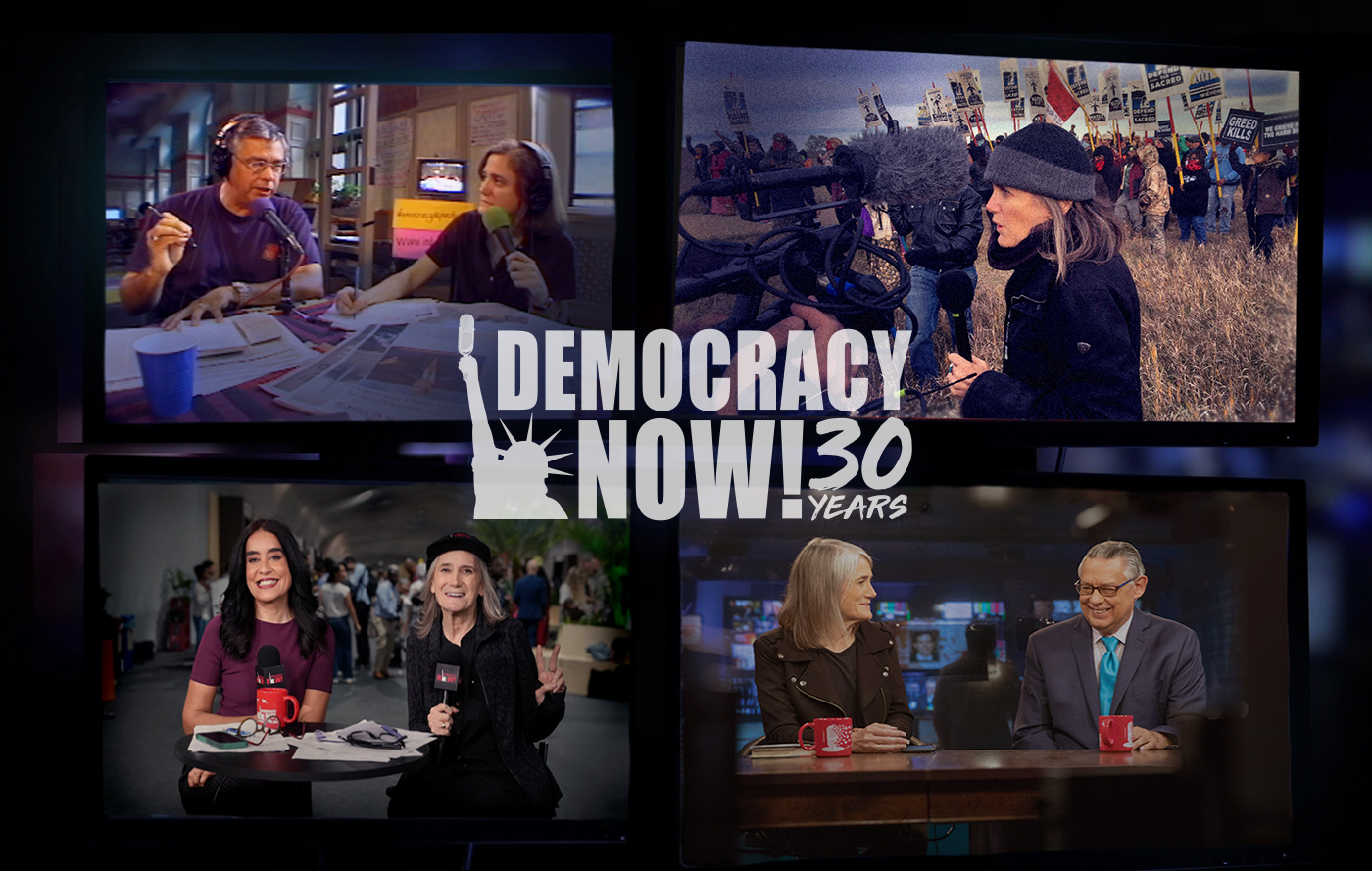
AMY GOODMAN: Right now also at IFC. Democracy Now!, the film about it, Steal This Story, Please!, will be shown at two theaters here in New York, at the SVA Theatre and at IFC Thursday and Friday. On Saturday, I’ll be speaking twice in Amsterdam in the Netherlands at the Royal Theater Carré. The film will show there at 5:15 and 8:30 on Saturday night. Hope to see people in Amsterdam. That does it for our show. I’m Amy Goodman. This is Democracy Now! Check our website at democracynow.org for details about the film’s showing.



 Top
Top
Media Options