







 Watch Full Show

Palestinians were battered with rain and freezing temperatures overnight as winter storm Byron hit the Gaza Strip. Soaked tents and makeshift shelters flooded, causing some mattresses to float and improvised roofs to blow away. An 8-month-old baby girl, Rahaf Abu Jazar, died from hypothermia. Moureen Kaki, an aid worker living in Gaza, says conditions at hospitals have not improved since the announcement of the so-called ceasefire. “It is not really a ceasefire,” she says. “It’s just a slower form of death.”
Related Story
 StoryOct 07, 2026Three Years into Genocide, “The IDF Is Still Hunting Gazans”: Palestinian Journalist Akram al-Satarri
Transcript
AMY GOODMAN: This is Democracy Now!, democracynow.org. I’m Amy Goodman, with Nermeen Shaikh.
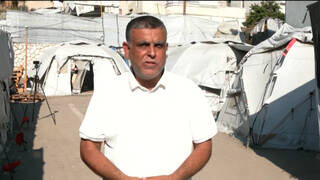
NERMEEN SHAIKH: We turn now to Gaza, where winter storm Byron battered displaced Palestinians with heavy rain and freezing temperatures overnight. Tents and makeshift shelters were soaked and flooded, or washed away entirely. In Khan Younis, an 8-month-old baby girl, Rahaf Abu Jazar, died from hypothermia. As the day broke, families faced soaked belongings and lakes of mud and sewage. This is Sami Yassin, a father and amputee, speaking to Al Jazeera.
SAMI YASSIN: [translated] It poured all night, and we were flooded. I couldn’t move out, as I have an amputated arm and shrapnel in my leg, and I can’t wade in the water. I started shouting and asking people to help get my children out, but they couldn’t. The food was spoiled, and the tent’s canopy got blown away. I don’t know what to do.
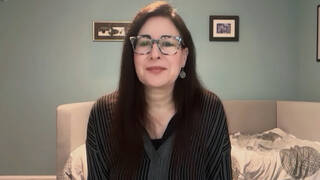
AMY GOODMAN: We’re joined now by Moureen Kaki, head of mission for GLIA International. She’s been in Gaza for well over a year.
Welcome back to Democracy Now! It’s great to have you with us. If you can describe the situation on the ground right now?
MOUREEN KAKI: Thank you for having me back.
Right now we are seeing intense rains on the ground. People’s tents are being either washed away or flooded entirely. People have no respite from this cold, from the wind, from the rain itself. I’m here in Mawasi, Khan Younis, on the beach. The tide has risen, washing away tents along with the last of people’s belongings. And they have nowhere else to go.
NERMEEN SHAIKH: And could you talk about the access to relief? I mean, what kind of aid is getting in to assist people?
MOUREEN KAKI: Not nearly enough. The Israelis are not allowing in — they continue to block vital aid that could save lives and provide shelter in Gaza. In fact, of the aid that is coming in, least of all is medical supplies and shelter supplies.
AMY GOODMAN: So, what is needed right now? What is GLIA International calling for?
MOUREEN KAKI: We are calling for the Israelis to, at the very least, adhere to their end of the deal of the ceasefire, more than that, a complete end to this de facto blockade, and the uninhibited access of aid into the Gaza Strip. This includes tents and tarps, medical supplies, which are out of — majorly out of stock in the hospitals. Essentially, this situations in the hospitals have not changed since the ceasefire in terms of what’s available. And the only way that Gaza can even begin to think about reconstruction is an end to this blockade.
NERMEEN SHAIKH: Moureen, are military strikes continuing in the midst of these storms?
MOUREEN KAKI: Yeah, absolutely. East of the yellow line, the bombing has not stopped. West of this yellow line, which is supposed to be a humanitarian zone, people continue to be targeted by drone strikes. Yeah, as late as November, there were two young boys, Juma and Fadi, who were going to collect firewood for their families, who approached the yellow line. They are children, 9 and 10 years old. They did not know what this yellow line was, and they were killed by a drone strike. And this is — these are two of hundreds of Palestinians that have been killed by Israeli — by the Israeli military since the ceasefire went into effect.
AMY GOODMAN: Finally, do you see this, Moureen, as a ceasefire or not?
MOUREEN KAKI: Absolutely not. Absolutely not. Like I said, this is over — nearly 400 Palestinians have been killed, over a thousand injured. Palestinians are dying every day in the hospitals due to medical emergencies that could be prevented if they were allowed to have the proper supplies and equipment needed. It is not — it is not really a ceasefire. It’s just a slower form of death.
AMY GOODMAN: And the issue of hunger, in the last 15 seconds we have, especially for children?
MOUREEN KAKI: Children continue to face issues of malnutrition because the Israelis are not letting in the agreed-upon amount of aid. The food that is accessible in the market is in through commercial routes, which is extremely unaffordable for families who have been out of work and living under bombardment for two years.
AMY GOODMAN: Moureen Kaki, we want to thank you for being with us, head of mission for GLIA International, speaking from Khan Younis, Gaza. I’m Amy Goodman, with Nermeen Shaikh.




 Top
Top
Media Options