







 Watch Full Show

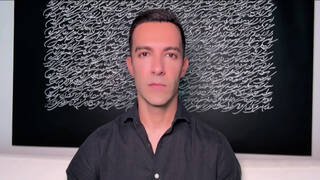
Will Iran join China, Russia and the United States as a fourth major power on the world stage? Iran’s resilience in the face of the U.S.-Israeli war is already shifting the global balance of power, says American political scientist Robert Pape. “What you are seeing with Iran is that its geography, in combination with a level of drone technology that we simply cannot destroy,” is demonstrating to other countries that they may not have to stay beholden to U.S. hegemony. “What makes us think we’re really going to stop Iran from becoming a nuclear power in the next six months or a year?” asks Pape. “Iran is far stronger than it was just 40 days ago. It is in control of 20% of the world’s oil. It is now an emerging fourth center of power. … The United States is on one side, and the rivals are China, Russia and now Iran.”
Related Story
 StoryJul 16, 2026A “Forever War” in Iran? Ali Vaez on Escalating War, U.S. “Diplomatic Malpractice”
Transcript
AMY GOODMAN: This is Democracy Now!, democracynow.org, The War and Peace Report. I’m Amy Goodman.
“The War Is Turning Iran Into a Major World Power.” That’s the headline of a new op-ed in The New York Times by our next guest, Robert Pape, professor of political science at the University of Chicago. Professor Pape writes Iran’s control over the Strait of Hormuz could help elevate Iran to become a “fourth center of global power,” along with the United States, China and Russia. Pape writes, quote, “If Iranian control over the strait persists for months or years, as I believe it may, it will drastically reshape the global order to the detriment of the United States,” unquote.
Professor Pape joins us now from London.
Welcome to Democracy Now!, Professor. Can you lay out your argument, why you believe the war is turning Iran into a major world power?
ROBERT PAPE: Yes. Thank you very much for having me.
What most people know is that Iran is causing oil shortages through selective blockade using drones and mines. I’m going one step further. I’m discussing the power that that selective blockade gives Iran today, in the coming months and in the coming years. It is power because of geography. The chokepoint at Hormuz is geographically perfectly located to allow Iran to selectively control the shipping through Hormuz, which means it can use that selective control as leverage to gain political power in the Gulf, change the hierarchy — change the balance of power in the Gulf from a balance to a hierarchy, where Iran now is at the top of the hierarchy, and if other states do not accept Iran’s power, they lose tremendous gross domestic product.
Also in Asia, the power that Iran has to cause the Asian states to distance themselves from the United States is already evident, and that’s only going to grow over time, because Asia is ground zero for the economic shock effects that Iran can have with its selective blockade.
Then, on top of that, when you look at the United States, look at how little power the United States has for its basings, with its basing structure in the Persian Gulf. We know the United States has bases in Kuwait, Qatar, Bahrain, but look how vulnerable those bases are, how much they’ve actually had to stand down operations. And our own aircraft carriers are a thousand miles away from the Persian Gulf for fear that they will be hit and sunk.
What all this adds up to is growing power of Iran, diminishing power of the United States. And on top of all of that, Amy, over the next months and year, there will be $75-$100 billion of oil revenues going into Iran in Chinese banks that can be used to create the — transform that nuclear-enriched material into working nuclear weapons. And if we can’t destroy the drones in those deep caves, what makes us think we’re really going to stop Iran from becoming a nuclear power in the next six months or a year? You add all that up, and Iran will become a nuclear weapons-oil hegemon in the near future, in the coming months, coming years. That means it will be the fourth center of world power.
AMY GOODMAN: You write it’s possible to control the strait without closing it. Explain how that’s occurring.
ROBERT PAPE: We are watching in real time, Iran is declaring, unless you cooperate with the Iranian military, the Iranian military will sink your ship as it goes through the Strait of Hormuz. And that threat has been made credible over 40 days of actually doing that. Just a few days ago, a Kuwaiti oil tanker tried to run the strait. And what happened? It was hit.
The French, for the first time in this war, about two days ago, first time that a European tanker got through, that happened as President Macron announced that France would not participate in any military endeavor to wrestle the Strait of Hormuz from Iran and would, in fact, cooperate with Iran. So, what you see is cooperation, that is political kowtowing, gets you oil. If you don’t do that, you have — you get your ship sunk.
And Iran is doing this, has been doing this now for 40 days. So it is a highly credible instrument of power, and Iran is not likely to surrender it. In all my studies, for 35 years, I have never found a state in the last 300 years that has willingly surrendered world power. And that’s why the ceasefire is breaking down.
AMY GOODMAN: You posted on social media yesterday, quote, “Power isn’t just about what you control. It’s about what you can put at risk. In a global economy, risk = power.” Explain.
ROBERT PAPE: Yeah, so, we have — in political science, in international relations, we have all our measures of raw power. We look at gross domestic product. We look at military forces. We look at nuclear weapons. What all of those static indicators are about, Amy, is the ability of a state to threaten other states to do — in other words, to make other states vulnerable.
What you are seeing with Iran is that its geography, in combination with a level of drone technology that we simply cannot destroy — we can destroy 50% of it, 70% of it, but Iran, thanks to the geography of the strait, only needs a small amount of offensive power, via a small number of drones, a small number of mines, in order to achieve the mission it must achieve to make the countries vulnerable, which is to sink their ships.
This is actually quite similar to the Vietnam War, where the Ho Chi Minh Trail — America, through air power, was able to cut 80-90% of the throughput of the Ho Chi Minh Trail, but we could never get the final 10%, and that’s why the VC won.
AMY GOODMAN: Professor Pape, your Substack page is called the Escalation Trap. What is that?
ROBERT PAPE: The escalation trap is when a strong country, the United States, uses military force, air power, that can be tactically successful — bombs hit targets, bombs kill leaders — but it does not produce strategic success. And that looming prospect of defeat for that power that just launched that attack is what drives that state up the escalation ladder to look for a rung that it will find victory.
And that’s exactly what you see with Donald Trump. Donald Trump started this war with a essentially three-day air plan. Yes, he had some backups, but he was telling us, “This is going to be over in three days.” Well, instead of disabling, causing the regime of Iran to collapse, it got stronger. It is now a more vicious, a stronger regime than before. So he launched the air campaign. Well, the air campaign was supposed to weaken Iran, and we did destroy launchers, but what that did is it allowed Iran to lash back in a horizontal escalation that seized the Strait of Hormuz.
Now, after 40 days, Iran just doesn’t — hasn’t just seized control of the Strait of Hormuz. It’s feeling its power, Amy. It is now using its power. It’s learning this isn’t just theoretical power capability; this is real power capability. And you see this with India. India is effectively cooperating with Iran, bowing to Iran, and that’s why a number of Indian oil tankers have been able to get through. And the French, I just mentioned.
And over time, this is going to exert enormous power — Iran will exert enormous power over the states in the Persian Gulf, one of the reasons the Saudis and the UAE are so desperate. But where are they going to go for protection? Donald Trump’s nowhere — has proven his protection isn’t worth anything. So, over time, you will probably see more and more bandwagoning toward Iran. The alternative for those Gulf states, if they don’t bandwagon, is Iran will probably topple their governments.
AMY GOODMAN: I want to get your response to Defense Secretary Hegseth speaking after the ceasefire was announced.
DEFENSE SECRETARY PETE HEGSETH: Operation Epic Fury was a historic and overwhelming victory on the battlefield, a capital-V military victory.
AMY GOODMAN: So, I want to get your response to that, especially in light of you writing, “Imagine Iran with control of about 20% of the world’s oil, Russia with about 11% and China able to soak up much of that supply. They would form a cartel to deny the West 30% of the world’s oil.” Professor Pape?
ROBERT PAPE: Exactly. What you’re hearing from — what you’re hearing, Amy, from Secretary Hegseth is a victory narrative, but it’s meeting escalation reality. The reality is Iran is far stronger than it was just 40 days ago. It is in control of 20% of the world’s oil. It is now an emerging fourth center of power, and the other centers of power are not all competing with each other. The United States is on one side, and the rivals are China, Russia and now Iran. And even if those three rivals don’t form a NATO-like integrated command structure, they will structurally — just because of the nature of the power balance, they will structurally end up tacitly or explicitly working together.
And as you just explained, in my op-ed, I lay out a very plausible scenario with Iran’s 20% of the world’s oil. Russia has 11%. Why exactly are they not going to work together at some point in the near future to cut that, to deny that 30% of the world’s oil to Europe, to the West, and essentially let China soak up that oil? This will be tremendous leverage they will wield. And unless we start to recognize that, this may become a reality, because that’s — 30% of the world’s oil is a tremendous amount of pressure, and even America won’t be able to escape the consequences of that.
AMY GOODMAN: Is there a way out of the escalation trap right now? And can you comment on what’s about to take place? You have Vice President Vance headed from Hungary to Islamabad to join with Witkoff and President Trump’s son-in-law, Jared Kushner, to negotiate with Iran.
ROBERT PAPE: Well, there are only two ways to settle this: one, on the battlefield — that’s the escalation trap; the other, at the negotiating table. The problem with the negotiating table is that given Iran’s surge in power, the price to get Iran to even give up a sliver or half of that power is going up and going up and going up. So, the deals that were on offer on February 27th simply are not going to be enough. Iran already wanted its 3.5% enriched uranium on February 27th. Well, notice now it has more power, so it’s not going to go back to the old — the old deal.
The one card that could be played that would really matter, I believe, get Iran’s attention, would be a enforceable military containment of Israel. You see, Iran has said very clearly it wants protection, confidence that it won’t be attacked in the future by — from both the United States and Israel. Well, you might think the United States has gotten enough of a black eye here. It might back off. Israel’s a completely different story, as your previous stories were just laying out. So, a true military containment of Israel, possibly even Israel joining the NPT and having to accept that there’s on-site inspections in Iran, there’ll be on-site inspections of the nuclear facilities, the nuclear production — material production facilities at Dimona, now we’re talking. But if we’re not — if that’s not politically possible, if we say that’s just not ever going to happen, then how else are you really going to get out of the trap? What would you give Iran to surrender world power? I don’t think they’re going to take a sucker deal at this point.
AMY GOODMAN: Robert Pape, we want to thank you so much for being with us, professor of political science at the University of Chicago, studies how force is used to achieve political objectives. We’ll link to your piece in The New York Times, “The War Is Turning Iran Into a Major World Power.” Professor Pape is joining us from London.
Up next, what has the Iran war meant for Gulf states that have been on the frontlines of the conflict? We’ll go to the Gulf to speak with Yasmine Farouk. Stay with us.
[break]
AMY GOODMAN: “Dancing in the Dark,” performed, no, not by Bruce Springsteen this time, but by ProPublica workers picketing outside the investigative news outlet’s Manhattan offices. The media workers have been fighting for over two years for their first union contract.



 Top
Top
Media Options