




 Watch Full Show

Guests
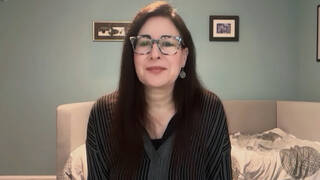
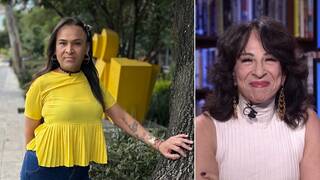
- Gustavo Guerra-García PicassoPeruvian economist and public policy expert, currently a professor at the School of Government and Public Policy at the Pontificia Universidad Católica del Perú.
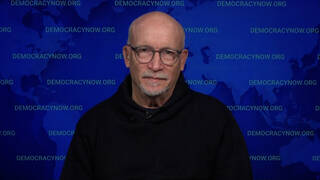
- Greg GrandinYale University history professor and Pulitzer Prize-winning author.
Peru’s presidential runoff is too close to call as ballots continue to be counted from Sunday’s election between Keiko Fujimori, daughter of former dictator Alberto Fujimori, and leftist lawmaker Roberto Sánchez. Peruvian election officials say final results could take up to a month to confirm.
Peruvian economist and public policy expert Gustavo Guerra-García Picasso says “democracy has been undermined” by Fujimori and her right-wing coalition, and that “reforms must be implemented quickly to restore a presidential system with checks and balances.”
We also speak with historian Greg Grandin, who situates the Peru election in a wider battle between right and left across Latin America — with the Trump administration conducting “an unprecedented program of aggression” against leftists.
Related Story
 StoryMar 06, 2026“Donroe Doctrine” Summit: Trump Seeks to Build Right-Wing Power Bloc in Latin America
Transcript
AMY GOODMAN: This is Democracy Now!, democracynow.org. I’m Amy Goodman.
Peru’s presidential runoff is too close to call, after voters took to the polls Sunday in a heated election between the daughter of a former imprisoned dictator — her name, Keiko Fujimori, or Fujimori — and a leftist lawmaker, Roberto Sánchez. Peruvian election officials warned final results could take up to a month to confirm. The latest ballot count this morning showed Fujimori leading by just about a percentage point ahead of Sánchez, according to Reuters. Sánchez spoke from Lima Sunday.
ROBERTO SÁNCHEZ: [translated] In keeping with our democratic commitment, we have fulfilled our responsibility, and I urge all our fellow citizens to vote responsibly to save Peru and strengthen democracy. Let us respect the free vote and have the capacity to honor the agreements and the election results, always calling for democracy, justice and social peace, and to move Peru forward.
AMY GOODMAN: Keiko Fujimori is the daughter of Peru’s late U.S.-backed ruler Alberto Fujimori, who was convicted and imprisoned on crimes against humanity committed during his regime from 1990 to 2000. Peru is reeling from a period of political turmoil, with Sunday’s runoff marking the ninth time Peruvians take to the polls to elect a new president in just 10 years. The entire Latin American region is experiencing one of its sharpest political shifts to the right in recent years, as President Trump aggressively intervenes, expanding attacks against leftist governments, while backing a series of right-wing candidates in recent presidential elections, including in Colombia and Honduras. Meanwhile, Mexican President Claudia Sheinbaum has also accused far-right sectors in the U.S. of coordinating with domestic groups to destabilize the Mexican government.
For more, we go to two guests. In Lima, Peru, we’re joined by Gustavo Guerra-García Picasso, a Peruvian economist and public policy expert, who’s held various high-level government and academic positions over the past 20 years. Here in New York, we’re joined by Greg Grandin, Yale University history professor, Pulitzer Prize-winning author. His latest book, America, América: A New History of the New World, now available in paperback. His new piece for The New York Review of Books is headlined “The Education of Pope Leo XIV.”
We welcome you both to Democracy Now! Let’s begin with Gustavo Guerra-García Picasso. Talk about what has happened and if you’ve been surprised by how close this runoff is, and who Sánchez and Fujimori are.
GUSTAVO GUERRA-GARCÍA PICASSO: Thanks for the invitation. I’m very glad to be here with your audience.
Well, Keiko Fujimori, she’s not leading the voting count. The last counting of votes that we have, what we call the quick count of the votes, Roberto Sánchez is leading by 50.3% against 49.7% of Keiko Fujimori. So, as this kind of quick counting votes has a very big sample, all indicates that Roberto Sánchez will be the next president of Peru.
AMY GOODMAN: So, talk more about — I mean, a daughter of a father doesn’t necessarily represent her father’s politics. But in this case, in fact, does Fujimori represent her father?
GUSTAVO GUERRA-GARCÍA PICASSO: Yes, Fujimori represents her father. And in the last years, democracy has been undermined by constitutional changes, leaded by her, that have disrupted the balance of powers and allowed one branch of government to capture several independent branches. Now the president can be removed from office in a month, a week or even a day, and it’s urgent that reforms must be implemented quickly to restore a presidential system with checks and balances and to reduce political instability, no? And the responsibility of these new problems is Keiko’s constitutions of 2024.
AMY GOODMAN: And can you talk about Sánchez’s position, and particularly his support for Indigenous peoples, Sánchez thanking the support of Quechua, the Aymara, the Amazonian peoples, of farmers, teachers, shopkeepers, transportation workers and young people?
GUSTAVO GUERRA-GARCÍA PICASSO: Roberto Sánchez is the leader of the poor in Peru. We have now a result that shows us a divided society, the coastal cities from Lima northward versus the rest of the country, the interior versus Lima, the poor versus the wealthy. Now the government of the Together for Peru party must carefully reconcile the country by closing divides and solving problems. Obviously, Roberto Sánchez is representing — no? — the votes of the poor and the votes of the vast social majority of the country.
AMY GOODMAN: And has President Trump had an effect on the Peruvian elections, Gustavo?
GUSTAVO GUERRA-GARCÍA PICASSO: Not really. I think the government of the United States is having an effect on some public policies, like the pressure for buying far — excuse me, military airplanes, or the pressure for building a military base close to Lima in Callao, in the Callao province. But I think the American administration has been very cautious in not interfering with the electoral process of Peru.
AMY GOODMAN: That certainly is not true for the rest of Latin America, President Trump’s role.
GUSTAVO GUERRA-GARCÍA PICASSO: I understand.
AMY GOODMAN: But first, Professor Grandin, I wanted to ask you about this piece you wrote in The New York Review of Books, “The Education of Pope Leo XIV: As a young missionary in Peru, the pope witnessed a war on liberation theology — and was indelibly stamped by the movement’s commitment to the poor.” Start in Peru, and then go broader to Latin America.
GREG GRANDIN: Well, regarding the piece, regarding Pope Leo’s piece, Peru, in many ways, was the cradle of liberation theology, that current within Catholicism that radicalized the church, that committed the church to the poor and to promote political change, even radical political change, with many nuns and priests and laypeople joining insurgencies or joining social movements. And Leo, at the time Father Bob Prevost from Chicago, from a kind of peace Catholic background, was very much influenced by this tradition. And he allied with Pope Francis, who at the time was the archbishop of Buenos Aires.
AMY GOODMAN: Of, yeah, Argentina.
GREG GRANDIN: Of Buenos — yeah. And in many ways, they worked together to push back against a kind of Vatican attempt to undermine liberation theology. And they pushed back very effectively. They really kind of contained Opus Dei within Peru. I mean, Leo’s tenure in Peru, over the course of 20 years, corresponded to Pope John Paul and Joseph Ratzinger, who became Pope Benedict’s campaign to isolate and undermine liberation theology. And then Leo was appointed bishop by Francis, and then he presided over a kind of rollback of the rollback. And so, in many ways, that’s shaping his moral vision. His humanism comes, in many ways, out of Latin America.
AMY GOODMAN: It’s interesting. The world — in some ways, you can watch the tension between Pope Leo and President Trump as they also take on each other.
GREG GRANDIN: Yeah, too.
AMY GOODMAN: But in Latin America, in these last minutes we have, talk about the rightward shift, Professor Grandin, and talk about President Trump’s role, from Peru to Honduras —
GREG GRANDIN: Yeah.
AMY GOODMAN: — and Mexico and beyond.
GREG GRANDIN: Yeah, the best way to think about is to compare it to the Middle East, to the Middle East, the war in Iran, an unforced error, which has led Trump to kind of box himself in with no exit strategy, unwilling, unable to restrain Israel as it goes into Lebanon, as it meddles in Syria. It’s a disaster, and it’s a fiasco.
Latin America is exactly the opposite. You see a kind of full-spectrum press on the whole continent. Like, there’s not a country, maybe apart from Uruguay, where the United States isn’t actively involved in the internal politics. And you see what’s being put into places is the full spectrum of hard power. We have regime change in Venezuela, lawfare. We’re seeing the United States allying with militaries, trying to expand as — the military footprint of the United States in Peru, in Ecuador, relaunching the war on drugs. What’s at stake with the election in Peru, the election coming up in Colombia, is, really, if Trump wins those countries back for the United States, we’re going to see a full-on reescalation of the war on drugs, Plan Colombia, which was devastating for the countries involved, devastating for Colombia. And that’s — and that is explicitly the plan.
In Mexico, the United States is doing a combination of CIA covert ops in the north and lawfare in order to box in Claudia Sheinbaum. In many ways, Claudia Sheinbaum stands as a polar opposite of Bukele in El Salvador. Sheinbaum and Bukele are the two most popular presidents in Latin America, and they represent polar political projects, right? Bukele is basically this dystopian project of eliminating due process and filling mega-prisons and basically serving as a receptacle for the United States’s castoffs. And Sheinbaum is trying to resurrect a kind of Mexican humanism, a Latin American humanism, a universalism, through economic redistribution. But, you know, she’s — her room for maneuver is tight.
Cuba is really just the tip of the iceberg. It really is a kind of unprecedented —
AMY GOODMAN: We have 20 seconds.
GREG GRANDIN: We have 20 seconds, OK. It really is an unprecedented program of aggression that we’re watching in Latin America, and quite, in many ways, we must admit, effective and successful.
AMY GOODMAN: Greg Grandin, Yale University history professor, Pulitzer Prize-winning author. His latest book, out in paperback, America, América: A New History of the New World. And Gustavo Guerra-García Picasso, Peruvian economist and public policy expert, speaking to us from Peru.
That does it for our show. I’ll be in Sheffield, in England, Friday night for the screening of the film about Democracy Now!, Steal This Story, Please!, and next week in Belfast on Tuesday night for [Docs Ireland]. That does it for our show. Go to our website at democracynow.org. I’m Amy Goodman.



 Top
Top
Media Options