






 Watch Full Show

Guests
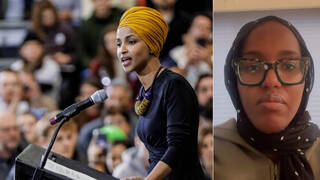
- Rodolfo Pastorformer secretary of the presidency under Xiomara Castro in Honduras.
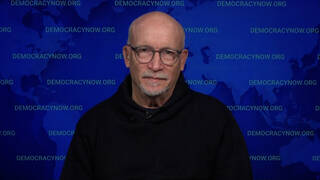
- Dana Frankprofessor of history emerita at the University of California, Santa Cruz.
President Trump has announced plans to pardon former Honduran President Juan Orlando Hernández, who is serving a 45-year sentence for trafficking hundreds of tons of cocaine into the United States. In 2024, Hernández was convicted in New York of drug trafficking and weapons charges. “The evidence from the Southern District of New York was overwhelming,” says Dana Frank, professor of history emerita at the University of California, Santa Cruz, and a longtime observer of Honduran politics.
Trump’s announcement came on Friday, and he also threatened to cut off funding if Hondurans did not elect his chosen conservative candidate as they went to the polls Sunday to pick a new president. “He’s almost threatening Honduras that if we don’t do what he is demanding … he will wreak vengeance against Honduras,” says Rodolfo Pastor, former secretary of the presidency under Xiomara Castro in Honduras.
Transcript
AMY GOODMAN: This is Democracy Now!, democracynow.org, The War and Peace Report. I’m Amy Goodman.
President Trump has announced plans to pardon former Honduran President Juan Orlando Hernández, serving a 45-year sentence in a U.S. prison for trafficking hundreds of tons of cocaine into the United States. Last year, Hernández was convicted in New York of drug trafficking and weapons charges. He once bragged, quote, “We are going to stuff the drugs up the gringos’ noses,” unquote. A trial prosecutor showed how Hernández ran Honduras as a narco-state from 2014 until 2022, accepting millions of dollars in bribes from cocaine traffickers in exchange for protection, including deploying the Honduran National Police to safeguard cocaine loads as they were transported through Honduras. One unnamed Drug Enforcement Administration agent who worked on the case described Trump’s move as, quote, “lunacy.”
Trump’s announcement came on Friday, two days before Hondurans went to the polls Sunday to pick a new president. Ahead of the vote, Trump also endorsed the conservative candidate Nasry “Tito” Asfura, the former mayor of Tegucigalpa. He’s a member of the right-wing National Party, the same party as Juan Orlando Hernández. Asfura has a slim lead in early election results.
Trump wrote on Truth Social, “If Tito Asfura wins for President of Honduras, because the United States has so much confidence in him, his Policies, and what he will do for the Great People of Honduras, we will be very supportive. If he doesn’t win, the United States will not be throwing good money after bad.” Trump continued, “Additionally, I will be granting a Full and Complete Pardon to Former President Juan Orlando Hernandez who has been, according to many people that I greatly respect, treated very harshly and unfairly,” unquote.
This all comes as the Trump administration has been bombing drug boats in the Caribbean and Pacific and has called for the closing of all airspace over Venezuela, saying that Venezuela is involved with drug trafficking.
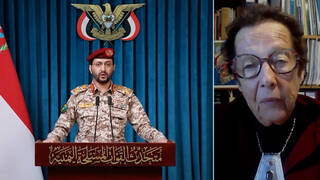
For more on the possible pardon and the Honduran elections, we’re joined by two guests. Dana Frank is professor of history emerita at the University of California, Santa Cruz, author of The Long Honduran Night: Resistance, Terror, and the United States in the Aftermath of the Coup. She attended the trial of Juan Orlando Hernández last year here in New York. And in Honduras, Rodolfo Pastor is with us, the former secretary of the presidency under the current president, Xiomara Castro. He’s also a LIBRE party candidate for city council in San Pedro Sula, where we’re speaking to him right now.
We welcome you both to Democracy Now! Let’s begin with Rodolfo Pastor in Honduras. Can you talk about the pardoning? Well, it looks like the imminent pardoning of Juan Orlando Hernández, often called JOH, J-O-H, in prison for 45 years for drug trafficking and other charges. The significance of this?
RODOLFO PASTOR: Of course, Amy. Good to be here. Thank you so much for paying attention to Honduras.
We’re waking up to results that are shocking the nation and are, in a degree, at least, a reflection of what President Trump stated a few days before the elections happened. For us, it’s shocking. It’s a blow to Honduran dignity and democracy that a foreign president would, first of all, state publicly what his preferences were. He actually suggested that Hondurans should vote for a specific candidate. And he went even further as to suggest that he would pardon Juan Orlando Hernández.
I think it exposes a very stark contradiction between what he is trying to portray as a justification for what’s happening in the Caribbean Sea and against Venezuela, and at the same time what is going on here in Honduras. I mean, this is, as you very clearly stated, a man who conspired to traffic tons and tons of cocaine and weapons between Honduras and the United States.
He is someone who has been sentenced and convicted for his crimes committed against the United States, but someone who has not been held accountable by Honduran justice. Hondurans are — were, at a first moment, very hopeful that because of what the U.S. had been able to do, what the Southern District of New York and the attorneys there had been able to do, what the court system in the United States had done, was just a partial justice for Honduras, because here in Honduras, there has been no process against Juan Orlando Hernández.
So, for President Trump to be so brazen in intervening, intervening in a sovereign process right before the elections, and also to be so hostile and aggressive in his stance, you know, he’s almost threatening Honduras that if we don’t do what he is demanding that we do, then that he will wreak vengeance against Honduras by sending back someone who’s done so much damage here.
AMY GOODMAN: Can you talk about who the three candidates are? And again, the significance of Trump saying, if he, Asfura, doesn’t win, that the U.S. would be withholding money to Honduras?
RODOLFO PASTOR: Exactly. He’s basically threatening Honduras if we go ahead and make a sovereign decision, right before our elections, right?
And the three candidates, the main party candidates, were, number one, Rixi Moncada, who is the candidate for the official party and who represents, you know, the continuation of what Xiomara Castro, as president, has started, which is a third alternative party that was born from the resistance to the coup back in 2009 and reshaped the electoral and political party system here in Honduras against two traditional, historic parties that had alternated in power for the last century. So, this was a very progressive, reform-oriented project, that has been, as results are coming in, devastatingly defeated.
On the second place, in second place, it would be Nasry “Tito” Asfura, who represents the National Party, which is the same party, as you also stated, that Juan Orlando comes from, and who is surrounded by most of the people who surrounded Juan Orlando during his government.
And in the third place, it would be Nasralla, who is this TV broadcaster who portrayed himself as an outsider, who represents the very traditional, the most historic political party in Honduras, the Liberal Party, and who was perceived as the most probable winner of the elections until Trump came in with his statement.
So, the result that Tito Asfura is now leading the polls, that LIBRE has been sent to a very distant third place in the results, is in many ways a reflection of this very hostile attitude by President Trump, who basically discarded Nasralla as having any possibilities. He accused him of being a socialist in disguise, of having aided Xiomara, because, of course, at one point, we all joined forces to be able to oust Juan Orlando and his very corrupt, very authoritarian, very repressive regime, and for siding with Tito Asfura.
So, basically, President Trump is saying, “We’re going to double — we’re going to bet down on the National Party on being our closest partner, and we do not care if they have very deep, deep links with organized crime and drug trafficking.” So, when you contrast that against what’s going on in Venezuela, it’s just so much hypocrisy on behalf of Trump.
AMY GOODMAN: Rodolfo Pastor, I remember interviewing your dad, Rodolfo Pastor Fasquelle, when I was in Tegucigalpa, flying in with the former president, the ousted president, Mel Zelaya, and his wife, Xiomara Castro, who is president of Honduras now, when they flew back into Honduras after being ousted in a U.S.-backed coup. That was back in what? 2009. And it was under Obama and Secretary of State Hillary Clinton. So, this intervention is not new, and that led to the rise of JOH — right? — of Juan Orlando Hernández.
RODOLFO PASTOR: U.S. intervention is nothing new for Honduras, Amy. You know, we are the emblematic banana republic. We’ve been, in so many ways, shaped by U.S. intervention for the last century in our country. And the coup back in 2009 was a shocking reminder of the fact that we’re still subjected to that kind of empire.
What happened after 2009 as a result of the coup was that Juan Orlando was able to make it to power and not only be there for what the constitution allowed him to be president for, a four-year term, he got reelected against the constitution that prohibits that reelection from happening, and with the backing again of the United States. And so, you know, from the beginning, from the get-go, what we started learning was that if the United States knew and understood the links that Juan Orlando had to drug trafficking, the corruption that he was responsible for here, the crimes that he was responsible for here, and would stand for him to be reelected against the constitutional prohibitions, you know, we knew that there was not a lot to do.
We went to elections in 2013, saw him get elected for the first time. We actually — the LIBRE party won those elections. But, you know, through the fraud and through the advantage that drug money gave Juan Orlando Hernández and public money that had been grafted gave Juan Orlando Hernández, we were defeated. We again went to the polls in 2017. We won again in that occasion with Salvador Nasralla as the candidate of the opposition. And yet we were again defeated through fraud and were repressed when we protested against that fraud.
And it was, finally, in 2021 that Xiomara Castro was finally elected as the first woman president of Honduras, and a transition period had started. It’s been a very, very difficult four years for Xiomara Castro. We were confronted with a country that had been destroyed, in so many ways, by the Juan Orlando administration, which, you know, stole enormous amounts of public money, which stopped investing in health, in education, in energy. And so, we were rebuilding the country.
And for this to come to a halt in such a brutal way, as in such an abrupt way again, and also as a result of U.S. intervention — or, should I say, directly as a Trump intervention, because he did so in a very personal way. He did so on his own social media. And I have not seen, as of yet, Amy, any kind of statement coming out of the State Department or the White House or the Department of Justice, that was such an important ally to bring Juan Orlando to justice.
AMY GOODMAN: I want to bring Dana Frank into this discussion, University of California, Santa Cruz, professor of history emerita. You’ve written a book on Honduras, deeply involved with covering what’s going on there. And I last spoke to you when you were going every day to Juan Orlando Hernández’s trial here in New York. This is astounding. Our top news headline is Venezuela has condemned President Trump’s unilateral declaration that all airspace surrounding Venezuela is closed. Trump said the U.S. is poised to launch attacks inside Venezuela itself, because, he says, the president of Venezuela is a drug trafficker. And here he says he’s going to pardon a leading drug trafficker, someone convicted of drug trafficking. By the way, that’s in addition to his brother, Tony Hernández, who’s serving a life sentence here for drug trafficking. Can you talk about the significance of this moment?
DANA FRANK: Well, you know, obviously, this contradiction between Trump’s — Trump’s criminal acts, attacking people of Venezuela, Colombia and other parts of — and Ecuador in the name of fighting drug trafficking, and that, you know, that is a front for regime change in Venezuela and wanting Venezuelan oil. So, all of this is about his rhetoric and really dangerous military acts against against Venezuela in the name of drug — fighting drug trafficking. And at the same time, he pardons one of the — you know, this famous drug trafficker. And, you know, I want to underscore that the evidence from the Southern District of New York was overwhelming, and Juan Orlando has been — Hernández has been sentenced to 45 years in U.S. federal prison.
But, you know, one of the things that’s missing here is that this is not just contradiction in terms of drug war. It’s an outrageous subversion of rule of law in the United States. For the president to just, you know, tweet out on — tweet out or send out on social media that he’s going to pardon a major former president of another country convicted of drug trafficking and other crimes, and just throw the Justice Department conviction of Juan Orlando and all their years and years of many people working on this case impeccably, and to just throw that out the window, is also terrifying for the people of the United States. So, what he’s doing is a threat to democracy in Honduras, outrageously, but also in the United States.
And, of course, we’re used to saying it’s outrageous, but here he is showing criminal — he’s showing overt sympathy to a criminal and saying, “Well, he” — you know, he’s obviously bonding with a criminal, another president who’s a criminal, and, you know, supporting Asfura, who worked closely with Juan Orlando. And, you know, Asfura, the candidate that Trump supports, worked — has himself been charged with stealing a huge amount of public money that was destined for a light rail system in Tegucigalpa.
And Nasralla, the other right-wing candidate, you know, supports, like Asfura, Bukele and Milei and Trump. You know, it’s this authoritarian-right project that Trump is supporting at the point of a gun here. You know, this is a really terrifying act of intervention into the — as Rodolfo pointed out, into another country. It’s not news, but it’s — to so baldly intervene in an election, it’s like blackmail. If you don’t support Asfura, we’re going to — you know, who knows? The gunboats could be out there attacking Honduras if Rixi wins. And I think people know that in Honduras.
And you want to remember about the question of the immigrants in here, because a third or a quarter of the Honduran economy runs on remittances, and Trump is already attacking Honduran immigrants in really dangerous and terrifying ways, and deportations.
AMY GOODMAN: Dana Frank —
DANA FRANK: So, you know, I think we want to be alarmed about all this.
AMY GOODMAN: What surprised you most? I mean, you’ve covered Honduras for decades. You’ve taught about it. You’ve written about it. When you sat in that trial, the extent of Juan Orlando Hernández’s involvement with drug trafficking, with cocaine into the United States, the man who Trump says he’s about to pardon?
DANA FRANK: Well, you know, it was breathtaking. And the evidence was not just — not just about Juan Orlando, about his minister of security, that the U.S. worked with for many years, about his right-hand man, Ebal Díaz, you know, on and on, all sorts of people in his regime and in his party, with which Asfura, the National Party candidate, is affiliated.
And, you know, the other thing in this that, you know, I think people may not be aware is, you know, not only did Obama and Trump and Biden all support Juan Orlando and look the other way at his many crimes, but his crimes, as Rodolfo underscored, are not just about drug trafficking. He supported the coup when he was on a — when he was on a congressional committee. He led the so-called technical coup that overthrew the Supreme Court in 2012 when he was president of Congress. You know, he turned the military and the troops on peaceful protesters in 2017, when he ran, completely illegally, for reelection.
But, you know, I think something people are not aware of is also that the Biden administration did not want Trump to be — excuse me, did not want Hernández to be extradited. You know, two weeks after Xiomara was inaugurated and Juan Orlando was out of office, you know, the Biden administration finally allowed Juan Orlando Hernández to be extradited to the United States. But the Southern District of New York had been working on that for five years and, in the year before, had been trying to indict Juan Orlando, and Biden would not allow it. So, there’s this long history of U.S. military support for Juan Orlando and for his regime and for his many crimes, and so it’s not like even Biden acted heroically. This is a long history of the U.S. supporting Juan Orlando, and Trump is just one more link in that chain.
But, you know, it is shocking, if you saw the amount of evidence in that trial and how impeccable those prosecutors are. It was extremely impressive to watch their work and how careful they are. And to see that thrown out, you feel that in your gut about what happened to the rule of law in the United States in this, as well as the subversion of the rule of law in Honduras.
And why was Juan Orlando not prosecuted in Honduras? Because the U.S. supported the coup and the post-coup regimes, which destroyed the rule of law, and on many fronts. And that’s why the gangs moved into that gap. And that’s why there’s so much mass poverty and why people have had to flee to the United States.



 Top
Top
Media Options