
Guests
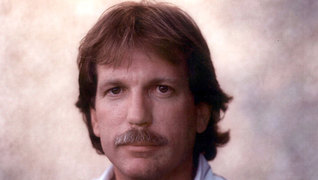
- Peter Dale Scottco-author of Cocaine Politics: Drugs, Armies, and the CIA in Central America.
On the eve of the congressional hearings into the controversy surrounding the CIA and its knowledge of the illegal drug trafficking into Los Angeles by Nicaraguan drug dealers, Larry Bensky speaks to Peter Dale Scott, co-author of Cocaine Politics: Drugs, Armies, and the CIA in Central America.
They discuss the San Jose Mercury News report about the CIA’s unwillingness to stop the flow of illegal Contra drugs into Los Angeles because profits from the trade were being used to support the Contras’ fight against the democratically elected Sandinista government, which the Reagan administration was determined to overthrow.
The interviewee discusses the three congressional investigations and their reticence to implicate anyone in the CIA. They discuss the possibility of the CIA having advance knowledge of this operation, as well as the misguided congressional investigation that prematurely concluded that there was no evidence that high government officials knew about the Contra deal, even though there was plenty of evidence to the contrary.
Peter Dale Scott argues that there is a clear historical correlation between flows of drugs and the places where the U.S. has major covert operations. He also discusses the targeting of the Black community and the creation of “crack markets.”
Transcript
AMY GOODMAN: You’re listening to Democracy Now! And we’re going to continue on this theme of drugs. This morning, the Senate Intelligence Committee will hold its second hearing on charges that the CIA knew that Nicaraguan drug dealers were bringing crack cocaine into South Central Los Angeles, but did nothing to stop it, because profits from that crack trade were supporting the Nicaraguan Contras in their war against the Sandinistas. The charges were raised in a controversial series published by The San Jose Mercury News in August that’s led to three official investigations, including one led by Senator Arlen Specter, who’s chair of the Senate Intelligence Committee. Today, the committee will question two former Contra leaders: Adolfo Calero, who used to head Coca-Cola under Somoza in Nicaragua, and Edén Pastora.
One person who’s been researching the CIA’s involvement in drug and weapons deals dating back to the Second World War is Peter Dale Scott, now a retired English professor at the University of California at Berkeley. Scott co-authored the book Cocaine Politics: Drugs, Armies, and the CIA in Central America. He spoke with Pacifica national affairs correspondent Larry Bensky about the current controversy over the CIA and drugs, based on Gary Webb’s series in The San Jose Mercury News.
LARRY BENSKY: Peter Dale Scott, I’d like to discuss with you some things that perhaps have not been discussed sufficiently on this program, on Pacifica or in the media in general, concerning the fallout of the Gary Webb series in The San Jose Mercury News. And I’d like to begin by getting your reaction to a couple of statements made by Jack Blum, the former special counsel for the Senate Foreign Relations Committee, better known as the Kerry Subcommittee on Narcotics, Terrorism, and International Operations, which had hearings on this back in 1988. Jack Blum, when he opened the hearings held recently by Senator Specter, a statement which was broadcast on this program, by the way, said the following: “We found” — referring to the Kerry Committee — “no evidence to suggest that people at the highest level of the United States government adopted a policy of supporting the Contras by encouraging drug sales. For the most part the Contras on the ground were forgotten men, short on both supplies and money. The drug trafficking some Contras engaged in went to line their pockets not to help their political cause.” There are two parts to that. First of all, his statement that they found no evidence to suggest that people at the highest level of the United States government adopted a policy of supporting the Contras by encouraging drug sales, your reaction to that?
PETER DALE SCOTT: Well, you know, it was very difficult to set up the Kerry Committee, and it’s quite obvious that there was a deal made in setting it up that they would not look directly at the CIA. And in fact, at one point, one of the defense attorneys for a witness accused Kerry of trying to bring the CIA into the picture, and Kerry’s response on the record in the hearings is very instructive. He said, “I have been very, very careful here. I have stayed away from naming any companies that are CIA proprietaries, because I have an agreement with Senator Boren.” Well, Senator Boren was the chairman of the Senate Intelligence Committee, and obviously Kerry’s mandate was not to get into the mandate of the Intelligence Committee. So, what Blum is saying there, I think, is technically correct, but it’s true because they weren’t looking at the highest level.
LARRY BENSKY: They couldn’t look at the highest level —
PETER DALE SCOTT: Right.
LARRY BENSKY: — according to what you’re saying, according to what the deal was to allow them to have these hearings.
PETER DALE SCOTT: Exactly.
LARRY BENSKY: All right, how about the second part? “For the most part the Contras on the ground were forgotten men, short on both supplies and money. The drug trafficking some Contras engaged in went to line their pockets not to help their political cause.” When I first read the Gary Webb story, one of the light bulbs that went off in my mind — or I should call it, rather, an alarm bell — was the economics of what was being proposed as the fallout from the drug sales in the United States, and specifically Los Angeles, going to the Contras. It didn’t, and doesn’t, accord with what I understood the financing of the Contras to be at the time in question. What’s your take on that? Who got money? How much money? Where did it go?
PETER DALE SCOTT: Well, let’s approach it from the drug end. I think it is a fact that it’s not so much Contras, but Contra supporters. That’s really the status of Norwin Meneses and Danilo Blandón. And there were many, many other people like them, people who were participating in the Contra support effort and who were also drug trafficking. And I want to say, in opposition to The New York Times and The Washington Post that the amount of drugs handled by all of these people was very, very big, much bigger than what was handled just by Meneses and Blandón — they were only two parts of a massive effort — and that the amount of money that was going to the Contras was also very big. The problem is, it’s extremely expensive to support an army. And even if you have millions — and that’s what we’re talking about here, millions of dollars — going to the Contras, they could still be indigent and not getting enough to eat, particularly because of the corruption at the top level of the Contras. It wasn’t filtering down to the troops.
LARRY BENSKY: All that the Contra supporters, however, were asking for in aid in this period under question in the Webb series, which is to say the early 1980s up until cutoff time and Boland Amendment time in 1984-’85, was something like $2 million a month. They said that that would be adequate to fund their forces, and that was what was being officially allocated. Why would they have needed, wanted or been able to use more money than that, unless, of course, as you say, it never got to them —
PETER DALE SCOTT: Yes.
LARRY BENSKY: — and, as Blum says here, and it was raked off by various crooks along the way posing as Contra leaders or Contra supporters?
PETER DALE SCOTT: Yes, well, I think some of the bona fide Contra leaders were also bona fide crooks and lining their own nest. There is a case in Oklahoma in which there was a witness. And what’s interesting about this, he is a government witness, and what he testified to that’s interesting to us came out under cross-examination. And he testified he had been a pilot for Jorge Morales, or George Morales, in Miami. It was clearly a sanctioned operation, because they were told to fly their contraband shipments of cocaine into customs-controlled airports, which is not the normal style, of course, of drug traffickers. But they were told, “In this case, you do it.” And they did do it, and there was no problem. And he testified that he personally had delivered millions to Contra leaders — may not have reached the Contra troops, but the funds were certainly getting to the Contra leaders.
LARRY BENSKY: Now, this, of course, should have set off some serious alarm bells in those who were allegedly the control agents of the Contras, who knew what their economic needs and situation was, and who might also have known, should also have known, could hardly have avoided knowing, that this drug trafficking operation was going on, this guns-in, drugs-out
PETER DALE SCOTT: Yes.
LARRY BENSKY: — Central American operation. Were those people necessarily in the CIA, and at what level, the ones who could have, should have, and almost obviously did know?
PETER DALE SCOTT: Well, Alan Fiers, who was head of the Central American Task Force for the CIA and, therefore, you know, a senior CIA officer and very much in the know, he actually testified that — to the Iran-Contra committee, that they knew there was drug trafficking. And what he chose to talk about — a lot of his testimony, to my knowledge, has still not been totally declassified. It wasn’t when I read it. But he admitted that they knew about the drug trafficking. Then he targeted the people who surrounded Edén Pastora, and obviously —
LARRY BENSKY: So-called Southern Front.
PETER DALE SCOTT: Yes, and in Costa Rica. And he was talking about a period when Edén Pastora was no longer in the good graces of the CIA. And in fact, there had been this famous bomb explosion in which we still don’t know the full story, but the CIA, many people think, were implicated in that, or some of their people were. So, he was conceding it was a well-known problem. He was just trying to limit the problem to a Contra leader with whom the CIA had fallen out of favor. The fact is, it was happening all over the place, and if we just draw back for a moment, this is a normal CIA modus operandi. They had just come off this huge operation in Laos in the '60s and the ’70s, and again, an enormous amount of government money went into Laos — wasn't enough to pay for the whole operation. The Royal Laotian Army ran the biggest heroin refinery in Vientiane, and everybody knew it, except, quote, “the U.S. Embassy.”
LARRY BENSKY: Peter Dale Scott, co-author of Cocaine Politics: Drugs, Armies, and the CIA in Central America. We’ll be back talking with him in a moment. We’ll talk about the question of whether or not the CIA was involved with crack cocaine in South Central Los Angeles. And also, what the heck is this CIA we’re talking about anyway. Stay tuned. I’m Larry Bensky. This is Democracy Now!
[break]
LARRY BENSKY: Peter Dale Scott, I want to get to the question of crack and South Central Los Angeles and the African American community, fallout of the Gary Webb series, whether or not he actually said that. It certainly is being interpreted that way. But before we do that, you’re in a unique position to, I think, help our listeners to understand what are we talking about when we talk about the CIA. It’s an executive branch agency. Its director is a bit unusual in government, in that he — and it always has been a man — not only heads that agency, the CIA, with a reported $3 billion-a-year budget, but is also the overseer of the 12 or 13 other government intelligence agencies, with a reputed budget of $30 billion a year. So the CIA itself has only a 10th, allegedly, of the official government intelligence budget. It has something like 30,000 employees, we’re told, although we never really know for sure. But it itself is divided into different parts. And I have problems, again, not only with the Webb series, but with the fallout from it, when people say the CIA did this, the CIA did that.
PETER DALE SCOTT: Yes, I agree. I agree.
LARRY BENSKY: Are we talking about an official government mandate, where Ronald Reagan, Edwin Meese — who knows who? — Richard Allen, William Casey sat around a room and decided the CIA will, as part of this government’s policy, do such and such, or are we talking about something else?
PETER DALE SCOTT: Under the statute of the National Security Act, the CIA was created to essentially inform the National Security Council and perform such other duties as may from time to time be directed. Senator Church raised the possibility of a rogue elephant CIA. I don’t think that’s the problem here with the Contras. At least in the Reagan period, it’s very clear that the whole Reagan administration was behind the Contra effort. And when we come to the real abuses that we’re talking about here, very close to the top in my mind is not just the fact that these people were trafficking, but that they were getting away with it. They were protected, and particularly in the case of Norwin Meneses. There was a big bust here in San Francisco in 1983, the so-called Frogman bust. It was pretty small by today’s standards, but it was the largest cocaine bust ever made on the West Coast at that time. And Meneses, according to my source, who was a Republican and at the time a Contra supporter —
LARRY BENSKY: Who’s mentioned under a pseudonym in the Gary Webb series.
PETER DALE SCOTT: That’s right. He’s called David Morrison, and I’ll call him that there, because he had every reason to be frightened for his life. He was receiving death threats. Because why? Because he went to the Justice Department, said, “You have a problem here.” And he learned that there were people inside the DEA and inside the FBI who were as upset as he was that this man was being protected, was told to get out of town before the big — a lot of busts were made in connection with the Frogman cocaine, but not the top man.
LARRY BENSKY: But you say this was not a rogue operation. And I’m trying to find out from you and from anybody that I can and help the listeners understand where the difference lies between policy and where the difference lies between operations. What goes on in an agency like the CIA so that when people say “the CIA,” what the heck are they actually talking about here?
PETER DALE SCOTT: Well, this is, actually, I think, a very difficult problem to articulate. And the way I would say it is, I’m sure that, on the one hand, there was never a meeting of the Cabinet or the National Security Council where we said, “We’re going to fund the Contras through drugs.” That’s absurd. It wasn’t like that at all. But what I think has built up over the years, and probably actually antedates the creation of the CIA in 1947, is a kind of symbiosis whereby in the Third World particularly, U.S. corporations who want to have influence in small countries, like Honduras — let’s take Honduras, because it’s the quintessential banana republic. It was also the site of the major Contra camp, the FDN. And historically, going back to the turn of the century, corporations have had influence in these countries by corrupting local governments, installing them in the case of Honduras, and doing that by working with local right-wing forces that, since the 1930s anyway, have been involved in drug trafficking.
LARRY BENSKY: And, of course, these are the forces who, in a place like Honduras, control not only the police, but all armed services, control the business structure and control the government.
PETER DALE SCOTT: Right, and there was a good deal of this in Nicaragua under Somoza. And Meneses, actually, I think, was able to become a major trafficker in the Somoza era because his brother was the chief of police.
LARRY BENSKY: Now, if we know this, you know this — your book, Cocaine Politics, was written in the late 1980s, early 1990s, came out in 1991. You and I followed closely the Iran-Contra hearings, the trial of Oliver North, the Kerry Committee, etc., all of which were broadcast in some measure on Pacifica, and I was there for those. We’ve known many of these details before.
PETER DALE SCOTT: Yes.
LARRY BENSKY: At what level do you think it got blocked from really coming out to the public consciousness? Where in the media elite structure or the government elite structure did the gates slam down?
PETER DALE SCOTT: Well, it’s, I would have to say, at the highest level in the media and in the government. You know, in Cocaine Politics, there’s a whole chapter about the media. We wouldn’t be in —
LARRY BENSKY: Very important chapter.
PETER DALE SCOTT: We wouldn’t be in this terrible mess if it weren’t for the complicity of The New York Times and The Washington Post. They are among the best newspapers in the world, and on many — if they’re talking about corruption in Tanzania, they’re pretty reliable. If they’re talking about corruption in Washington, they’re not reliable at all, because they work very closely with the CIA. CIA is a major source for them. There have been the occasional honest story that has come out in those papers about the Contras and drugs, but they’re vastly outnumbered by the dishonest stories. It’s a kind of modus operandi that if the government wants to say the Contras were not involved in drug trafficking, which they wanted to do in 1986, some small guy becomes a designated liar in the Justice Department, and then the Times and the Post solemnly go to this person and print a story saying that the Contras were not involved in drug trafficking. Doesn’t mean that The New York Times really believes it. It means that they have a special relationship to the CIA.
LARRY BENSKY: And, of course, Jack Blum, in his opening remarks to Senator Specter’s one day of hearings, mentioned the fact that they had had a terrible time getting coverage of the Kerry Committee hearings —
PETER DALE SCOTT: Yes.
LARRY BENSKY: — when they were taking place in early 1988.
PETER DALE SCOTT: I wanted to say a word about that.
LARRY BENSKY: Quickly, yeah.
PETER DALE SCOTT: It was so galling that the — when the Kerry report finally came out with proof of all these really serious charges, such as the drug airline was used to supply the Contras in Honduras, for example, both the Post and the Times ran it in the back of the paper and said there was nothing new here. Well, it wasn’t new to you and me, but it was certainly new to people who only read The New York Times.
LARRY BENSKY: I want to get your reaction to another one of Jack Blum’s statements in his opening remarks to Senator Specter’s committee, the Senate Intelligence Committee, just a few weeks back. Talking about the Kerry Committee again in their hearings, he said, “We found no evidence whatsoever that the African American community was the particular target of a plot to sell crack cocaine. Cocaine has been, and continues to be, an equal opportunity destroyer. The flood of cocaine that hit the United States in the mid-1980s ruined whites, Latinos and African Americans indiscriminately.” Your reaction?
PETER DALE SCOTT: Well, I’m still learning in this area, and I want to be careful. I have been asked many times on radio broadcasts: Was the Black community targeted? And I have always felt, and said in the past, that I felt it was targeted by indirection, you know, that, obviously, particularly back in the time of the Black Panthers and so on, there were a number of COINTELPROs that were directed specifically against the Black Panthers and other Black leaders, including quite moderate leaders, like Martin Luther King. This is no secret. It cannot be denied. And it became pretty clear, I think, that law enforcement at all levels, from the local up to J. Edgar Hoover, they much preferred to see Black communities dominated by capitalists, even if they were criminals and traffickers, than by radicals like the Black Panthers. I saw it with my own eyes when the nonviolent antiwar march that started in Berkeley got to the border of Oakland. The Oakland police were waiting there, but the march was actually broken up by the Hells Angels, who were the major distributors at that time in Oakland. And it was obviously —
LARRY BENSKY: Of speed.
PETER DALE SCOTT: Of speed, yes. And it was obviously something being tolerated by the Oakland police. I’ve always said in the past that I thought it was that kind of indirect fallout that has afflicted the communities. I must say, I’ve learned — I’ve been studying how crack markets are created. And they don’t just grow. It’s clear that what happened in Los Angeles is a model for what’s happened in the nation. People go in, create a crack market —
LARRY BENSKY: Or do they —
PETER DALE SCOTT: — by giving it money.
LARRY BENSKY: Or do they use the traditional American merchandising strategy, which is why Wendy’s opens up next to McDonald’s, opens up next to Taco Bell, opens up next to Pizza Hut, because the African American community had already — and one could say this was a previous nefarious activity, of course — had an established market for heroin, for example —
PETER DALE SCOTT: Oh, yes.
LARRY BENSKY: — had an established market for marijuana? It was easy to establish a market for crack cocaine because there was already a commercial or a mercantilist, if you will, predilection towards having a drug sales network.
PETER DALE SCOTT: Yes, but there is something hard-edged about the creation of crack markets. People go in, start it, and you can date when it was started. And it’s very ironic that the day that, I think it was, that Tim Golden of The New York Times was speaking — was supposed to speak on the Berkeley campus about this, The New York Times actually ran an article about a Dominican trafficker, in which they conceded that there was a date in 1985 when crack hit New York one month after a market had been created for it in Los Angeles. I think that there — whether those dates are actually precise or not, it tells us that there is something specially artificial about the creation of crack markets, which is, I think, the — I would like to study more about this. Initially, I myself was among the skeptics who thought that Gary Webb might have overstated the importance of this connection going into the neighborhoods of South Central L.A. I now believe that crack markets are created, and that Danilo Blandón, with an MBA from Colombian University, was an expert in market creation, and therefore was a major factor in the spread of crackdown.
LARRY BENSKY: We may never know about Mr. Blandón, because, apparently, now the Justice Department and the federal courts are seeking to quickly deport him from the country, something that is being protested by Maxine Waters and others, but we’ll see how that plays out over the following few weeks. Peter Dale Scott, finally, your reaction to a statement again by Jack Blum in opening up the Specter Committee hearings? He says, “If the question is 'Did the CIA sell crack in the inner city to support the Contra war?' the answer is a categorical no. If you ask whether the United States government ignored the drug problem and subverted law enforcement to prevent embarrassment and to reward our allies in the Contra war, the answer is yes.” Is he making a distinction without a difference here between the crack sales, the CIA and the United States government ignoring the drug problem?
PETER DALE SCOTT: Well, I think all of us will sound more credible if we stress that it was Contra supporters who actually sold the cocaine. The kicker is in the — at the very end of what Jack Blum said there. It’s not really so much that the government ignored the problem. It’s that they subverted the law enforcement process. If you think about it, that means they weren’t ignoring the problem; they were paying attention to the problem and taking care to see that the key Contra supporters were protected. That, to me, is the central issue. And that is my anger at The Washington Post and The New York Times both, that they have tried to fudge that issue by attacking Gary Webb for things he never said at all.
LARRY BENSKY: Well, one of the things, of course, that they’re doing — and this comes back to where we began to speak in this conversation we’re having — is trying to, in some cases, pin down the economics of it, saying, for example, in The Washington Post, that there could have been only $30,000 to $90,000 passed along, that this was a tiny drop in the bucket of the amount of money that it would have taken, officially and extraofficially, to fund the Contras. Are we ever likely to get anything approximating reliable data on this?
PETER DALE SCOTT: Well, we can certainly, I think, speak to those figures. What the Post did was magically convert the whole issue into the actual amount of money handled by Meneses and Blandón. There were many, many, many Contra supporters. There was just Jorge Morales, for example, in Miami, who’s just one more. One of his pilots says that he personally saw millions of dollars going to the Contras. The biggest supporters of the Contras at the time, who profited from this situation to get into drug trafficking, were the Honduran Army and the so-called Guadalajara Cartel in Mexico, who had a representative in Honduras called Juan Matta Ballesteros. The DEA was quoted in Newsweek back in the '80s as saying these two — they were actually just talking about one of them — could have supplied from 30% to 50% of the cocaine reaching the United States. I don't think you can arbitrarily separate the Honduran Army from Matta Ballesteros, but there were two shipments, just two single shipments, traced back to the Honduran Army that were intercepted, and they totaled 6.7 tons, just those two shipments. So, without —
LARRY BENSKY: A lot more than $30,000 to $90,000.
PETER DALE SCOTT: So, what we’re — what we can safely say is that despite everything that had poured out of the Justice Department and the Times and the Post, this was a major factor in our drug problem at the time. And common sense would tell this, because — say this, because we didn’t really have a cocaine epidemic in the country until the Contras began, just as we never had any, any heroin in this country from Afghanistan and the Pakistan border until we started supporting the guerrillas there, and we were suddenly flooded with heroin coming from the so-called Golden Crescent. There is a very clear historical correlation between flows of drugs into this country and where we have major covert operations.
LARRY BENSKY: Peter Dale Scott, who is co-author of Cocaine Politics: Drugs, Armies, and the CIA in Central America, co-author along with Jonathan Marshall, a book published by University of California Press. It’s still in print. In fact, it’s out in paperback now and, I believe, had an update in the paperback edition from its first edition in 1991. Peter Dale Scott is also author of Deep Politics and the Death of JFK, and that was published, again, by University of California Press. Peter Dale Scott is a retired professor of English at the University of California, Berkeley, also a former Canadian diplomat. Thank you very much for joining us today on Democracy Now! We, of course, will continue to follow this story and eagerly look forward to speaking to you again as you follow it yourself.
PETER DALE SCOTT: Thanks very much.
AMY GOODMAN: That’s right, Larry. Tomorrow, we’ll bring you excerpts of today’s Senate Intelligence Committee hearing on the CIA-Contra-cocaine connection. And on Thursday, back by popular demand, the amazing story of the friendship between an African American civil rights activist and the former Grand Cyclops of the Ku Klux Klan. If you’d like a copy of today’s show, you can call 1-800-735-0230. That’s 1-800-735-0230. Democracy Now! is produced by Julie Drizin. Our engineer is Kenneth Mason. I’m Amy Goodman, for another edition of Pacifica Radio’s Democracy Now!


Media Options