







 Watch Full Show

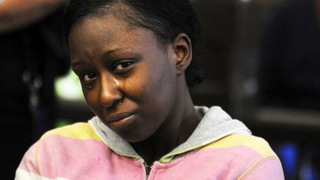
The new documentary Free Joan Little chronicles the landmark case of the first woman in U.S. history to be acquitted on the grounds of self-defense against sexual violence. Joan Little’s 1975 murder trial inspired a national campaign for racial justice, prisoners’ rights, and survivors’ rights to self-defense. Director Yoruba Richen calls the movement to free Little a “cry for justice,” and Little’s trial testimony about her assault by a prison guard “a radical act” that helped expose “the scourge of violence and abuse in jails and in prisons.” Free Joan Little premieres this week at the DOC NYC Film Festival.
Related Story
 StoryMar 31, 2016The Price of Fighting Back: How Woman Faces 60 Years in Prison for the Death of Her Abusive Ex
Transcript
AMY GOODMAN: This is Democracy Now! I’m Amy Goodman, with Juan González.
Before we begin with our last segment, we want to note it includes a discussion of sexual assault.
Fifty years ago, August 15, 1975, Joan Little became the first woman in U.S. history to be acquitted of murder on the grounds of self-defense against sexual violence.
Joan Little was charged with first-degree murder after she stabbed a white guard named Clarence Alligood, who she said tried to rape her in the Beaufort County Jail in North Carolina. She faced the death penalty if convicted. Her landmark trial inspired a national campaign for racial justice, prisoners’ rights, and a woman’s right to self-defense against sexual assault. Those who defended her included Angela Davis, Rosa Parks, and its impact is felt today in the #MeToo movement and calls to “Say Her Name.”
Now a new documentary, called Free Joan Little, will have its world premiere Wednesday and Thursday at DOC NYC Film Festival. In a minute, we’ll speak with the director, Yoruba Richen. But first, some clips. This is Karen Bethea-Shields, now Karen Galloway, who was on Joan Little’s legal team. She was the first African American woman to graduate from Duke University’s School of Law.
KAREN BETHEA-SHIELDS: We got a call from the medical examiner, who told us, “We need to see the autopsy report.” The autopsy report showed how his body was, stabbed a number of times. And then, we realized the most important detail. Alligood was found dead naked from the waist down. And there was semen found dripping from his penis. Obviously, he died not in the line of duty. Because what kind of duty is that? That was when I understood that what we were dealing with in Joan’s case was rape.
AMY GOODMAN: Joan Little’s lawyer, Jerry Paul, pushed to make sure she would not be held in the jail where the attack took place. Again, this is Karen Bethea-Shields, key member of Little’s legal team.
KAREN BETHEA-SHIELDS: Joan was afraid, and she had a right to be. At that time in North Carolina, the sentence she could be facing for first-degree murder was the death penalty. One person was ready to get her out of the country, and she refused. She says, “I want to stay here and tell my story.” She wanted people to know what really happened to her. Now, if you’re not telling the truth, you’re not going to be saying that. So I believed her. And so did a lot of people.
AMY GOODMAN: As Joan Little’s case drew national attention, it was the focus of a song by Sweet Honey in the Rock. We hear from member Bernice Johnson Reagon in this clip from Free Joan Little, but first, Angela Davis.
SWEET HONEY IN THE ROCK: [singing] Who is this girl and what is she to you?
Joan Little, she’s my sister
Joan Little, she’s our mama
Joan Little…
ANGELA DAVIS: Bernice Reagon of Sweet Honey in the Rock wrote the song.
SWEET HONEY IN THE ROCK: [singing] Joan the woman who’s gonna carry your child.
BERNICE JOHNSON REAGON: We recorded this song about a woman named Joan Little. I remember thinking that this could be my daughter, my sister, my mother, could be any woman on the planet.
SWEET HONEY IN THE ROCK: [singing] ’Cause now Joan is you and Joan is me
Our prison is the whole society.
CHRISTINA GREENE: Bernice would sing this line, “Joan is you, Joan is me.” And women would just sort of scream.
AMY GOODMAN: That last voice was Christina Greene, author of the book Free Joan Little: The Politics of Race, Sexual Violence, and Imprisonment. And finally, this is a clip from the film about Joan Little’s testimony in her case, featuring a dramatic reading from the trial transcript, when she was questioned by her own lawyer, Jerry Paul. First, we hear from another of her lawyers, Karen Bethea-Shields.
KAREN BETHEA-SHIELDS: She was nervous, but we had prepared her for the type of questions she was going to get. We told her just to tell her story and answer the questions correctly and truthfully.
JERRY PAUL READER: Miss Little, on the 26th of August, did you see Clarence Alligood?
JOAN LITTLE READER: Yes, sir, I saw him.
JERRY PAUL READER: Did he say anything to you?
JOAN LITTLE READER: He was talking about how nice I looked and that he wanted me to have sex with him.
JERRY PAUL READER: What do you say to him?
JOAN LITTLE READER: I told him no, and I would really appreciate if he left. And he left.
JERRY PAUL READER: Do you know about what time that was?
JOAN LITTLE READER: It was about 2.
JERRY PAUL READER: What happened later?
JOAN LITTLE READER: He came back again with a pack of cigarettes and a bag of sandwiches. He had a sort of, I’ll say, silly grin on his face.
AMY GOODMAN: For more on this remarkable documentary, Free Joan Little, which has its world premiere Wednesday and Thursday at DOC NYC, we’re joined by its director, the acclaimed filmmaker Yoruba Richen, founding director of the Documentary Program at the Craig Newmark Graduate School of Journalism at CUNY, City University of New York.
Yoruba, welcome back to Democracy Now!
YORUBA RICHEN: Thank you.
AMY GOODMAN: What an amazing documentary short this is. What a lesson in history. Why’d you choose to do it now?
YORUBA RICHEN: Yeah, thank you so much, Amy.
So, I discovered this story when I was making my film about Rosa Parks, _The Rebellious Life of Mrs. Rosa Parks_. And Rosa was one of her advocates. She created the Free Joan Little Committee in Detroit. And one of the things we did in the film, the Rosa Parks film, was look at Rosa Parks’s lifelong commitment to putting a light — shining a light and investigating sexual violence against Black women, starting in the 1940s with, most famously, the case of Recy Taylor.
And then, we connected it to her work in the ’70s around the Joan Little case. And when I discovered this story, I was amazed. It was, you know, hidden in plain sight. It was recent, relatively recent, and there was so much footage. It was really well covered, like, throughout the world.
So, I knew I wanted to go back to this story. It was only a small part of my film, the Rosa Parks film, but I knew I wanted to go back to this story and bring it to light and show how these various movements, as well, disparate movements, who were, you know, sniping and not aligned on a lot of things — similar to what we see today — came together for the fight for justice. And in this unlikely, unlikely circumstance, a Black woman accused of killing a white prison guard, you know, they were able to have victory. And so, I think it’s such an important lesson for today.
JUAN GONZÁLEZ: And, Yoruba, could you talk a little bit more about that? What prompted this national movement to develop on a case that would otherwise not have necessarily garnered much attention, except where it actually happened?
YORUBA RICHEN: Yeah, I think the lawyers, Jerry Paul, Karen Bethea-Shields, they recognized that in order for justice to happen for Joan, they had to create a movement. They had to foster a movement. And so, they reached out to Larry Little, who’s also featured in the film. He was head of the Black Panthers in North Carolina. They reached out to him.
He went around the country with Joan, and they organized. It was organized. It was meeting people in where they were around the country. It was reaching out to the white feminist movement, to the Black Power movement, to LGBT, labor, that sort of on-the-ground work. And we show that. We have footage of him doing that work that got people motivated and invested in this case.
And the case became, you know, a really rallying cry for all these communities and throughout the world. It was covered by Swedish television. It was featured in newspapers in Europe, in the Middle East, in Africa. So it became an international rallying cry for justice.
And I think it inspired — you know, as the song says, “Joan is you, Joan is me.” Bernice Johnson Reagon says, “This could be my mother, my sister, my child.” People related to what happened and to the sexual abuse of women that was so rampant, and is so rampant, too, in prison and in our society.
JUAN GONZÁLEZ: And could you talk about the trial itself, the decision of the attorneys to put Joan Little on the stand to testify in her own defense? And also, what happened to her after her acquittal?
YORUBA RICHEN: Yeah, so, that decision was key. As you know, a lot of times, defendants do not testify in their own trial, and especially victims of sexual violence, and especially at that time. As we see in the film, there were headlines calling her a whore or a murderess. Women who were sexually assaulted or accusing people of sexual assault were completely victimized — I mean, completely criminalized and made to be that they were bringing it on to themselves or that she was seducing him.
So, to tell her own story, to choose to tell her own story on the — in court was a radical act. And it was — it moved the jury to tears. They saw her, you know, looked at the facts, felt her testimony, listened to her testimony, and they acquitted her within a couple hours. And it was a mixed-race jury.
And then, afterwards, Joan did have to serve the remainder of her time that she was in for the initial charges, so she did serve her time. And then, she went on to live a life of — you know, she hasn’t spoken about the case for 30 years. She had some other run-ins with the law, but she is — my understanding, she’s raising her family ’til this day. And she has not spoken about the case. And as Karen Bethea-Shields says, she does not want to be retraumatized by this, the worst moment of her life. But her legacy and the importance of the trial still resonates today.
AMY GOODMAN: What’s amazing is, she escaped after she killed him. And then they said that he was killed in the line of duty. She faced first-degree murder, but then there was a problem when they had to reveal that they found him naked from the waist down, only wearing socks. But when the lawyers — and Kunstler was involved with this, too — right? — William Kunstler — decided to bring her back in, they didn’t bring her to that jail, scared that there was a death bounty on her head. And so they brought her to the State Bureau of Investigation?
YORUBA RICHEN: I have to go back and look at the —
AMY GOODMAN: Well, wherever. They didn’t bring her to that jail —
YORUBA RICHEN: To that jail, exactly. Because she was —
AMY GOODMAN: — because they were scared she’d be killed.
YORUBA RICHEN: That’s right, of course. They were scared she’d be killed. Absolutely.
AMY GOODMAN: Well, this is an amazing story. In the last 20 seconds, what lesson do you think it has for today?
YORUBA RICHEN: Well, I think it’s an inspiring lesson that when groups and marginalized communities and people who are fighting for justice come together, they can win, in unlikely circumstances and in unlikely times, that victory can be achieved. And also that the scourge of violence and abuse in jails and in prisons is still something that we are reckoning with and that we are dealing with today.
AMY GOODMAN: Well, it’s such an important film. Yoruba Richen is the acclaimed filmmaker and director of Free Joan Little, which is having its world premiere this Wednesday and Thursday at the DOC NYC Film Festival here in New York.
Happy birthday to Allie Tutich! I’ll be speaking in Amsterdam at the International Film Festival there on Saturday. Check our website at democracynow.org. I’m Amy Goodman, with Juan González, for another edition of Democracy Now!



 Top
Top
Media Options